How Much Does a Pop-Up Camper Weigh? A Practical Guide to Weight Ratings and Towing
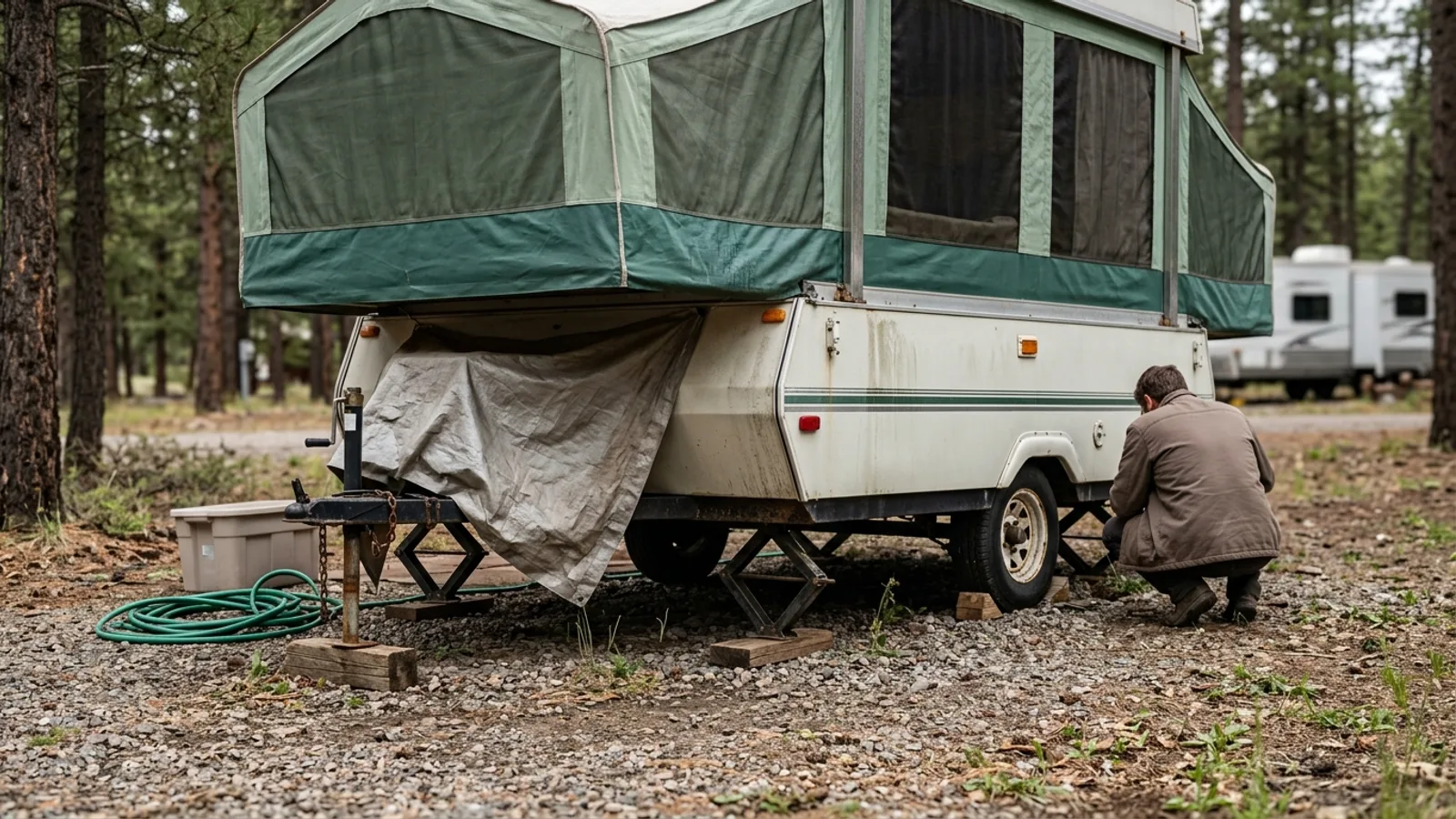
Pop-up campers span a wide weight range, generally from a few hundred pounds for the smallest teardrop-style models to well over 3,000 pounds for larger, feature-heavy units. Most fall somewhere in the middle of that range once you account for the frame, canvas or hard sides, axle, and basic equipment. The exact number for any given camper depends heavily on its size, construction materials, and how many built-in amenities it carries.
Before towing one, it's worth understanding both how campers are weighed and how to match that weight to what your vehicle can safely handle.
Key Weight Ratings to Know
Camper and vehicle weights are described using a few standard terms. Knowing them helps you compare campers accurately and avoid overloading your setup.
Unloaded Vehicle Weight (UVW)
This is the weight of the camper as built by the manufacturer, generally including standard equipment but not cargo, water, or aftermarket accessories. Think of it as the camper's base weight before you add anything of your own.
Cargo Carrying Capacity (CCC)
This is the maximum additional weight the camper can safely carry — food, water, gear, bedding, and other supplies. Adding up your packed items and comparing that total to the CCC is one of the most useful checks you can do before a trip.
Gross Axle Weight Rating (GAWR)
This is the maximum weight the camper's axle (or axles) is rated to support. Loading a camper unevenly, or simply overloading it, can push actual axle weight past this rating even if the total trailer weight seems reasonable.
Gross Vehicle Weight Rating (GVWR)
For the camper itself, this is the maximum total weight it's rated for once fully loaded — UVW plus cargo. Manufacturers set this number based on the strength of the frame, axle, and tires, and it should not be exceeded.
Matching a Camper to Your Vehicle's Towing Capacity
Your tow vehicle has its own limits, and they matter as much as the camper's ratings. Your owner's manual is the most reliable source for towing capacity, usually presented as a chart based on engine, drivetrain, and trim.
If the manual isn't available, a dealership or qualified mechanic can look up towing specifications using your vehicle's identification number. Online vehicle-specification tools can also help, though it's worth cross-checking anything you find against an official source.
Once you know your vehicle's rated towing capacity, plan to stay comfortably under it rather than right at the limit. Leaving a margin accounts for the added weight of water, gear, and passengers, and reduces strain on the engine, transmission, and brakes over time.
Water is easy to underestimate: it adds roughly eight pounds per gallon, and a full tank can meaningfully change your total towing weight. Fuel, propane, and any gear stored on the camper's exterior racks or bumper should be factored in as well.
Pop-Up Camper Sizes and Typical Weight Ranges
Pop-up campers are generally grouped into a few broad categories based on size and weight, though there's overlap between them.
Small or Lightweight Models
These are the most compact and least equipped campers, often designed for one or two people. Their lighter weight makes them towable by a wide range of vehicles, including many smaller SUVs and crossovers, though it's still essential to check your specific vehicle's rating.
Mid-Size Models
These offer more interior space and amenities — additional sleeping areas, a small kitchen setup, or extra storage — at the cost of added weight. They typically require a vehicle with a moderate towing capacity.
Larger Models
Built for bigger groups or longer stays, these campers carry the most amenities and the highest weight. They generally need a vehicle with a substantial towing capacity and a properly rated hitch setup.
Within any size category, added features like an onboard bathroom, air conditioning, or a larger holding tank will push the weight higher than a bare-bones version of the same footprint.
Advantages of Pop-Up Campers
- Lighter towing: Their reduced weight compared to hard-sided trailers means a broader range of vehicles can tow them.
- Compact storage: Because they collapse for transport, they take up less space at home when not in use.
- Closer to nature: Canvas or soft-sided walls let in more outside sound and air than a rigid RV, appealing to people who like the feel of tent camping with a bit more shelter.
- Simpler systems: Fewer built-in mechanical systems generally means less to maintain and repair.
Trade-Offs to Consider
- Limited amenities: Bathrooms, kitchens, and climate control are often smaller or absent compared to larger trailers.
- Setup time: Raising and lowering the camper, and securing canvas sections, takes longer than parking a rigid trailer.
- Weather exposure: Soft-sided walls offer less insulation and sound dampening than hard-sided construction.
- Campground restrictions: Some campgrounds or storage facilities have specific rules about trailer types, so it's worth checking ahead.
Pop-Up Campers vs. Expandable (Hybrid) Trailers
Expandable trailers, sometimes called hybrids, combine a hard-sided box with pull-out canvas sections for extra sleeping space. They tend to weigh more than a basic pop-up but offer sturdier walls, easier setup, and often more built-in storage and amenities.
If minimizing weight and towing with a smaller vehicle is the priority, a traditional pop-up usually wins. If you want more comfort and weather protection while still saving some weight over a full-size travel trailer, an expandable model is worth considering.
Choosing the Right Camper for Your Needs
Start with your vehicle's towing capacity, not the camper you like best. Working backward from what you can safely tow narrows the field quickly and keeps the decision grounded in safety rather than wish-list features.
From there, think about how many people typically need to sleep in the camper, how much gear you travel with, and how important quick setup is to your camping style. A camper that's light enough to tow easily but too small for your group — or one loaded with amenities you'll rarely use — will wear on you faster than the extra weight or setup time ever would.
Finally, always weigh the camper loaded as you actually plan to travel — with water, propane, and gear aboard — before a long trip. A quick stop at a public scale is the most reliable way to confirm you're within both the camper's and the vehicle's rated limits.