Why Your RV Propane Alarm Keeps Beeping (And How to Fix It)
A beeping propane alarm in an RV is impossible to ignore, and that's the point. These alarms are a core safety device, so before you silence one, it's worth understanding what it's actually telling you. Most of the time the cause is harmless. Occasionally it isn't. This guide walks through both.
First, Take Every Alarm Seriously
RV propane (LP-gas) detectors are built to alert you to combustible gas before it reaches a dangerous concentration. They can also chirp or beep for reasons unrelated to an actual leak. The safe approach is to treat every alarm as a possible leak until you've ruled that out, not the other way around.
If you ever smell gas, hear a hissing sound near a propane line or appliance, or simply aren't sure what's causing the alarm, don't guess. Shut off the propane supply at the tank, extinguish any open flames, open windows and doors, get everyone out of the RV, and don't operate light switches or anything that could spark. Only go back in once you're confident it's safe, and have the system inspected by a qualified propane technician before using it again.
Common Causes of a False Alarm
Aerosols and Fumes Nearby
Many household aerosols, including cooking sprays, deodorants, insect repellents, and some cleaning products, use propane, butane, or similar gases as propellants. Spraying these near the detector can trigger it exactly as a leak would. Cleaning products with strong solvent fumes can occasionally do the same. If you know an aerosol was just used nearby, ventilate the space and see if the alarm clears before assuming anything more serious is going on.
Blocked Airflow
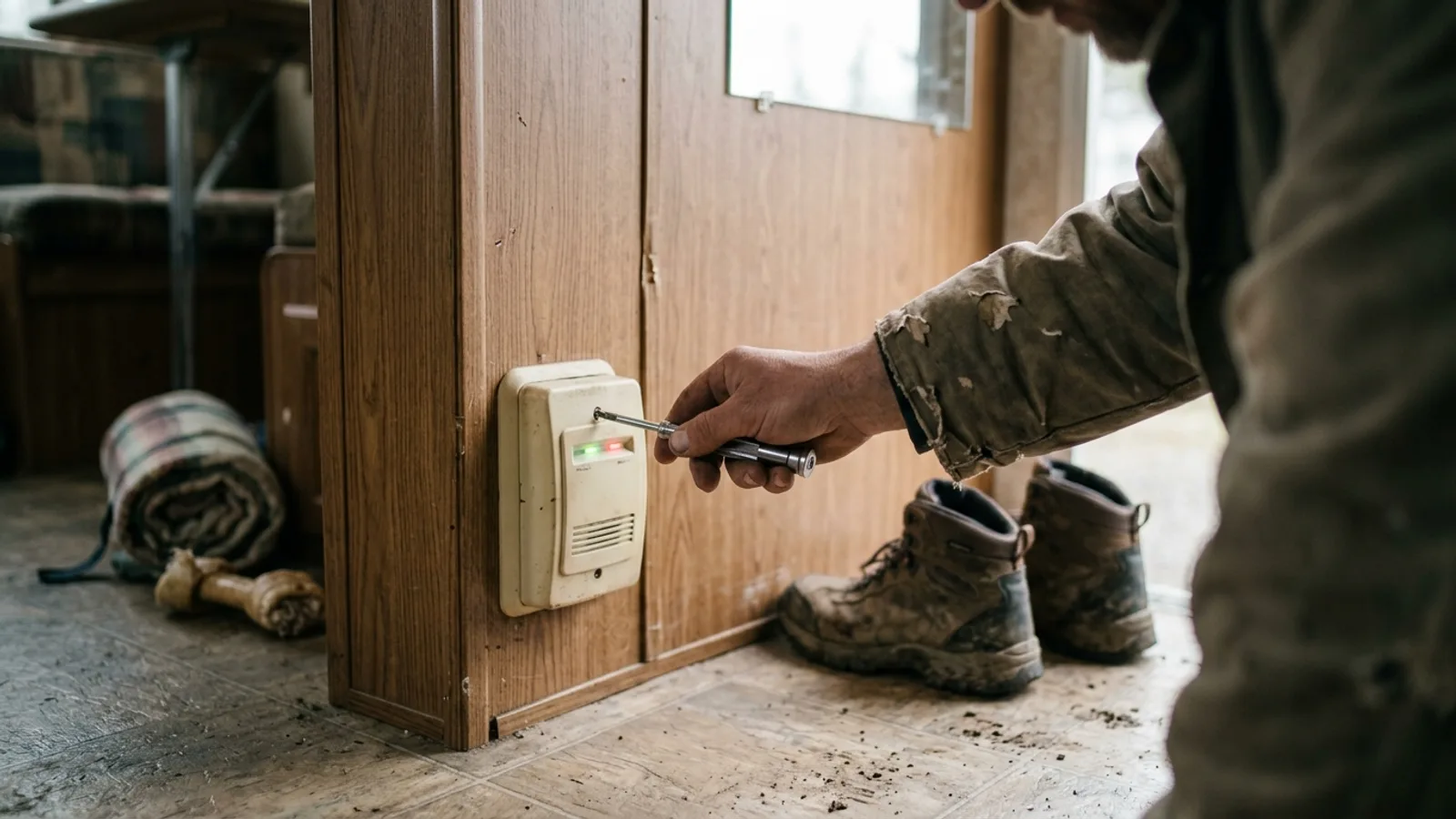
The sensor needs open air around it to work. Bags, storage bins, pet bedding, or anything else pushed up against or over the unit can interfere with normal readings and cause erratic beeping. Keep a clear zone around the detector, and if you travel with pets, make sure they can't block or knock into it.
Dust and Grime on the Sensor
Over time, dust, cooking residue, and general grime can coat the sensor element and cause false or inconsistent readings. Periodic cleaning helps: with the unit powered down, gently clear the vents and surface using a soft brush or a vacuum's brush attachment, avoiding liquids or solvents unless the manufacturer's instructions say otherwise. Let it power back up and confirm it settles into normal operation.
An Aging Detector
Combustible gas sensors don't last indefinitely. They degrade with age and eventually become unreliable, which is why many models are designed to signal, through a distinct beep pattern, when they've reached end of life. Check the unit for a manufacture or expiration date, and if it's well into its service life or beeping in a pattern that doesn't match a leak or low battery, plan on replacing it. When installing a new one, follow the manufacturer's mounting location and wiring instructions exactly, since placement affects how well it detects propane, which is heavier than air and settles low.
Low RV Battery or Power Fluctuation
Many propane alarms are wired into the RV's 12-volt system and can behave erratically, or beep a low-power warning, if that supply drops or fluctuates. Check your house battery's charge level and connections, and confirm the alarm is getting steady power. If you routinely camp without shore power or a generator, keeping the battery properly charged and monitoring its voltage will prevent a lot of nuisance alarms.
When It Might Be a Real Leak
If the alarm keeps sounding after you've ruled out aerosols, obstructions, dust, age, and power issues, or if you notice a sulfur-like "rotten egg" smell (the additive used to make propane detectable), treat it as a potential leak. Follow the safety steps above: gas off, flames out, ventilate, evacuate, and don't restore power or flame sources until a professional has checked the system.
Small leaks are still worth taking seriously. Propane is heavier than air, so it can pool in low areas of the RV rather than dispersing, and a small accumulation is enough to create a fire or explosion risk in an enclosed space.
Keeping the Alarm Reliable Long-Term
- Clean the sensor area on a regular schedule, not just when it starts acting up.
- Keep aerosols, strong cleaners, and clutter away from the unit.
- Check the battery and electrical connections periodically, especially before longer trips.
- Note the detector's age and replace it proactively rather than waiting for it to fail.
- Test the alarm using its built-in test function on a routine basis, not only when troubleshooting.
The Bottom Line
A beeping propane alarm is usually caused by something simple: an aerosol, a blocked vent, dust, a weak battery, or an aging unit. But because the alternative is a genuine gas leak, the right habit is to rule out the harmless explanations methodically rather than silencing the alarm and moving on. When in doubt, treat it as real, get everyone to safety, and have the system checked before you use propane appliances again.