How to Refill Your Fresh Water Tank While Camping
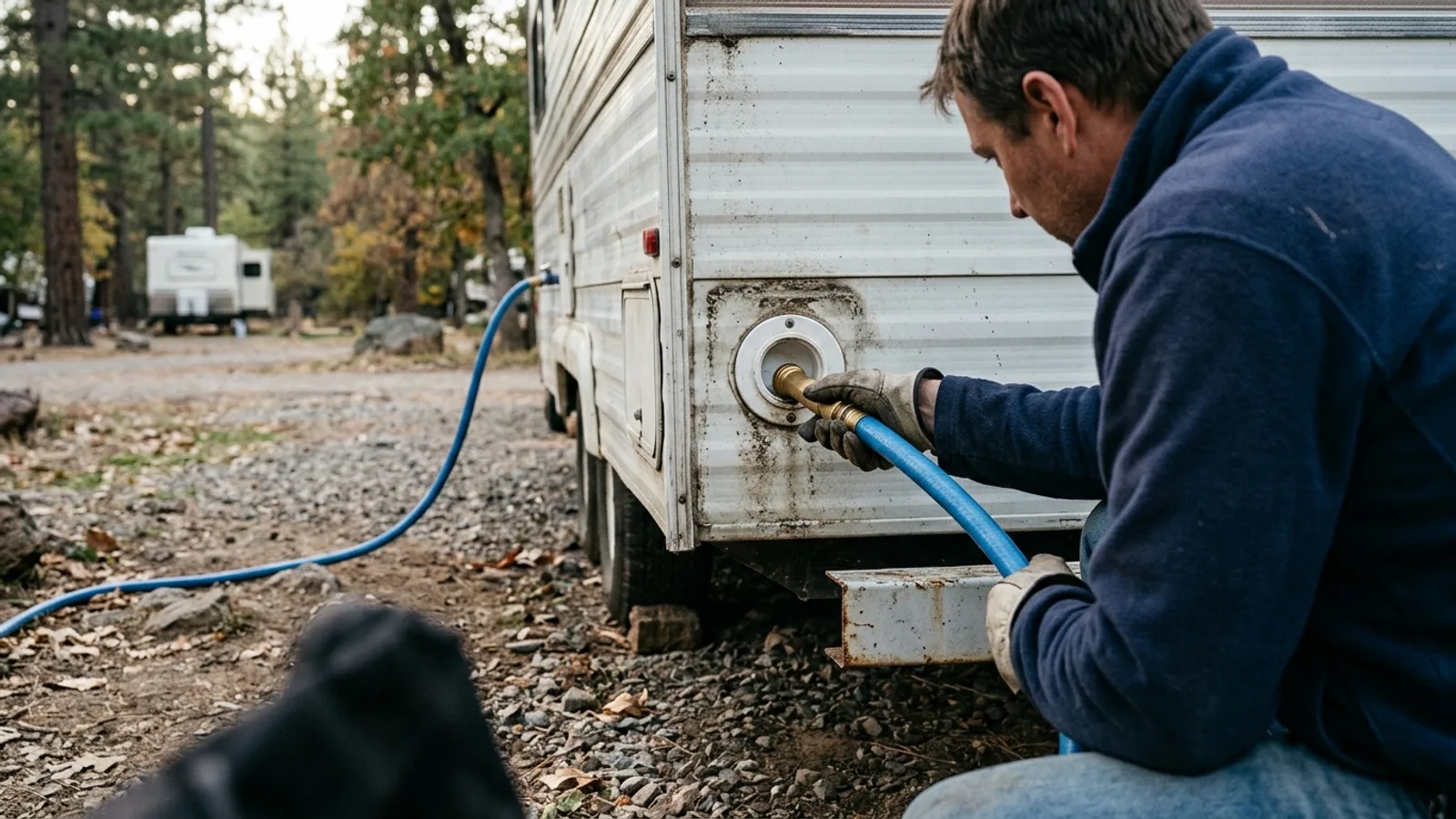
Keeping your fresh water tank topped off is one of the more routine chores of camping, but doing it well means knowing your options before you need them. Here's how to refill safely, whether you have a hookup, a pump, or nothing but gravity and a jug.
Refilling at a Faucet or Hookup
The simplest way to fill a tank is through a direct connection to a potable water source. Use a hose that's rated specifically for drinking water — a standard garden hose can leach chemicals into your water and shouldn't be used for this purpose.
Connect one end to the water source and the other to your rig's fresh water fill inlet, not the city water inlet (those are different connections; the fill inlet leads to the tank, while city water pressurizes your lines directly). Turn the water on at a moderate flow and stay nearby so you can shut it off as soon as the tank is full — many tanks vent or overflow audibly when they reach capacity, so listen for a change in sound.
Store your drinking water hose separately from any hose used for rinsing tanks or other chores, and cap the ends when not in use to keep them clean.
Finding Water Sources on the Road
Not every campsite has an individual hookup, but potable water is usually not far away. Common sources include:
- Campground fill stations: Many campgrounds have a shared spigot near the entrance or in a utility area, even if individual sites don't have hookups.
- Dump stations: Facilities built for emptying waste tanks frequently include a separate potable water tap for filling. Look for signage distinguishing the fresh water tap from the waste disposal area, and never let a hose touch the ground near the dump station or contact wastewater equipment.
- Travel centers and rest areas: Larger fuel and travel stops along highways often have a water spigot for travelers, though access and location can vary by site.
- Park visitor centers and campgrounds: Public lands with developed campgrounds often provide potable water at central taps, though some backcountry or primitive sites have no treated water at all — check ahead if you're headed somewhere remote.
Call ahead or check a campground's website before you arrive if water access will determine your route. Some locations post whether their water is drinkable or for non-potable uses like washing only — take those labels seriously.
Using a Pump
Many RVs have a built-in water pump that pressurizes the lines once the tank is filled, but a separate transfer pump can also be used to move water from external jugs or containers into the tank itself. This is useful if you're carrying your own water supply rather than relying on a hookup.
A small portable transfer pump typically runs off a 12-volt power source, such as a vehicle battery, and uses a hose to draw water from a container and push it into the tank's fill inlet. This method is faster than pouring by hand and reduces spills, since the pump controls the flow rate.
If you use a transfer pump, dedicate it to drinking water only, and rinse the hoses after each use so algae or mineral buildup doesn't develop over time.
Refilling by Gravity
Without a pump or hookup, you can still fill a tank using gravity alone. Set a water container above the level of the tank's fill inlet — on a tailgate, table, or other elevated surface — and run a hose or funnel from the container down into the inlet.
Gravity flow is slower than a pressurized fill, so budget more time, and check the tank level periodically so you don't overflow it. This method requires no power and no special equipment beyond a container and a length of hose, which makes it a reliable backup when other options aren't available.
Water Safety Basics
Not all water labeled as available is necessarily safe to drink without treatment. If you're unsure about a source's quality, use a portable water filter or purification method suited for drinking water, or rely on bottled water instead.
Rinse and sanitize your fresh water tank periodically, especially if it sits unused for extended periods, since stagnant water can develop odors or support bacterial growth. A simple routine of draining, flushing, and refilling before each trip goes a long way toward keeping your water supply reliable and pleasant to use.