How to Tell If Your RV Converter Is Charging the Battery
What an RV Converter Does
An RV converter takes incoming AC power — from shore power or a generator — and steps it down to DC power that your RV's house battery can store and use. This is what lets your lights, water pump, fans, and other 12-volt systems run whether or not you're plugged in.
Many converters also include a battery charger stage, sometimes with multiple charging modes that adjust voltage and current as the battery fills up. This helps the battery charge faster early on and avoids overcharging as it approaches full.
Because the converter typically powers your RV's 12-volt circuits at the same time it charges the battery, it's not always obvious just by looking whether charging is actually happening. That's why checking a few specific signs matters.
Signs Your Converter Is Charging the Battery
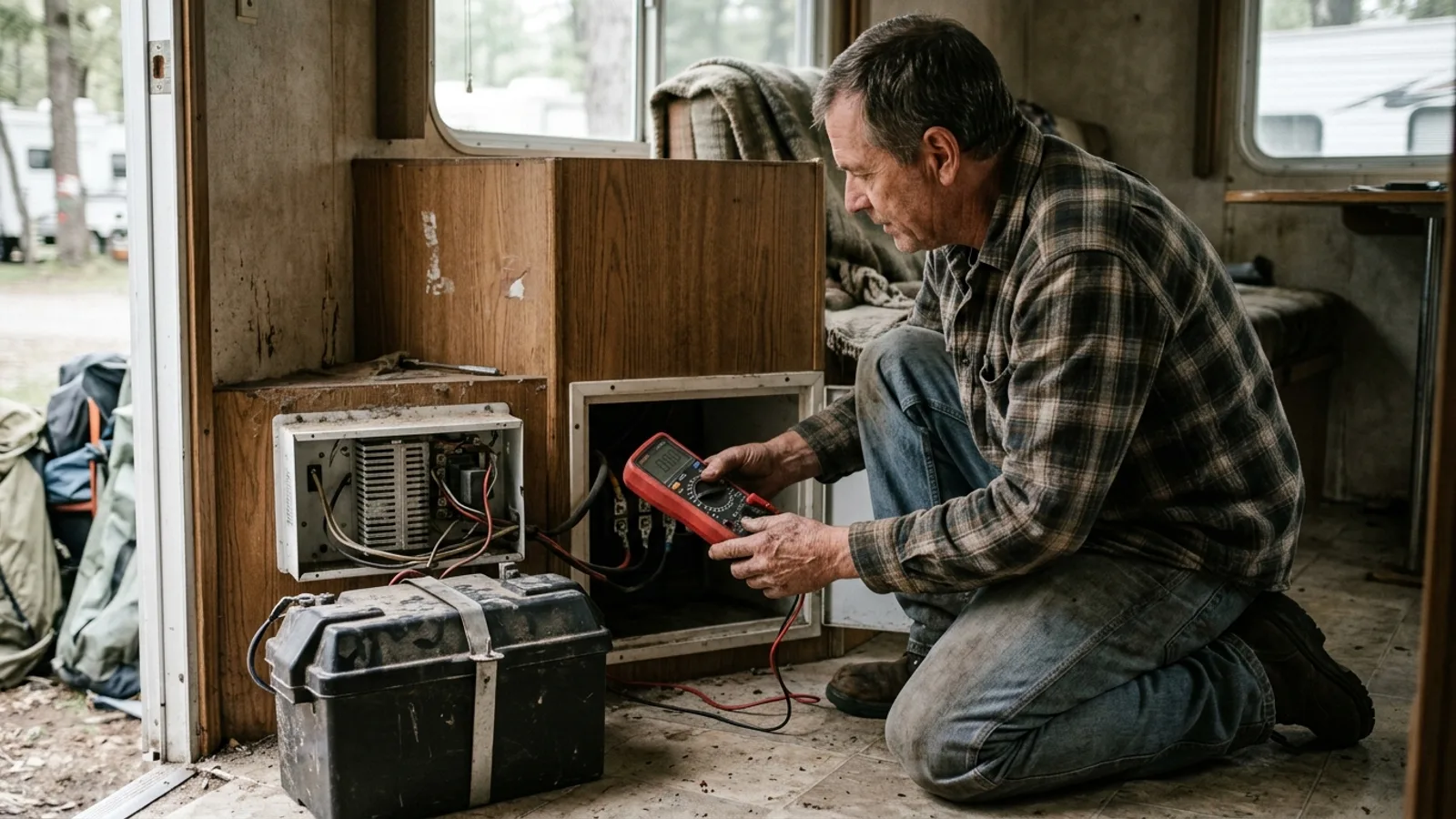
The most reliable way to confirm charging is with a multimeter on the battery terminals. With the converter powered and connected, a healthy charging voltage on a standard lead-acid or AGM battery is noticeably higher than the battery's resting voltage — generally in the mid-13 to low-14 volt range, depending on the charger's stage and the battery chemistry. A reading stuck at or below normal resting voltage (around 12 to 12.6 volts) while plugged in suggests the converter isn't actively charging.
Other useful, if less precise, indicators include:
- Indicator lights: Most converters have a status light that stays lit steadily when connected to power. Flickering, unlit, or blinking lights (depending on what your unit's manual says that pattern means) can point to a problem.
- Fan operation: Many converters run a cooling fan when actively charging under load. Hearing it cycle on periodically is a reasonable sign the unit is working, though some converters are fanless or run silently at low loads.
- Battery behavior over time: A battery that steadily loses charge while the RV is plugged in and not drawing unusual loads is a clear sign the converter isn't keeping up, even if lights and fan seem normal.
Because indicator lights and fan noise vary by manufacturer and model, a voltage reading is always the most trustworthy check.
Troubleshooting a Converter That Isn't Charging
Check the Shore Power Connection
Start with the basics: confirm the RV is plugged into a live outlet, the shore power cord and connections are undamaged, and any inline breakers or GFCI outlets haven't tripped. A converter can't charge anything if it isn't receiving power.
Inspect Battery Terminals and Connections
Corrosion or loose connections at the battery terminals are one of the most common causes of poor charging. Disconnect the battery, clean the terminals and cable ends with a wire brush and a mild cleaning solution made for battery corrosion, then reconnect securely.
Test the Battery Itself
An old, deeply discharged, or damaged battery may not hold or accept a charge properly regardless of how well the converter is working. A multimeter reading well below normal resting voltage, or a battery that won't climb in voltage after extended charging, often points to the battery rather than the converter.
Look at the Circuit Breaker or Fuse
Converters are usually protected by a breaker or fuse on the DC side, the AC side, or both. A tripped breaker or blown fuse will stop charging entirely. Check these before assuming a more serious internal fault.
Check for Overheating or Airflow Blockage
Converters generate heat while charging and rely on airflow (and sometimes a fan) to stay within safe operating temperatures. If the unit is mounted in an enclosed space with poor ventilation, it may reduce output or shut down to protect itself. Make sure vents aren't blocked by storage items.
Consider Internal Component Failure
Converters contain components — diodes, resistors, circuit boards — that can fail with age or heat exposure. Repairing these internal parts generally requires electrical knowledge and the right test equipment. If basic checks don't resolve the issue, this is the point where a qualified RV technician or mobile RV repair service is the safer route, since working inside a converter involves both AC and DC circuits.
How Long Charging Takes
Charging time depends heavily on how depleted the battery is, its capacity, and the converter's charging output. A lightly discharged battery might return to a full charge in a few hours, while a deeply discharged battery can take the better part of a day or longer.
Rather than relying on a fixed number, use voltage as your guide: charging is complete when the battery holds a steady, appropriate resting voltage after being disconnected from the charger for a period of time. Topping off a battery slowly is generally gentler on it than fast, high-current charging.
Maintaining Reliable Charging
Routine care goes a long way toward avoiding charging problems in the first place:
- Periodically inspect and clean battery terminals, especially before longer trips.
- Keep the converter's ventilation area clear of stored items.
- Avoid letting batteries sit fully discharged for extended periods, which shortens their usable life.
- Check shore power cords and connections for wear or damage before each use.
If your RV sits unused for long stretches, consider how the battery is maintained during storage — a battery left disconnected and unattended for months will often need attention before your next trip regardless of how well the converter performs.