RV vs. Trailer: How to Choose the Right Camping Rig
What Counts as an RV
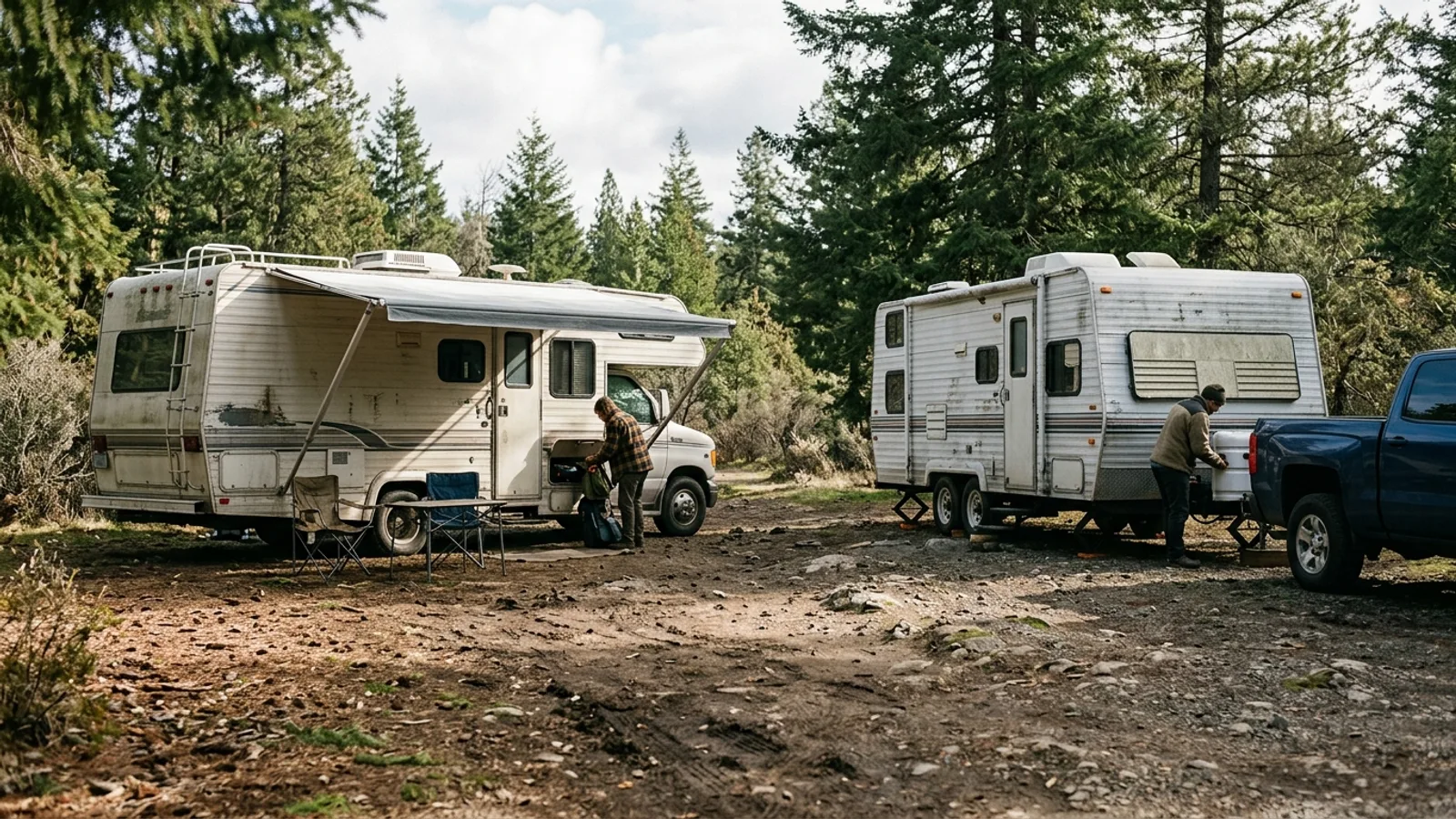
"RV" is short for recreational vehicle, and it covers two broad categories: motorized vehicles you drive, and towable units you pull behind a separate vehicle. A motorhome has an engine and living quarters built into one chassis. A towable, often just called a trailer, has no engine of its own and depends entirely on the tow vehicle to move it.
Both categories are built around the same basic idea: a self-contained space with sleeping, cooking, and often bathroom facilities, so you can travel without depending on hotels or restaurants.
Types of Towable Trailers
Travel Trailers
Travel trailers attach to a hitch on the tow vehicle's frame or bumper. They range from small, lightweight units that a midsize SUV can pull to larger models with separate bedrooms and full kitchens. Because they detach easily, you can park the trailer at a campsite and use the tow vehicle for day trips without breaking camp.
Fifth Wheels
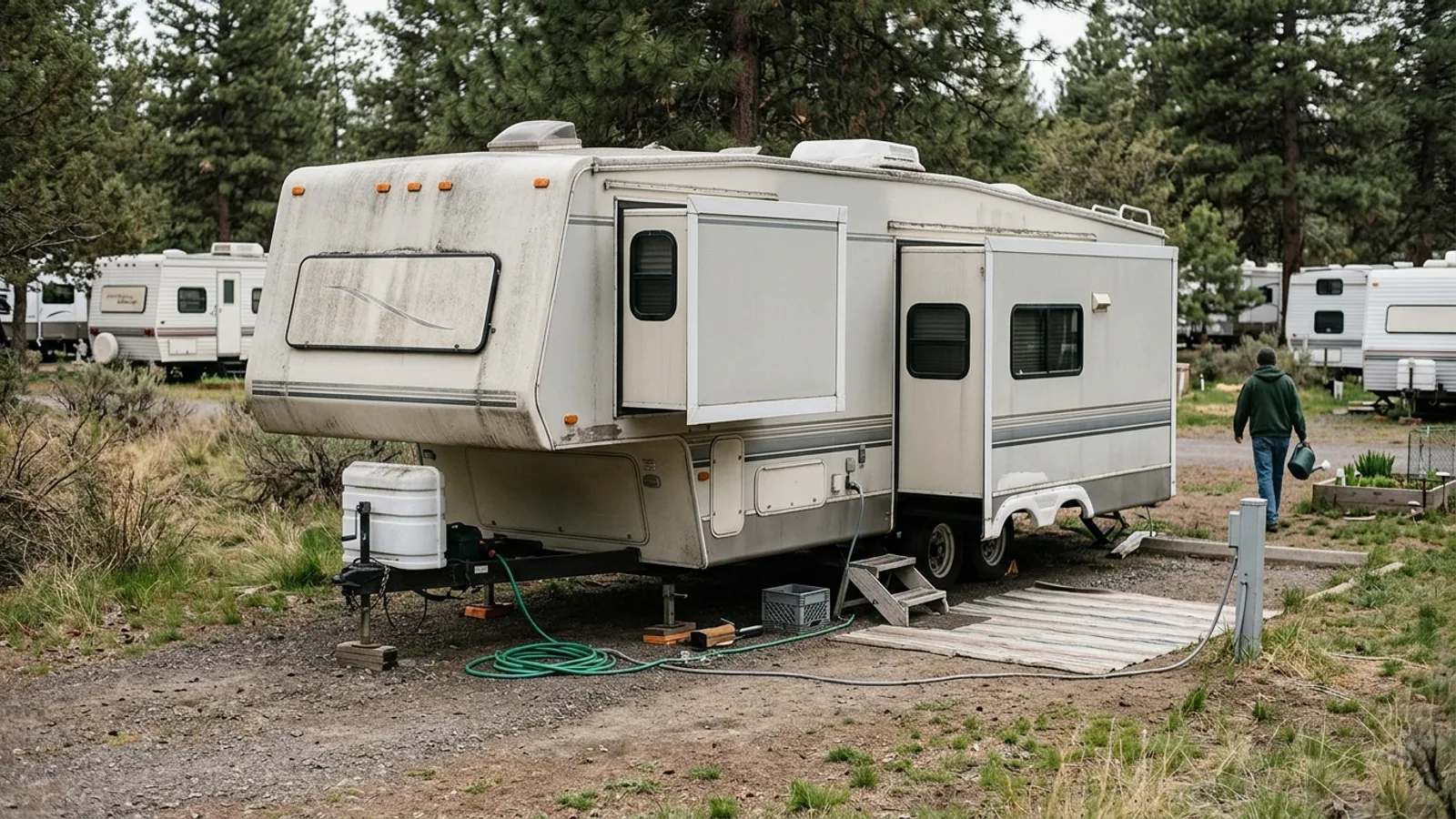
Fifth wheels use a hitch mounted in the bed of a pickup truck rather than at the rear bumper. This hitch point sits over or ahead of the truck's rear axle, which generally gives a more stable, controlled tow than a bumper-pull trailer of similar size. The trade-off is that you need a pickup truck with the right bed and hitch setup, and the truck bed is no longer usable for hauling other gear. Fifth wheels tend to offer more interior space and sometimes multiple levels, since part of the unit extends over the truck bed.
Folding and Lightweight Camping Trailers
Folding trailers, sometimes called pop-up campers, collapse down for towing and storage, then expand at the campsite into a larger footprint with sleeping and dining space. They're lighter and easier to store than hard-sided trailers, and many can be towed by smaller vehicles. The trade-off is less insulation and weather protection than a hard-sided unit, which matters more in cold or wet conditions.
Living Comforts On the Road
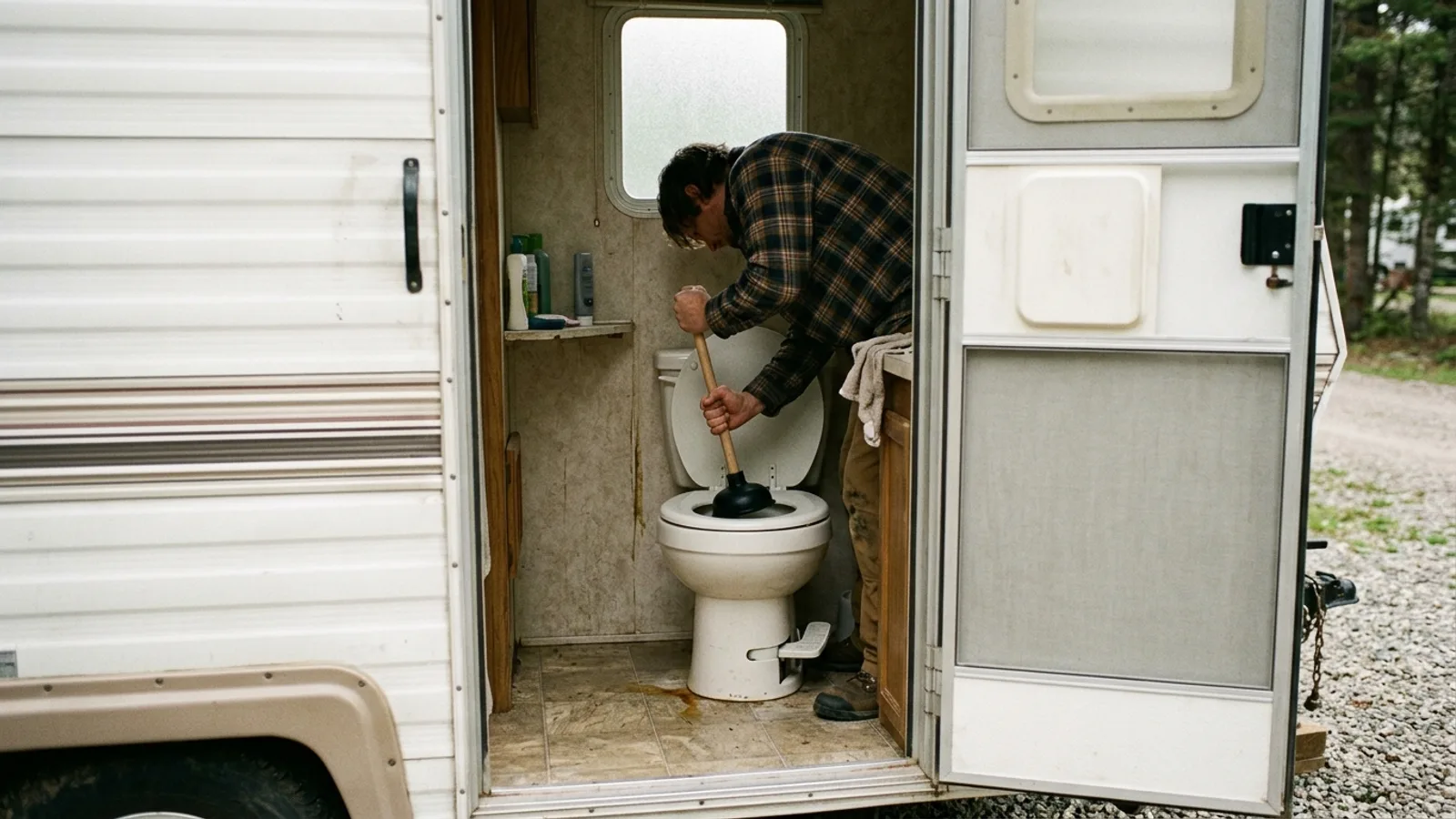
Most RVs and larger trailers include a sleeping area, a bathroom, and a kitchen. Having these onboard means fewer stops at public restrooms and more control over meals, which matters on longer trips or when traveling with kids.
A private bathroom is one of the most valued features for many owners, since it removes dependence on campground facilities that vary widely in cleanliness and availability. An onboard kitchen, even a small one, cuts down on both cost and time spent finding places to eat, and lets you accommodate dietary needs without relying on restaurant menus.
Some larger units include an outdoor kitchen: a cooking setup built into the exterior of the rig, useful for grilling or entertaining without adding heat and mess to the indoor space. This is more common on larger travel trailers and higher-end motorhomes than on compact units.
Mobility and Flexibility
A motorized RV lets you change plans without checking out of anywhere. If a spot doesn't suit you, or the weather turns, you can drive to another. This is useful for shoulder-season trips or for exploring regions with variable weather, since your lodging moves with you.
Trailers offer a different kind of flexibility: once parked at a site, the tow vehicle is free for errands, hikes to trailheads, or exploring nearby towns without moving the whole living setup. This matters if you plan to stay several nights in one place and want to come and go without breaking camp each time.
Both approaches can get you to less-visited areas, but access depends heavily on the size of your rig. Larger motorhomes and long trailers are limited by narrow roads, tight campground loops, and low clearances in some parks and forests, so check size restrictions before planning a route into remote or mountainous terrain.
Cost and Practical Considerations
Trailers are generally less expensive to buy and maintain than motorized RVs, since they have no engine, transmission, or drivetrain to service. They can also be detached and stored separately from your daily vehicle, which is useful if you don't have space for a large rig sitting in a driveway year-round.
Towing a trailer requires a vehicle rated for the trailer's weight, along with an appropriate hitch and, in the case of fifth wheels, a compatible truck bed. Before buying a trailer, check your vehicle's towing capacity and confirm it comfortably exceeds the trailer's loaded weight, not just its empty weight.
Motorized RVs consolidate cost into one vehicle but require separate transportation once you arrive at a destination, unless you tow a car behind the RV itself. That adds another set of towing considerations on top of driving the motorhome.
Choosing Between an RV and a Trailer
Consider how you'll use the rig most often:
- Full-time or long-distance travel: A motorhome offers a single, self-contained unit with no separate tow vehicle to manage, which some full-time travelers prefer.
- Basecamp-style trips: A trailer lets you park once and use your regular vehicle for side trips, which suits people who stay put for several days at a time.
- Storage and budget: Trailers are usually cheaper to buy, insure, and store, but require a suitable tow vehicle you may already own or need to acquire.
- Driving comfort: Driving a motorhome means learning the handling of a larger single vehicle. Towing a trailer means learning to back up, turn, and judge clearance with a vehicle-and-trailer combination, which some drivers find takes more practice.
Towing and Driving Differences
Motorhomes drive like a single large vehicle. The main adjustments are wider turns, longer stopping distances, and awareness of overhead clearance for bridges, drive-through canopies, and low branches.
Trailers add the complexity of a hinge point between two vehicles. Backing up requires turning the steering wheel in the opposite direction from what feels intuitive at first, and wide turns need to account for the trailer cutting the corner more sharply than the tow vehicle. Practicing in an empty parking lot before a real trip helps build comfort with backing, turning, and judging mirrors before you're doing it at a crowded campground entrance.
Whichever you choose, check that your tow vehicle's mirrors give a clear view down both sides of the trailer, and confirm your hitch, brakes, and lights are matched to the trailer's weight before you leave home.
Making the Decision
There's no universally "better" option between an RV and a trailer. The right choice depends on how often you travel, how long you stay in one place, what vehicle you already own or are willing to buy, and how comfortable you are learning to tow or drive a larger vehicle. Matching the rig to your actual travel pattern, rather than to the most feature-packed option, tends to produce the most satisfying ownership experience.