Pop-Up Campers: Types, Sizes, and What to Know Before You Buy
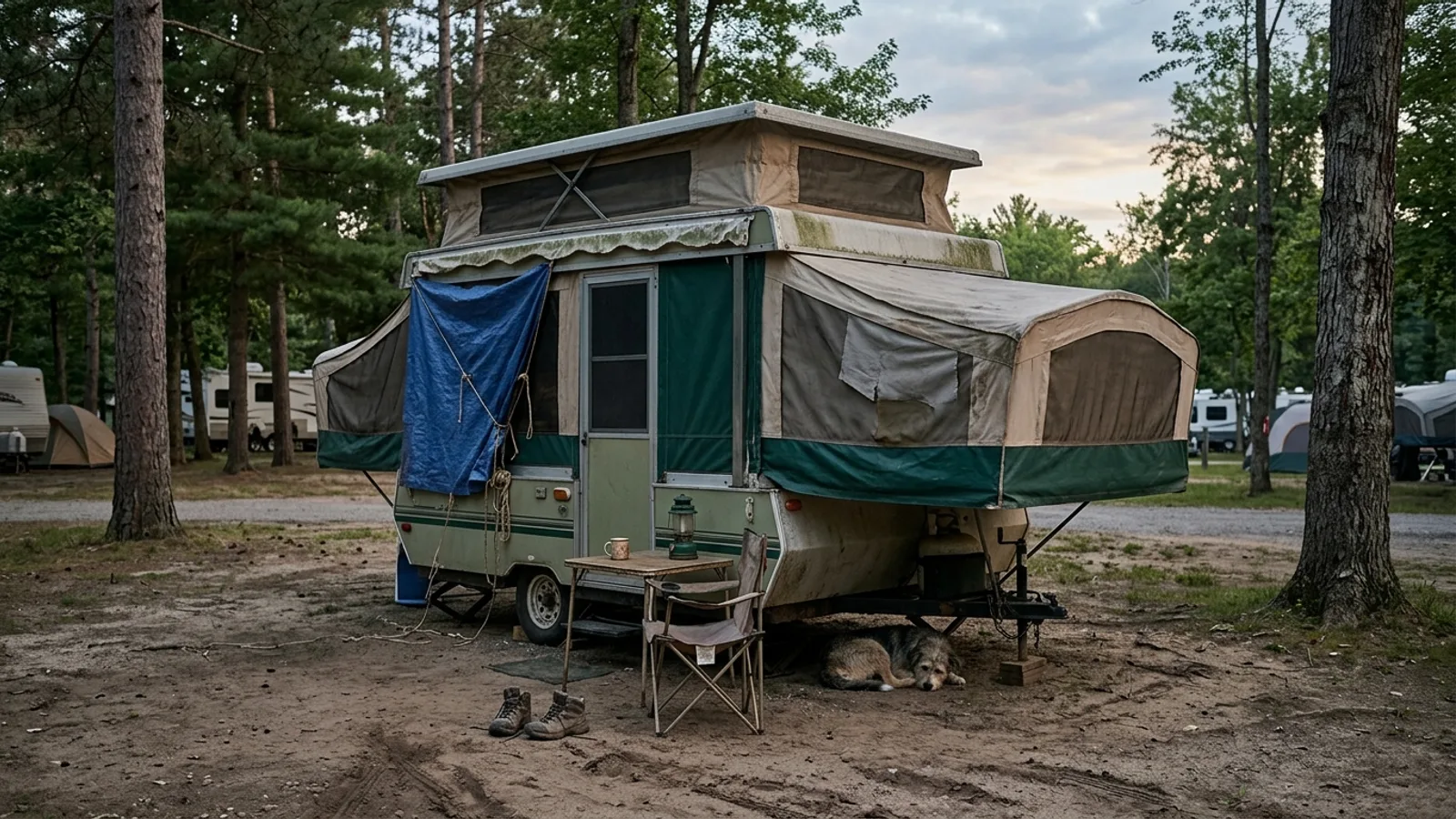
A pop-up camper is a towable trailer with a low, compact profile for travel that expands at the campsite into a larger living space, usually with canvas or soft-sided walls that fold or crank upward. They sit between tent camping and a full hard-sided RV, giving you a real bed and some shelter from weather without the size, weight, or cost of a larger trailer.
Types of Pop-Up Campers
Pop-up campers vary quite a bit in structure and purpose. Knowing the main styles will help you figure out which fits your trips.
High-Wall Pop-Up Campers
These have solid, rigid side walls up to a certain height, with a canvas section above that expands upward. The solid lower walls add durability, better insulation, and more security than an all-canvas design, while keeping weight and towing size manageable.
Folding Tent Trailers
The classic pop-up style: a low box that unfolds into a large canvas tent structure with bed ends extending outward. They are light, easy to tow, and inexpensive to maintain relative to hard-sided trailers, but the fabric walls mean less insulation, more noise from wind and rain, and more upkeep to prevent mold or wear over time.
Toy Hauler Pop-Ups
These combine sleeping space with a rear cargo area for hauling small gear like bikes or off-road vehicles. They tend to be larger and heavier than standard pop-ups, so check your tow vehicle's rated capacity carefully before choosing one.
Off-Road and All-Terrain Pop-Ups
Built with reinforced frames, higher ground clearance, and rugged suspension, these are designed for reaching remote or rough campsites that standard trailers can't handle. They usually still fold down compact for towing but trade some interior space and affordability for durability off pavement.
A-Frame Pop-Ups
These fold into a small, tapered footprint and pop up into a tall, roomy structure, often combining solid walls with a lifting roof. They tend to offer a good balance of interior space, weather protection, and relatively simple setup compared to full canvas tent trailers.
Inflatable Pop-Up Trailers
Instead of a crank or manual lift, these use air-filled beams or bladders to raise the structure, cutting setup time significantly. They are generally light and simple to tow, though the inflation system is a mechanical component that needs occasional care and inspection like any other seal or valve.
Advantages of Pop-Up Campers
Pop-up campers appeal to a lot of campers for practical reasons:
- Lighter towing: Many models can be towed by smaller SUVs or crossovers rather than requiring a full-size truck.
- Compact storage: Their folded profile takes up less space in a driveway or storage lot than a hard-sided trailer.
- Closer to nature: Canvas walls let in more outside sound and air, which many campers enjoy as a middle ground between tent camping and a sealed RV.
- Lower cost of entry: Compared to larger travel trailers, pop-ups are generally a more affordable way to get off the ground and out of the weather.
Disadvantages of Pop-Up Campers
- Temperature control: Soft walls insulate poorly, making pop-ups less comfortable in very hot or very cold weather.
- Setup time: Raising and lowering the camper, securing canvas, and leveling takes longer than parking a hard-sided trailer.
- Limited privacy and sound insulation: Thin walls mean noise travels easily, both in and out.
- Storage space: Interior storage is usually tighter than in larger RVs, so packing efficiently matters more.
- Limited or no onboard bathroom: Many pop-ups rely on a portable toilet or campground facilities rather than a built-in bathroom.
Common Features and Amenities
Feature sets vary a lot by model, but most pop-up campers fall into a few tiers.
Basic Features
- A bed platform, often at each end of the trailer
- A dinette that can convert to additional sleeping space
- A small icebox or cooler space
- A propane stovetop for cooking
Additional Features on Larger or Higher-End Models
- A sink with manual or pressurized water
- Fresh and gray water tanks
- A toilet or shower, sometimes in a wet-bath style compartment
- Interior lighting run off a battery system
- Air conditioning or heating units
Some models include slide-outs or a secondary raised section that adds floor space once parked, which can make a real difference in comfort for longer stays.
Choosing the Right Size
Start with how many people will regularly sleep in the camper and how much gear you typically bring. A camper that technically sleeps a given number of people may feel cramped once you add bags, coolers, and rainy-day downtime.
Check your tow vehicle's rated towing capacity, and make sure the camper's loaded weight — not just its base weight — fits comfortably within that limit. Loaded weight includes water, propane, gear, and any built-in appliances.
If you're considering a used pop-up, inspect the canvas closely for tears, mildew, and sun damage, and check the lift or inflation system to be sure it raises and lowers smoothly and locks securely at full height. Look over the frame and wheel wells for rust or impact damage, since these can signal a harder life on the road than the interior might suggest.
Finally, think honestly about how much setup time and physical effort you're willing to put in at each stop. A camper that's a great fit on paper can become a burden if raising and lowering it feels like a chore every time you make camp.