How to Measure a Travel Trailer Correctly
A travel trailer's length isn't one number. Manufacturers, campgrounds, storage facilities, and insurers may each mean something different when they ask for "length," and using the wrong figure can leave you turned away from a site or short on storage space. Here's how to measure your trailer the right way and know which number to use when.
Key Terms You Need to Know
Interior length is the usable living space inside the trailer, measured from the inside of the front wall to the inside of the back wall. This is what tells you how much room you actually have to live in, but it's rarely the number anyone else asks for.
Exterior length (sometimes called body length or box length) is the length of the trailer's body itself, not counting the tongue or hitch. Some manufacturers use this number in marketing, which can make a trailer look shorter than it really is when hitched up.
Overall length is the measurement that matters most for camping and travel. It runs from the very front of the coupler or hitch to the back of the trailer, including bumpers, spare tire carriers, ladders, generator boxes, or any other rear-mounted equipment. This is the number campgrounds, ferries, and low-clearance routes generally want.
If you tow with a vehicle, the combined length of tow vehicle plus trailer matters too, especially for parking, some campground pull-through sites, and certain state length limits on combined rigs.
How to Measure Overall Length
- Park the trailer on level ground and make sure it's hitched or unhitched consistently with however you plan to record the number.
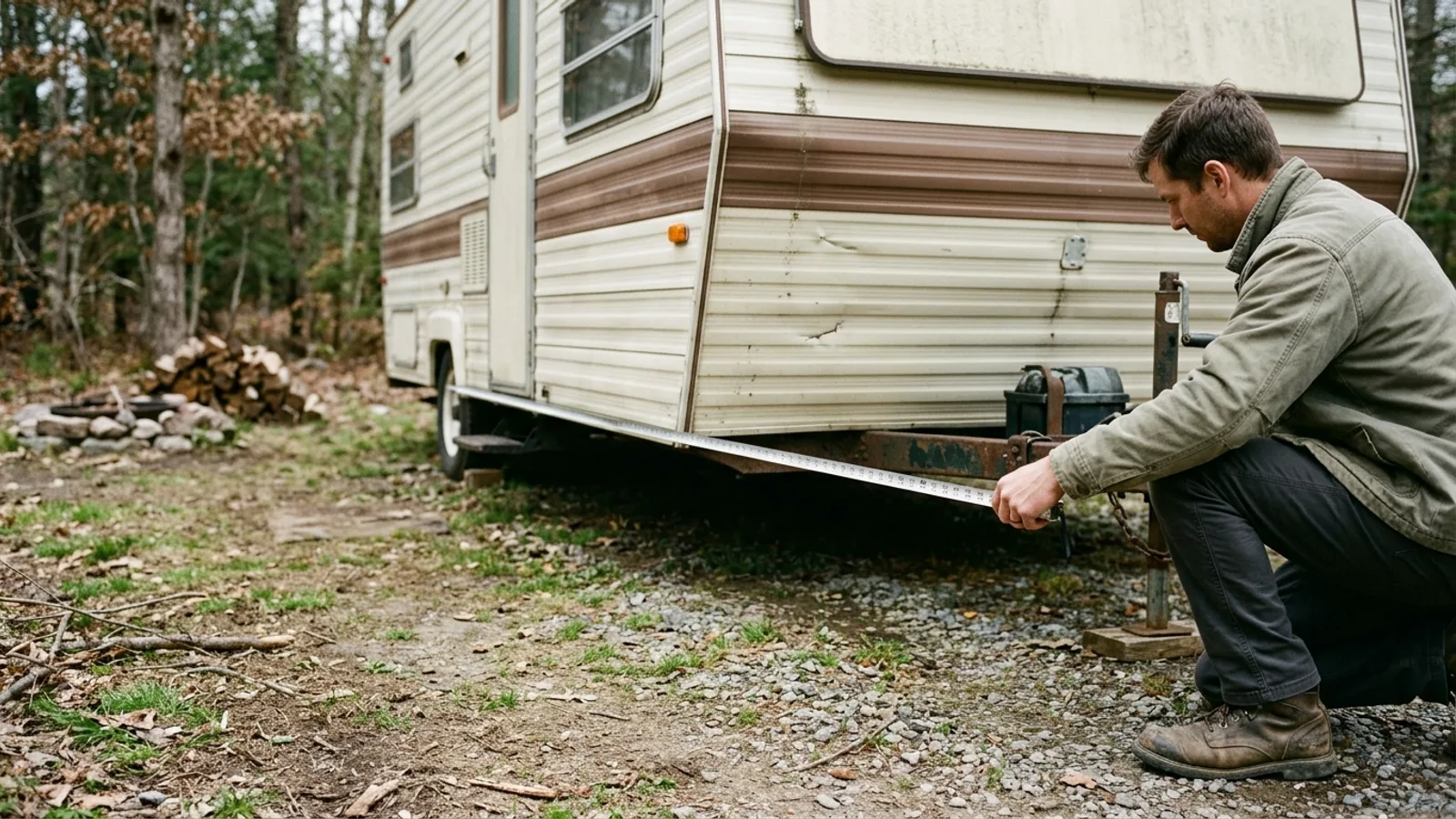
- Use a long tape measure or a measuring wheel for accuracy over long distances; a fabric or retractable tape can sag or give an imprecise reading over 20+ feet.
- Measure from the very front of the coupler (the part that latches onto the hitch ball) to the furthest point at the rear of the trailer, including any bumper-mounted racks, spare tires, or ladders.
- If the trailer has a fold-down tongue jack or an adjustable coupler, measure it in the position you'd normally tow with, since this can add or subtract a few inches.
- Round up, not down. When in doubt, add a small buffer to whatever number you record so you're never caught short at a gate or site marker.
Measuring Height and Width
Length gets the most attention, but height and width matter just as much for clearance and lane restrictions.
Measure height from the ground to the highest point of the trailer, including air conditioners, vents, and antennas — not just the roofline. Do this with tires properly inflated, since sagging or underinflated tires change the reading.
Measure width at the widest point, which is often the mirrors on the tow vehicle or awning arms on the trailer, not the trailer body itself.
Why Accurate Measurements Matter
Campsites and Routes
Campground listings often state a maximum RV length for each site. Booking based on your overall length, not your interior or exterior length, prevents arriving to find your rig doesn't fit the pad, pull-through, or turning radius.
Storage
Storage facilities size their units and lots by overall length as well. Bring your measurement with you or provide it when reserving a unit to avoid picking a space that's too tight.
Towing Safety
Knowing your trailer's length helps with route planning, especially around tight turns, mountain switchbacks, and low-clearance underpasses. Length also affects sway and how much runway you need for lane changes and merging, so it's worth knowing before you're on the road, not while you're already towing.
Insurance
Insurers may ask for length as part of determining coverage. Keeping an accurate, updated measurement on file — especially after adding a rack, ladder, or other rear-mounted accessory — helps avoid discrepancies if you ever need to file a claim.
Don't Forget Weight
Length isn't the only number that matters for towing. Your trailer's loaded weight needs to stay within your tow vehicle's rated towing capacity and your hitch's rated capacity. The best way to know your actual loaded weight, not just the manufacturer's dry weight estimate, is to weigh the fully loaded trailer at a certified scale, such as those found at many truck stops. Weighing loaded, with all your gear, water, and propane aboard, gives a far more realistic number than the weight listed on the trailer's spec sheet.
Practical Tips
- Keep your overall length, height, width, and loaded weight written down somewhere you can access without cell service — a note in your glovebox or saved offline on your phone works well.
- Re-measure any time you add or remove exterior equipment like bike racks, cargo carriers, or awnings.
- When booking a campsite, check for stated length limits and consider calling ahead if your rig is close to the maximum, since posted limits aren't always updated for tight turns or low branches.
- If you're shopping for a trailer, compare listed exterior or interior lengths carefully, and ask for the overall length specifically before assuming it matches marketing figures.