Can a Camper Tip Over When Parked? Causes and Prevention
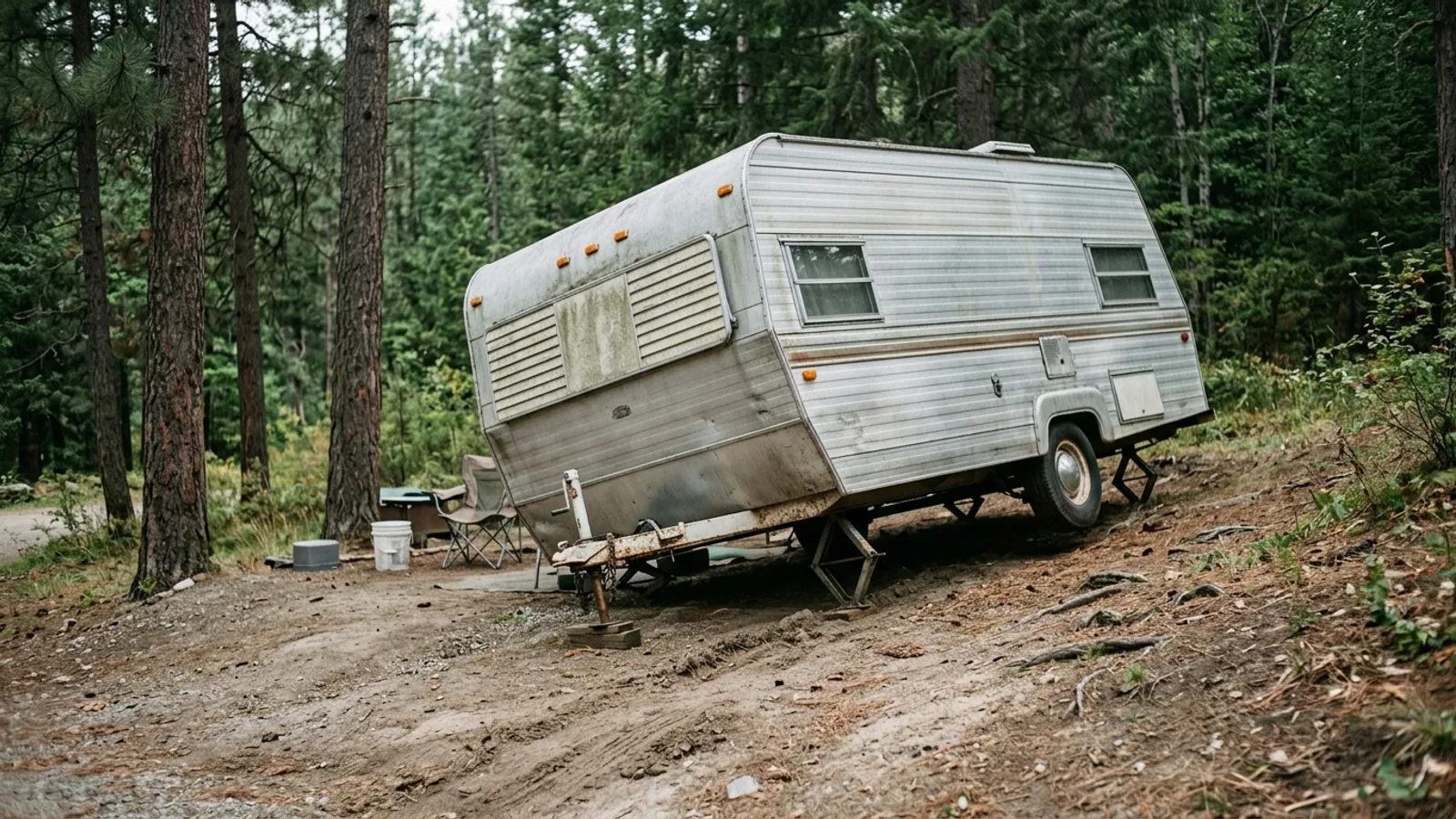
A parked camper can tip over, though it's uncommon when the unit is set up correctly. Most tip-overs trace back to a handful of preventable causes: an unlevel site, uneven weight inside the camper, wind acting on a tall broadside surface, or jacks and stabilizers that were never meant to bear that kind of load.
Why Parked Campers Become Unstable
A camper's stability depends on how its weight sits relative to its footprint. The higher and more lopsided the load, the easier it is to push past the tipping point.
Weight Distribution
Heavy items stored high or off to one side raise the center of gravity and shift it away from the middle of the frame. Keeping heavier gear low and centered, close to the axle, keeps the camper's balance point where the frame and stabilizers are designed to handle it.
Uneven Ground
A site that slopes or has a soft, uneven surface puts more load on one side of the camper than the other. Over time, or with any additional force like wind or movement inside, that lopsided load can be enough to tip the unit.
Wind
Campers present a large flat surface to crosswinds, especially pop-ups with canvas sides or units with slide-outs extended. Sustained wind or strong gusts can rock a camper and, in extreme cases, tip it, particularly if it's not solidly leveled and stabilized.
Setup and Towing Habits
Problems that start on the road often show up later when parked. Overloading a tow vehicle beyond its rated capacity, using a mismatched hitch, or towing with weight distributed poorly inside the camper can leave it more prone to instability once it's parked and unhitched.
Setting Up for Stability
Good setup habits matter more than any single piece of equipment.
- Pick a level site first. Walk the spot before parking and look for slope, soft ground, or ruts. Most campgrounds have at least a few genuinely flat, firm pads.
- Level before you unhitch. Use leveling blocks or ramps to correct side-to-side and front-to-back slope before disconnecting from the tow vehicle.
- Deploy stabilizer jacks correctly. These jacks are meant to steady the camper against rocking, not to lift or bear its full weight. Follow the placement and load guidance in your owner's manual.
- Load heavy items low and centered. Distribute weight evenly side to side, and avoid stacking heavy gear near the roof or far to one end.
- Retract awnings and slide-outs in wind. Extended awnings and slides add surface area for wind to catch and increase leverage on the frame.
Reading the Weather
Check the forecast before you set up and again before you turn in for the night. If strong, sustained wind is expected, look for a site with natural windbreaks like tree lines or terrain, and park with the camper's narrower profile facing the prevailing wind direction where possible. If conditions turn severe, it's safer to leave the site than to wait it out in an exposed camper.
On the Road
Stability problems often start before the camper is ever parked. Confirm that your tow vehicle is rated for the camper's loaded weight, not just its empty weight, and use a hitch and sway control setup appropriate for that weight. Drive at moderate speeds, leave extra following distance, and slow down well before curves or highway interchanges, since sharp steering inputs are one of the more common triggers for a swaying trailer to become unstable.
Warning Signs to Watch For
A camper rarely tips without some warning. Pay attention to:
- New creaking or cracking sounds from the frame or body, which can indicate the structure is under uneven strain.
- Rocking or swaying that's more pronounced than normal, especially if it happens without an obvious gust of wind.
- Grinding or unusual noise at the hitch while still connected, which can point to an imbalance between the tow vehicle and camper.
If you notice any of these, stop and check the leveling, stabilizer jacks, and weight distribution before continuing to use the camper.
If a Camper Tips Over
Safety comes first. Make sure everyone is clear of the camper and that it's not at risk of shifting further before approaching it. Check for hazards like a compromised propane connection or downed power lines nearby, and don't attempt to right the camper yourself if it involves significant weight or awkward leverage.
Once it's safe, document the scene with photos before moving anything, since this record is useful for any insurance claim. For the recovery itself, a towing or camper repair professional can right the unit and assess the frame, axle, and hitch for damage that isn't visible from the outside. Even a camper that looks fine after tipping is worth having inspected before it's towed or used again.