How to Keep Mice Out of Your Camper or RV
Mice are one of the most common problems in stored or seasonally used campers. They can enter through surprisingly small gaps, chew wiring and upholstery, build nests inside walls and cabinets, and leave droppings that create a genuine cleanup hazard. Keeping them out is mostly a matter of sealing the vehicle well, removing what attracts them, and checking on it regularly.
Why Campers Attract Mice
A parked camper offers exactly what a mouse looks for going into cold weather: a dry, enclosed space, insulation and soft materials for nesting, and often lingering food odors from past trips. Unlike a house, a camper usually sits undisturbed for long stretches, giving mice time to settle in without being noticed.
The underside of a camper is full of gaps where plumbing, wiring, and slide-out mechanisms pass through the floor and walls. A mouse can fit through an opening about the width of a pencil, so even a small unsealed hole is a viable entry point.
Signs Mice Have Gotten In
Check for these indicators whenever you open up a camper that's been sitting for a while:
- Droppings: small, dark, rice-shaped pellets, often clustered near food storage, drawers, or nesting spots.
- Gnaw marks: fresh chew marks on wood trim, wiring insulation, plastic bins, or fabric.
- Shredded material: insulation, paper, or fabric pulled apart and gathered into a nest, often tucked behind panels or inside cushions.
- Odor: a persistent musky smell in enclosed cabinets or closets can indicate mice have been living there.
- Noise: scratching or scurrying sounds, usually more noticeable at night, if mice are active while you're inside.
If you find fresh droppings, avoid stirring up dust when cleaning them. Ventilate the area first and dampen the area before wiping it up, rather than sweeping or vacuuming dry debris.
Sealing Entry Points
The most reliable long-term defense is physical: close off every gap a mouse could use to get in. Go over the camper systematically, both underneath and inside cabinetry, looking for places where wires, hoses, or pipes pass through an exterior wall or floor.
Common problem areas include:
- Where water, propane, or electrical lines enter the underbelly
- Around slide-out mechanisms
- Furnace and water heater vents and their surrounding trim
- Gaps around the frame where it meets the body
- Door and storage-bay seals that have worn or warped
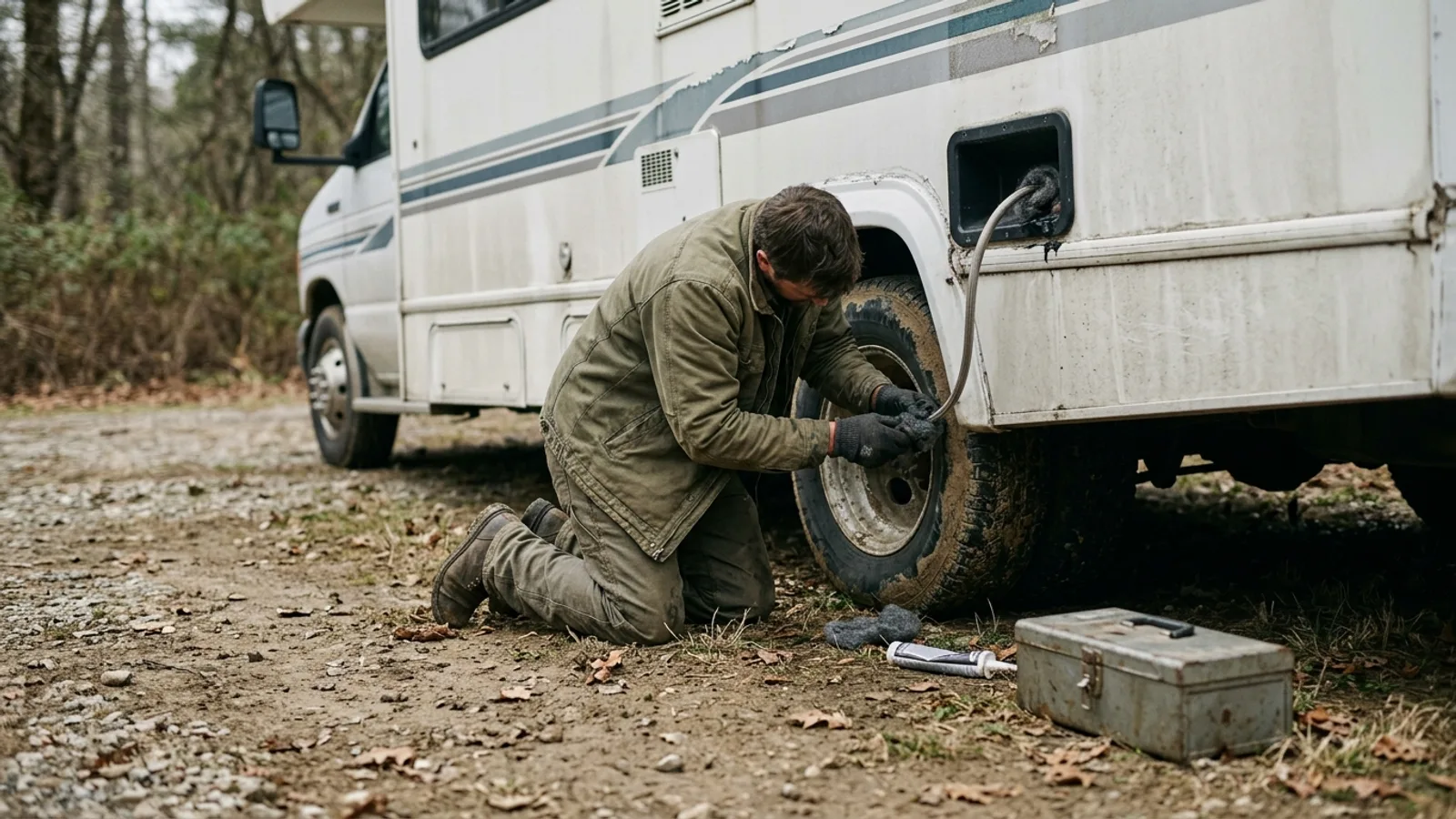
Use your hand to feel for drafts around these spots — moving air usually means a gap. Fill small gaps with a material mice can't chew through easily, such as steel wool combined with caulk, or an expanding foam rated for outdoor use. Soft foam alone is not enough on its own, since mice can chew through it; pairing it with steel wool or metal mesh makes it far more effective.
Inspect and reseal these points at least once a year, since foam and caulk can shrink, crack, or loosen with vibration from towing or driving.
Removing What Attracts Them
Before storing a camper, clear out all food, including items that seem shelf-stable, and wipe down surfaces where crumbs could collect. Store any food you do keep onboard in rigid, sealed containers rather than bags or boxes, since mice can chew through cardboard and thin plastic.
Pack away soft fabrics you're not using, or store them in sealed bins, since mice use them for nesting material. Reducing clutter in general makes a camper less appealing, since it removes hiding spots and nesting material.
Deterrents
Deterrents can add a layer of protection but shouldn't be relied on as your main defense — sealing entry points matters more than any scent or device.
Strong-scented options such as peppermint oil or dryer sheets are sometimes used as a mild repellent in cabinets or storage areas. Their effect tends to fade over time and needs to be refreshed regularly, and results vary. Ultrasonic plug-in devices are another option some owners use, though their effectiveness is inconsistent and they only work in the areas they cover, not the whole vehicle.
If you're storing a camper somewhere prone to rodent activity, physical traps checked on a regular schedule are generally more reliable than scent- or sound-based deterrents.
Ongoing Checks
Whatever methods you use, periodic checks matter most. If a camper is in storage, try to inspect it every few weeks rather than leaving it fully closed up for months. Look inside cabinets, under seating, and around the edges of the floor for droppings or new gnaw marks, and confirm that any seals or traps you've placed are still intact.
Catching a problem early, before mice have nested and reproduced, makes cleanup and repair far simpler than discovering an established infestation at the start of a new season.