Overlanding on Off-Road Trails: A Practical Guide
What Overlanding Is
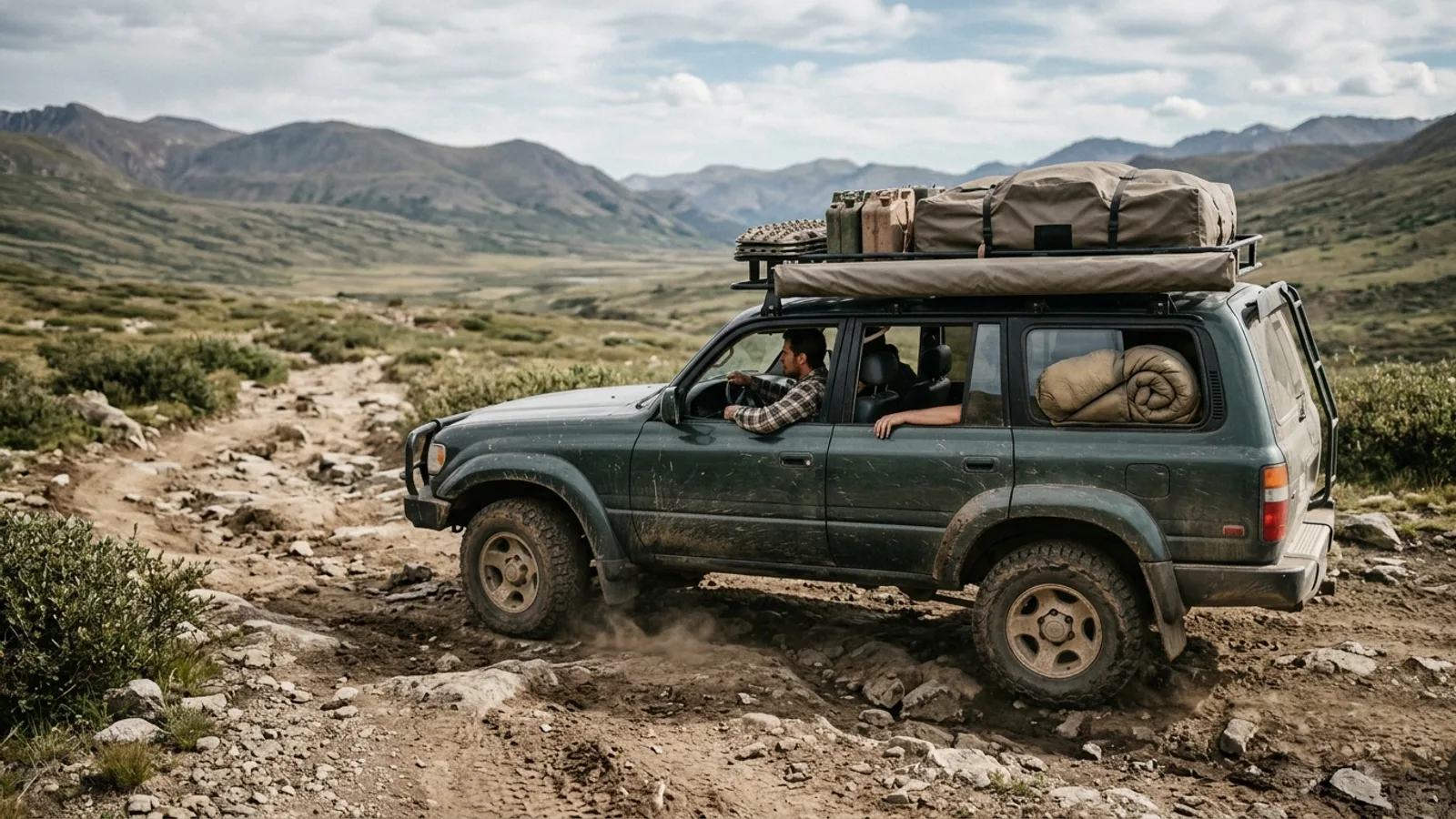
Overlanding is self-contained vehicle travel over remote or rugged terrain, usually combined with camping along the way. The point isn't just reaching a destination; it's traveling through varied terrain—dirt roads, sand, rock, river crossings—while carrying everything you need to be self-sufficient for days at a time.
It sits somewhere between a road trip and backcountry camping. You need a vehicle capable of handling the terrain, enough supplies to handle delays or emergencies, and the judgment to know when a route is beyond your skill or your rig's capability.
Choosing Terrain and Routes
Off-road trails vary enormously depending on region and season. Desert routes tend to involve sand, washboard gravel, and exposed heat with little shade or water. Mountain routes bring elevation changes, narrow shelf roads, and weather that can shift quickly. Forested and coastal routes often mean mud, roots, and softer ground that behaves differently when wet.
Rather than picking a route based on region alone, match it to your experience and vehicle's actual capability—ground clearance, tire type, and recovery gear all matter more than horsepower. Local land-management agencies or park visitor centers can tell you which roads are currently open, whether high-clearance or four-wheel drive is required, and if there are seasonal closures for wildlife, weather, or erosion control.
Start with well-traveled, well-documented routes before moving to more remote or technical ones. A trail with cell service, other travelers, and a clear path back to a paved road is a very different undertaking than one that isn't.
Vehicle Preparation
Before any trip, check the basics that matter most in remote conditions: tire condition and pressure, fluid levels, brakes, belts, and battery health. A vehicle that runs fine in daily driving can still have marginal components that fail under the stress of rough terrain and long distances from help.
Know your vehicle's clearance, approach and departure angles, and how it handles in low-traction situations before you're relying on that knowledge on a trail. Practicing recovery techniques—like using traction boards or a winch—somewhere safe and low-stakes is far better than learning them for the first time when stuck.
Carry basic tools and spare parts appropriate to your vehicle: a spare tire in good condition, a jack rated for the terrain, fuses, and any fluids specific to your engine. Know how to change a tire on uneven ground, not just pavement.
Essential Gear and Supplies
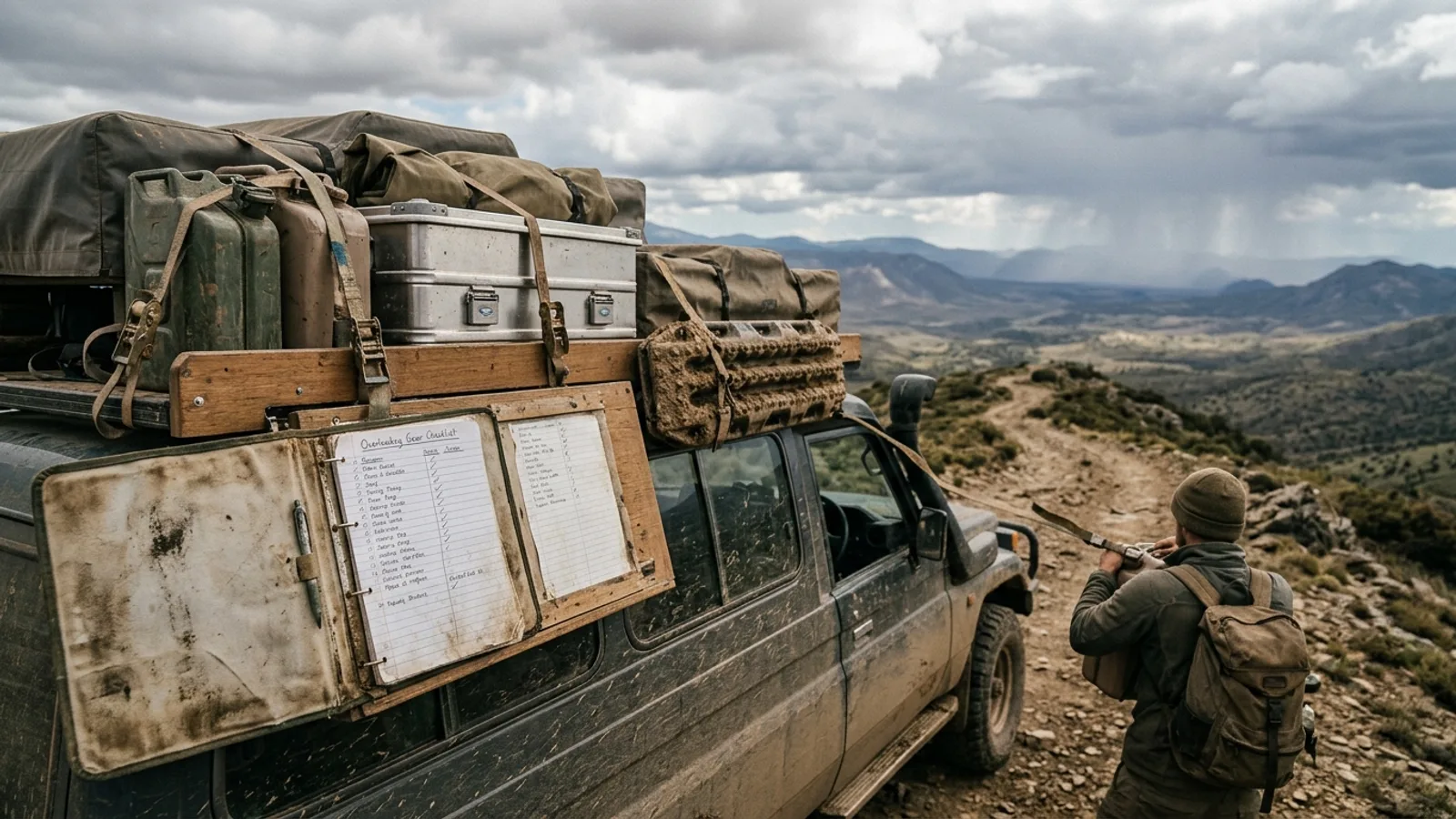
A reasonable packing list for overlanding includes:
- Navigation tools that don't depend solely on a phone signal—paper maps and a GPS device or offline maps
- A way to communicate in areas without cell coverage, such as a satellite communicator
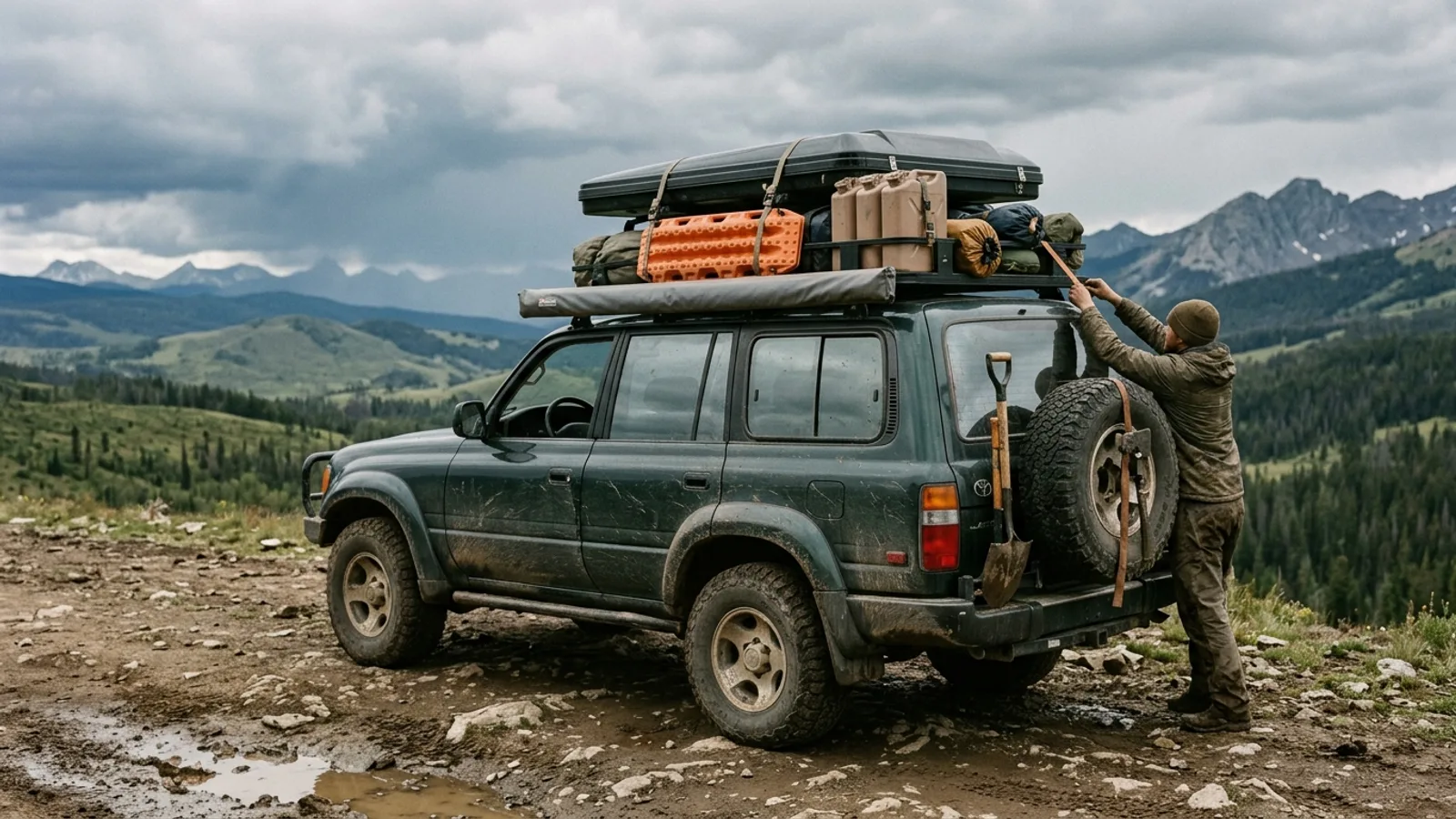
- Recovery gear suited to your terrain (traction boards, tow strap, shovel)
- Extra water beyond what you expect to need, plus a way to treat more if necessary
- Food that doesn't require refrigeration, with some buffer for delays
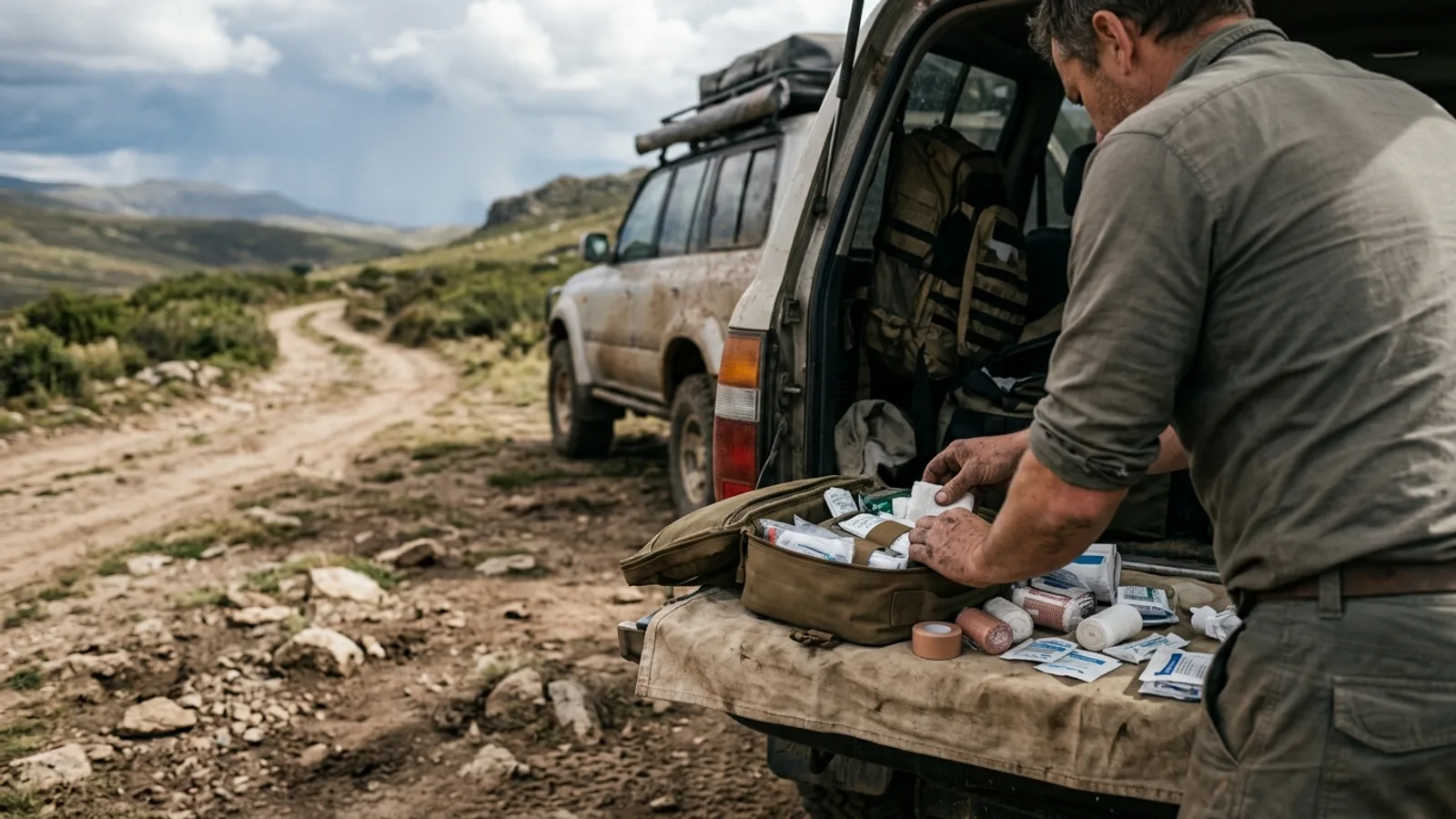
- A first aid kit, plus any personal medications
- Layered clothing for temperature swings, especially at elevation or in deserts
- Shelter and sleeping gear suited to expected overnight temperatures, not just daytime ones
- A basic vehicle repair kit and tire pressure gauge
Pack supplies with the assumption that you might be stuck an extra day. Weather, washed-out roads, or mechanical issues can extend a trip well past what you planned.
Safety Practices
Tell someone who isn't on the trip where you're going and when you expect to be back, including your planned route if possible. In areas without cell service, this is often the fastest way for help to find you if something goes wrong.
Check weather and trail conditions before departing, and again as you get closer to the trailhead if you have signal. Conditions that look fine on a forecast can change quickly at elevation or in desert terrain.
Drive at speeds that let you react to what's ahead—blind corners, other trail users, wildlife, and washouts are all more common on unpaved routes than on highways. If you're traveling solo, there's real value in linking up with another vehicle or group, since a second vehicle can help with recovery or emergencies in places where no one else will pass by for hours.
Leave No Trace on Off-Road Trails
Off-road travel puts extra pressure on fragile ground, so sticking to existing routes matters more than it might seem. Driving off-trail to avoid an obstacle or find a shortcut can create new erosion channels and damage vegetation that takes years to recover.
Pack out everything you bring in, including food scraps. Use existing campsites and fire rings where camping is allowed, and check current fire restrictions before building any fire. Store food securely to avoid attracting wildlife, and observe animals from a distance rather than approaching or feeding them.
Leave rocks, plants, and any historical or cultural artifacts where you find them. These aren't just aesthetic guidelines—removing them affects the ecosystem and, in the case of cultural sites, may be against the law.
Sharing the Trail
Off-road routes are often shared with hikers, mountain bikers, and other vehicles. Yield to non-motorized users, and slow down well before passing anyone on foot to keep dust and noise down.
When you meet an oncoming vehicle on a narrow trail, the vehicle facing downhill or in the less stable position typically yields, but be ready to communicate and negotiate this in person if the situation isn't obvious. A friendly wave and a willingness to back up or pull aside goes a long way toward keeping trails pleasant for everyone using them.
Camping and Overnight Options
Overlanding trips typically involve camping directly from the vehicle, whether that's a ground tent, a rooftop tent, or sleeping in the vehicle itself. Each has tradeoffs: rooftop tents set up quickly and keep you off the ground, but they add weight and height that can affect fuel economy and vehicle balance. Ground tents are lighter and more flexible about campsite choice but take longer to set up and break down.
Wherever you camp, choose a site that's already been used if one is available, is on durable ground, and is a safe distance from any water source to protect both the water and the wildlife that depends on it. Check whether backcountry camping requires a permit, as many public lands require registration even for informal or dispersed sites.
Planning Ahead
Good trips start well before you leave home. Research your route through current maps and any available trail reports, and confirm whether permits, reservations, or seasonal restrictions apply. Some areas cap the number of vehicles allowed per day, and others close roads entirely during wet seasons to prevent damage.
Build in flexibility. Weather, trail closures, or a vehicle issue can change your plans, so it helps to have a backup route or an earlier exit point in mind before you're relying on it under pressure.