Building a First Aid Kit for Overlanding
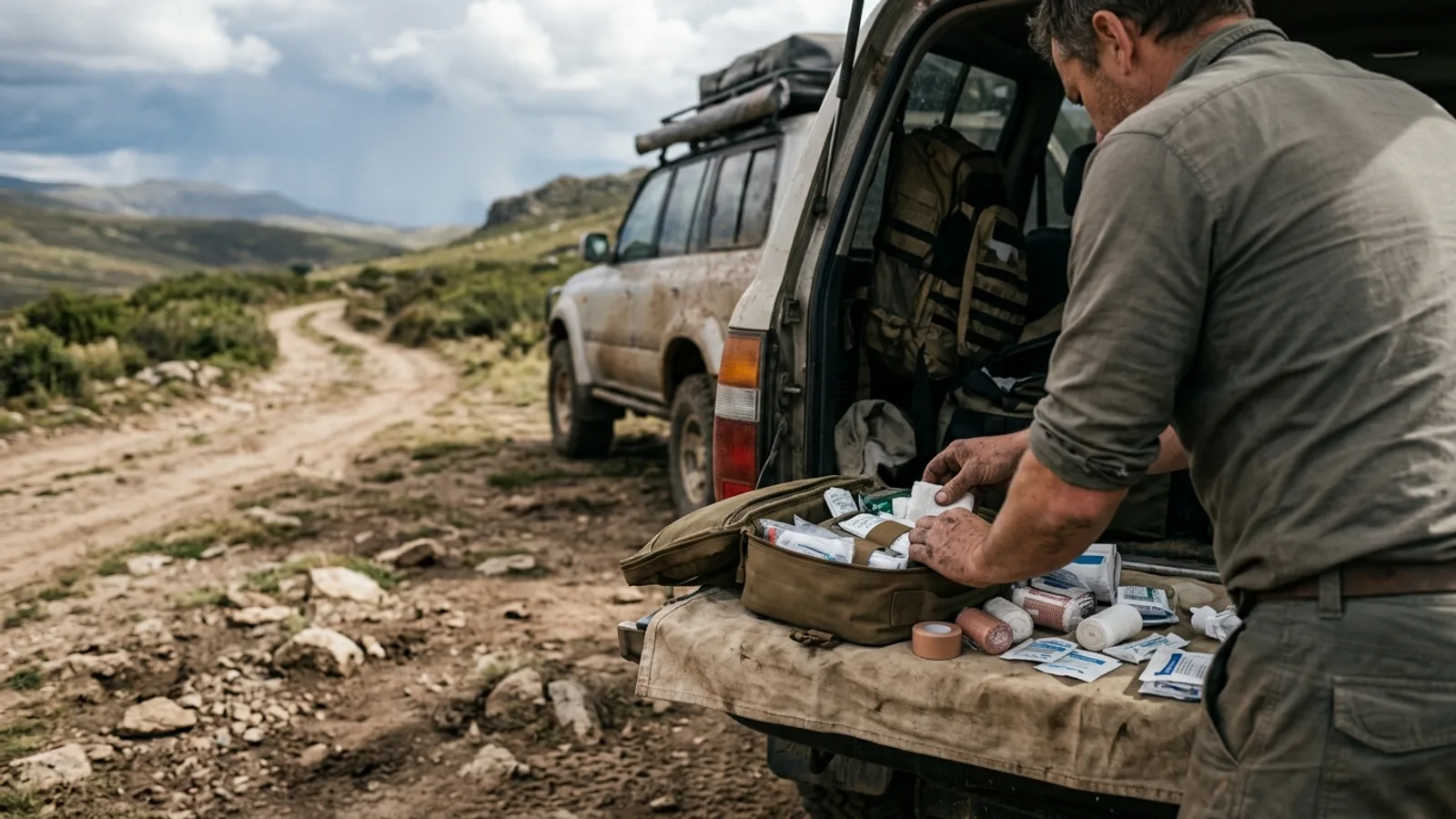
Why Overlanding Changes the First Aid Equation
Overlanding means traveling by vehicle into places that are, by design, far from paved roads and quick help. A twisted ankle, a burn from a camp stove, or a deep cut becomes a bigger problem when the nearest clinic is hours away and cell service is gone.
This doesn't mean overlanding is unusually dangerous. It means the margin for handling small problems yourself is larger, and the cost of being unprepared is higher. A first aid kit built for road trips or day hikes often falls short here, because it assumes help is close by.
What Belongs in the Kit
Core Supplies
These form the base of any kit, regardless of destination:
- Adhesive bandages in several sizes
- Sterile gauze pads and a roll of gauze
- Medical tape
- Antiseptic wipes or solution
- Tweezers and small scissors
- Disposable gloves
- Instant cold packs
- Over-the-counter pain relievers and antihistamines
- Blister treatment
- A first aid manual or card that doesn't rely on a phone signal
Additions for Remote Travel
When you're hours from definitive care, a few upgrades matter:
- A compression bandage for sprains or to help control bleeding
- An elastic wrap for joint support
- A tourniquet, if you know how to use one correctly
- Burn gel or burn dressings, since campfires and camp stoves are common sources of injury
- Tick removal tool, especially in wooded or brushy terrain
- Electrolyte replacement packets for dehydration
- A rescue blanket for shock or unexpected overnight exposure
- Any prescribed emergency medication group members may need, such as an epinephrine auto-injector
None of this replaces a wilderness first aid course. Items like tourniquets and compression bandages are only useful if you've practiced with them before you need them.
Choosing a Kit That Fits Your Trip
Size and Placement
A kit that's too bulky ends up buried under gear and never gets used. A kit that's too small runs out during a real emergency. Aim for something sized to your group and trip length, and store it somewhere you can reach without unpacking the whole vehicle.
Many overlanders keep a small pouch of essentials in the cab for immediate access, with a larger, more complete kit stored nearby but secured.
Durability and Weather Protection
Vibration, dust, and moisture are constants on rough roads. A hard case or a heavy-duty waterproof bag protects supplies from getting crushed, soaked, or contaminated. Individually sealed items, like alcohol wipes and gauze, hold up well even if the outer case is compromised.
Customizing the Kit
A generic kit is a starting point, not a finished product. Adjust it based on who's traveling and what you'll be doing:
- Add any personal prescription medications, kept in their original labeled containers
- Note known allergies for each group member somewhere accessible, not just in someone's memory
- If traveling with children, include pediatric dosing information and appropriately sized supplies
- If your route includes water crossings, high altitude, or extended off-trail hiking, add supplies suited to those specific risks
Write down or print key medical information for each traveler — allergies, conditions, medications — and keep it with the kit. In an emergency, this saves time and reduces guesswork for whoever is administering care.
Keeping the Kit Ready
A first aid kit degrades if it's ignored. Before each trip, check for:
- Expired medications or ointments
- Used items that weren't restocked
- Packaging that has torn or lost its seal
- Batteries, if the kit includes any powered tools
A quick inventory before departure catches most problems. For longer trips, a mid-trip check is worth the few minutes it takes.
Training Matters as Much as Gear
A well-stocked kit is only as useful as the person using it. Basic first aid and CPR courses cover the fundamentals, but a wilderness first aid course is more directly relevant to overlanding — it addresses situations where evacuation takes hours rather than minutes, and where you may need to stabilize someone rather than simply hand them off to paramedics.
These courses are widely available through outdoor organizations, community programs, and some outfitters. Refreshing the training periodically keeps the skills sharp, since techniques and best practices are things you retain better through practice than through reading alone.
The combination of the right supplies, a kit suited to your route and group, and the knowledge to use it is what actually improves your odds when something goes wrong far from help.