Overlanding Cooking Gear: What You Actually Need
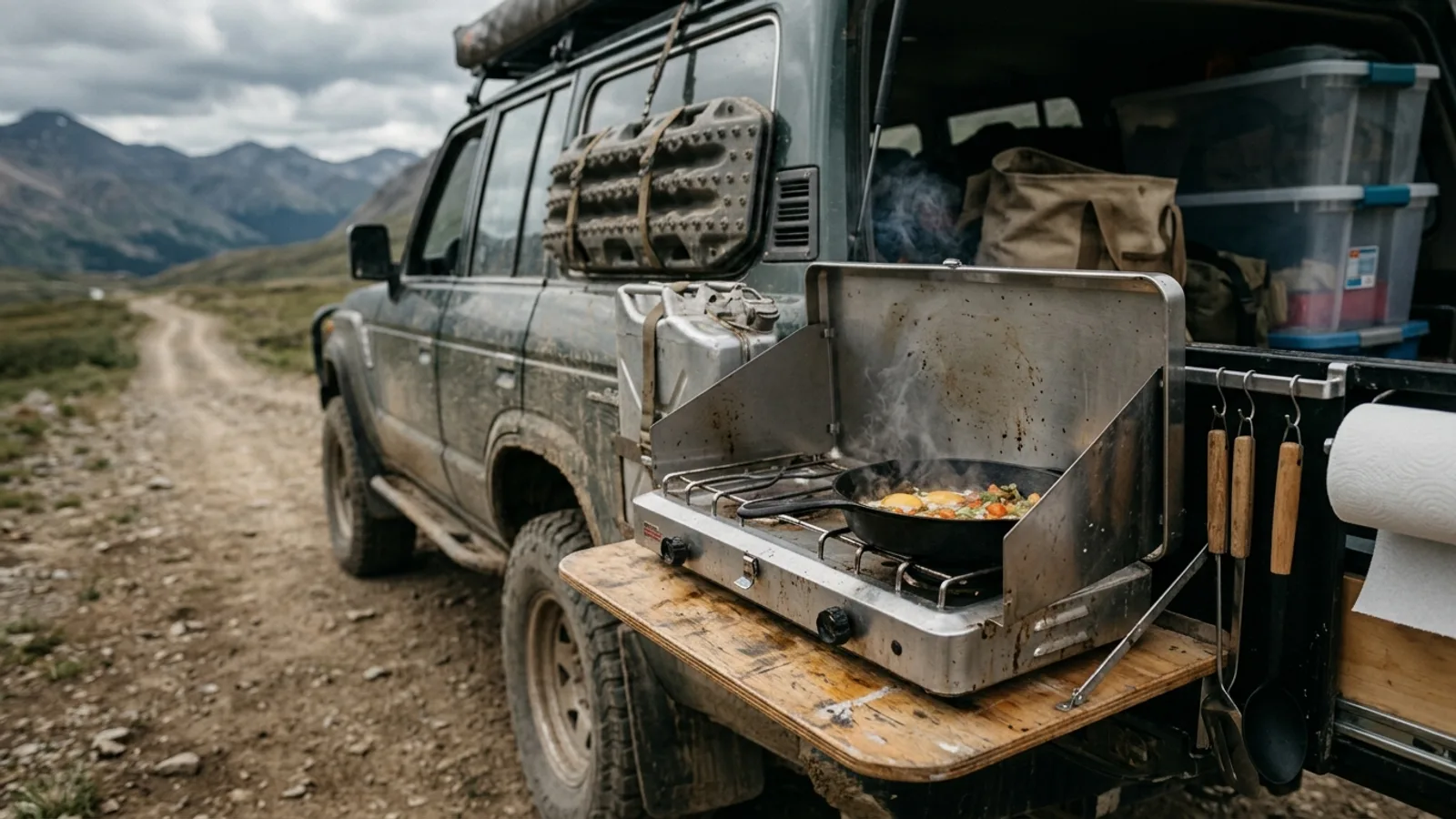
Cooking well on the road comes down to a handful of choices: how you generate heat, what you cook in, what tools you keep within reach, and how you keep food safe between stops. Get those right and everything else — menu planning, cleanup, packing — gets easier.
Portable Stoves
Most overlanding setups use one of three stove types.
- Canister stoves run on pre-filled fuel canisters. They light quickly and burn clean, but canister availability can be limited in remote areas, and cold weather reduces canister pressure.
- Liquid-fuel stoves burn refillable liquid fuel, often the same fuel used for vehicles or lanterns. They perform better in cold temperatures and at altitude, but require priming and more maintenance.
- Two-burner camp stoves give you more cooking surface and let you run two pots at once, which matters for cooking for a group. They take up more space and weight than single-burner backpacking stoves.
When comparing stoves, pay attention to boil time, wind resistance, how stable the pot supports are, and whether replacement parts and fuel are easy to find where you travel. A stove that's fussy to light in calm conditions will be worse in wind and rain.
Camp Cookware
Cookware sets generally fall into a few categories: nesting pot-and-pan sets that pack into a small footprint, single multi-use pots designed for boiling and simple one-pot meals, and modular sets that mix pots, pans, and lids that double as plates.
When choosing cookware, consider:
- Material. Stainless steel is durable and easy to clean but heavier. Aluminum is lighter but dents more easily and can react with acidic foods unless it's coated. Titanium is light and durable but often costs more and can have uneven heat distribution.
- Size and weight. Match the set to how many people you're actually cooking for — oversized cookware wastes space and fuel.
- Versatility. A pot that can boil, sauté, and double as a mixing bowl is worth more than several single-purpose pieces.
- Packability. Nesting designs and dedicated storage bags keep things organized and prevent rattling and scratching in transit.
Grills and Camp Barbecues
Options range from small portable charcoal grills to compact gas grills that run off small propane canisters, to grates designed to sit directly over a campfire.
Charcoal gives more traditional grilled flavor but takes longer to reach cooking temperature and produces ash that needs to be packed out or disposed of properly. Gas grills light instantly and are easier to control, but depend on a steady fuel supply. Fire grates are simple and require no separate fuel if a campfire is already permitted and built, but they offer less temperature control.
Before choosing, think about how much cooking surface you need, how quickly you want to get from setup to cooking, how the grill breaks down for storage, and how easy it is to clean after use. Removable grates and drip trays make a real difference in field cleanup.
Utensils and Accessories
A functional outdoor kitchen doesn't need to be extensive, but a few tools consistently earn their space:
- A sturdy spatula and tongs suited to the cookware you carry
- A sharp knife and small cutting board
- A can opener, if any of your food is canned
- Heat-resistant gloves or a pot holder
- A collapsible or nesting set of bowls and cups to save space
Beyond the basics, a few accessories add real convenience: a wind screen for the stove, a compact dish basin for washing up, a cutting board that doubles as a prep surface and serving tray, and a headlamp or clip-on light for cooking after dark. Choose additions based on what actually slows you down in the field, not what looks useful on a shelf.
Food Storage and Organization
Keeping food at safe temperatures and free from contamination matters more on the road, where refrigeration is limited and conditions are dustier and warmer than at home. Use airtight, durable containers for dry goods, and a well-insulated cooler or a powered fridge/freezer for anything perishable. Keep raw meat separated from ready-to-eat food, and pack coolers so the items you'll use last stay coldest and most protected.
Organization matters as much as storage. A few tools that help:
- A dedicated bin or crate system so utensils, spices, and dry goods have a fixed spot
- Stackable, labeled containers for staples like rice, pasta, and coffee
- A hanging or clip-in organizer for smaller items like spice jars and condiments
- A simple rotation system — front-to-back or first-in-first-out — so nothing gets forgotten at the bottom of a bin
The goal is to be able to find what you need without unpacking everything else first. A kitchen setup that's easy to access encourages better meals and less reliance on quick, less satisfying options when you're tired at the end of a driving day.