Choosing a Low-Power Fridge for Overlanding
Why a Compressor Fridge Beats a Cooler
A 12-volt compressor fridge holds a steady temperature regardless of outside heat, doesn't need ice, and frees up space that would otherwise go to melting bags. The tradeoff is that it draws power continuously, so the real question when shopping isn't just capacity or price — it's how much energy the unit needs to do its job and whether your vehicle's electrical system can support it over multiple days.
Sizing the Fridge to Your Trip
Bigger is not automatically better. A larger box has more interior air to cool and more surface area to lose cold through, so it draws more power to hold temperature, and it costs more to run and more to fill. Think in terms of days between resupply and number of people, not the biggest unit that fits in the vehicle.
- Solo or weekend trips: a compact single-zone fridge is usually enough.
- Couples or week-long trips: a mid-size single or dual-zone unit gives room for both fresh food and drinks.
- Groups or extended trips: a larger dual-zone fridge, ideally paired with a way to recharge along the way, works best.
If you regularly need both refrigerated and frozen items, a dual-zone fridge with separate compartments is worth the extra space and cost over running two single-zone units.
What Actually Drives Power Consumption
Three things matter more than any spec sheet number: how well the box is insulated, how efficient the compressor is, and how often the lid or door opens. Thicker insulation and a tight-sealing lid reduce how hard the compressor has to work. A fridge left in direct sun or packed against a hot engine bay will cycle more often than one kept in shade or an insulated compartment. Loading the fridge with already-cold food and drinks, and keeping it fairly full (air holds less cold than dense contents), also reduces the compressor's workload.
Ambient temperature swings — hot days, cold nights — affect draw more than any single feature does. A fridge's power use in a cool climate says little about how it will behave in the desert.
Power Supply and Battery Protection
Most overland fridges run off a dedicated auxiliary battery charged by the vehicle's alternator, solar, or both, rather than the starting battery. This avoids the risk of draining the battery you need to restart the engine.
Look for a fridge with an adjustable low-voltage cutoff. This setting shuts the compressor off before the battery is drawn down to a level that could damage it or leave you unable to start the vehicle. Setting the cutoff appropriately for your battery type is one of the simplest ways to protect your electrical system on a long trip.
If you rely on solar to keep the fridge running, plan for cloudy days and shorter winter daylight by building in a buffer rather than assuming best-case charging every day.
Mounting and Physical Setup
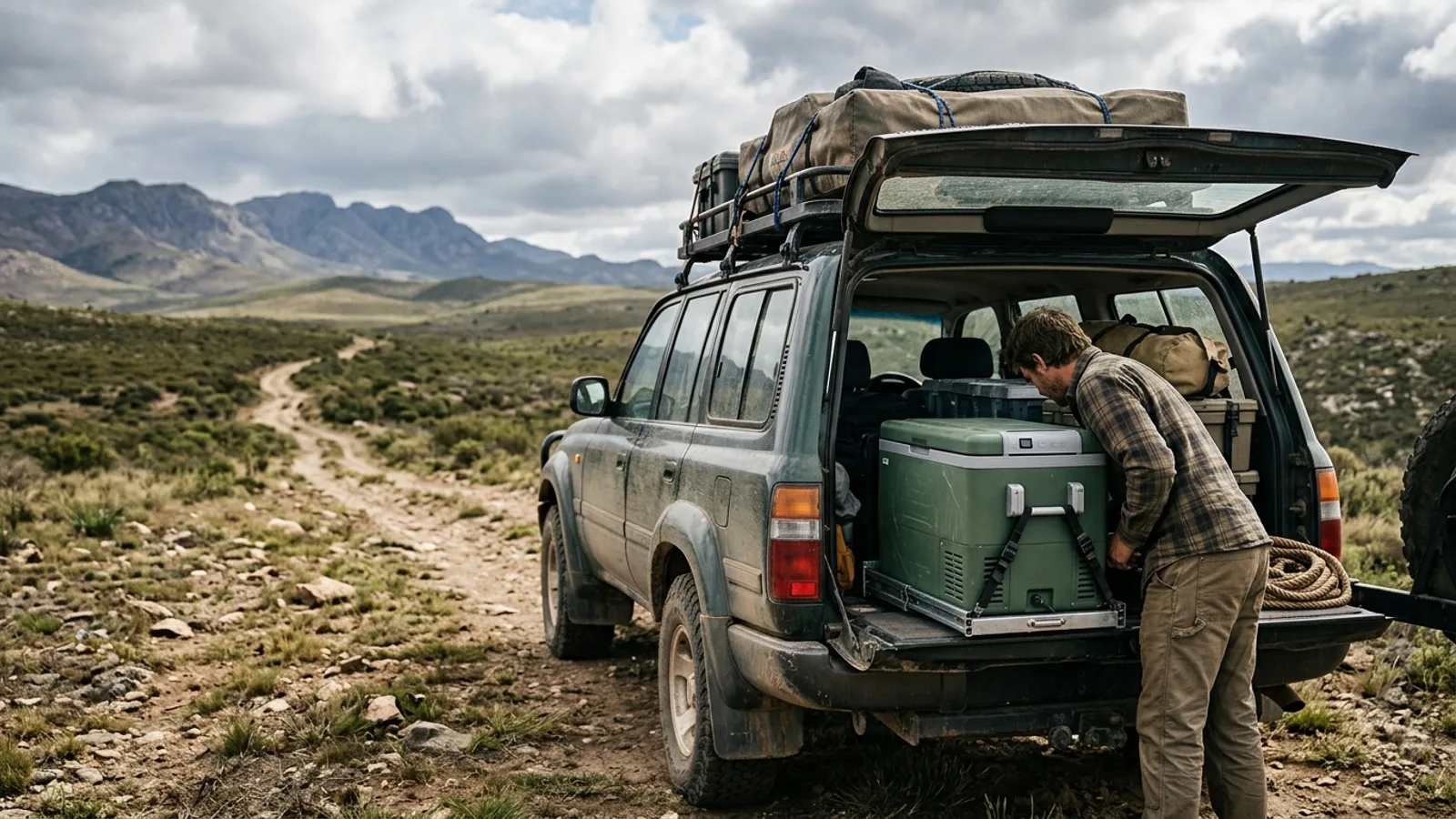
A fridge that shifts or tips during rough driving is both a safety hazard and a fast way to damage the compressor. Secure it with a slide, tie-down points, or a dedicated mount rated for the fridge's weight, and position it so the lid opens without obstruction and the compressor has airflow around it — compressors need to vent heat, and a cramped, sealed-in fridge will run hotter and less efficiently.
Keep the fridge as level as reasonably possible. Compressor fridges tolerate more tilt than absorption units, but sustained extreme angles on rough trails are still worth avoiding where you can.
Convenience Features Worth Considering
- Digital temperature display and controls: lets you set and verify temperature without guesswork.
- Basin drain: makes cleaning spills and condensation far easier.
- Reinforced corners and secure latches: matter more than they seem on rough roads over many trips.
- App or remote monitoring: useful for checking temperature and battery status without opening the fridge, though not essential.
- Interior lighting and dividers: small conveniences that add up on longer trips.
Care and Longevity
Clean the interior and drain regularly to prevent odor and mold, especially after trips with raw meat or spilled liquids. Let the fridge fully dry with the lid open when stored. Avoid running the compressor fridge on its side or upside down, and give it a few minutes to settle after transport before restarting if it's been jostled heavily. With reasonable care, a quality compressor fridge should last many years of regular trips.
Bottom Line
Choose the smallest fridge that comfortably covers your typical trip length and group size, prioritize insulation quality and a reliable low-voltage cutoff over extra features, and mount it securely with room to vent. Power efficiency comes as much from how you use and place the fridge as from the unit itself.