How to Choose and Use a Can Opener for Camping
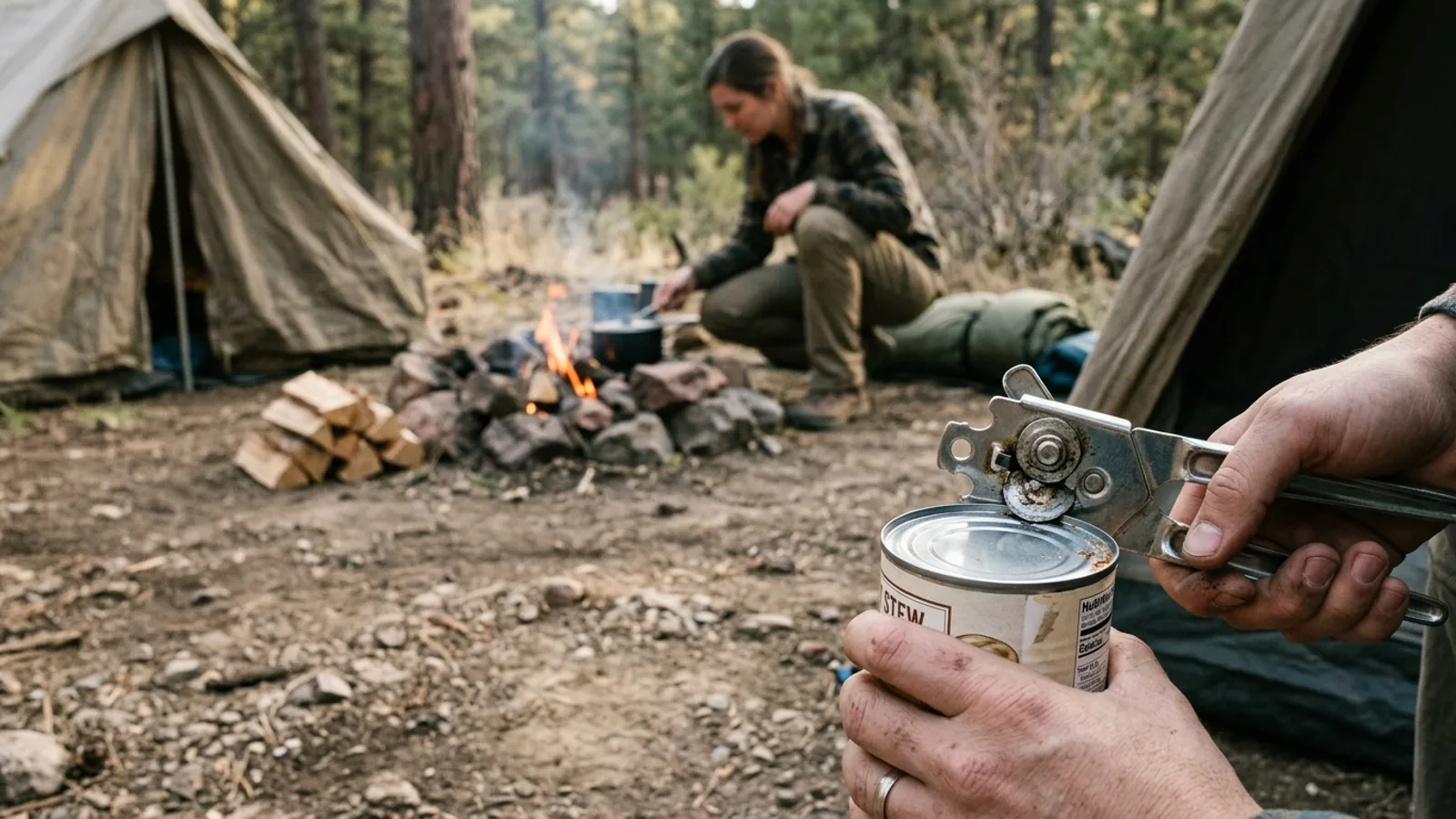
Why a Manual Can Opener Belongs in Your Kit
Canned food is a camping staple because it's stable at room temperature, hard to crush, and needs no refrigeration. A manual can opener is the simplest way to access it. It has no battery to die, no motor to fail, and it works the same way whether you're car camping or several miles into the backcountry.
Electric and battery-powered openers exist, but they add weight, need power, and are one more thing that can break in a bag. For most camping situations, a small manual opener is more dependable.
What to Look for in a Camping Can Opener
- Material: Stainless steel resists rust better than plated metal, which matters if the opener gets wet or sits in a damp pack.
- Size and weight: Compact, foldable designs pack easily into a mess kit or food bag without adding bulk.
- Grip: A handle with some texture or an ergonomic shape is easier to control with cold, wet, or gloved hands.
- Cutting mechanism: Look for a sharp, well-aligned wheel. A dull or misaligned one takes more effort and is more likely to slip.
It's worth carrying a small backup, such as a basic key-style or P-38-type opener, in case your primary one is lost or damaged.
Preparing to Open a Can
A few simple steps before you start make the process smoother and safer:
- Find a stable surface. A flat rock, picnic table, or the tailgate of a vehicle works well. Avoid trying to open a can while holding it in one hand, especially with a sharp opener.
- Check the opener. Rinse off any dried food or grit from previous use. A clean cutting wheel grips the rim better and turns more smoothly.
- Settle the contents. Give the can a gentle shake so liquid and solids aren't unevenly distributed, which reduces splashing once it's open.
- Have a container ready. If you'll be draining liquid or transferring food, set out a bowl, pot, or bag beforehand so you're not fumbling after the lid is off.
Technique for Opening a Can Cleanly and Quietly
Most of the noise and mess from can opening comes from rushing or misaligning the tool. A slower, more deliberate technique helps in both regards.
- Position the opener at the rim. Clamp the cutting wheel onto the edge of the lid, making sure it's seated on the rim rather than the flat top of the can.
- Squeeze evenly. Apply steady pressure to pierce the lid rather than forcing it in one motion.
- Turn slowly and steadily. A consistent, unhurried pace keeps the cutting wheel tracking the rim and reduces the chance of it slipping or skipping, which is what causes both noise and jagged edges.
Go all the way around until the lid is fully separated, or stop just short and bend it back with the opener or a utensil if you prefer to keep it attached as a handle for lifting the lid out.
After Opening: Handling Liquid and Contents
Once the can is open, a few habits keep things tidy in a campsite setting:
- Draining liquid: Tilt the can gradually rather than all at once. A slow, controlled pour prevents splashing, especially if you're draining into a narrow container.
- Scooping contents: Use a spoon or spatula and scrape along the inside wall of the can to get the last bits out. Sharp-edged lids can have rough spots, so keep fingers away from the rim.
- Transferring food: If you're moving contents into a pot or bag, do it over a stable surface so drips or spills are easy to clean up.
Disposing of the Can
Empty the can completely before packing it out or crushing it. Rinsing it with a small amount of water helps prevent odors that can attract animals to your site or pack.
Flatten the can if it's practical to do so, which saves space in your trash bag. Never bury or burn cans; pack out all food containers, including empty ones, as part of standard low-impact camping practice.
If You Don't Have a Can Opener
Improvised methods work in a pinch but carry real risk of cuts, so use them only if necessary and go slowly:
- Blade or knife edge: A sturdy knife can sometimes be walked around the seam of the lid by applying steady downward pressure and working in small increments. This produces a sharp, uneven edge, so handle the opened can with care afterward.
- Friction against a rough surface: Rubbing the lid firmly against a coarse rock or concrete surface can wear through the metal over time, though this is slow and better suited to a stationary campsite than the trail.
Either method should be treated as a backup, not a primary plan. A small manual opener is light enough that there's little reason to go without one.
Quick Reference
- Choose a compact, stainless steel manual opener with a comfortable grip.
- Work on a stable, flat surface and keep the opener clean.
- Pierce with steady pressure, then turn slowly and evenly around the rim.
- Drain and scoop contents carefully to avoid splashes and spills.
- Pack out every can, rinsed and flattened if possible.