How to Shower While Camping: Practical Options for Staying Clean Outdoors
Why Hygiene Still Matters on a Camping Trip
You don't need a daily hot shower to stay healthy outdoors, but going too long without rinsing off can lead to skin irritation, clogged pores, and general discomfort. Sweat, sunscreen, insect repellent, and trail dirt build up quickly, especially in hot or humid conditions. Even a quick rinse every few days, combined with regular hand washing and clean clothes, makes a noticeable difference in comfort and skin health.
Hygiene while camping isn't only about showering. Washing your hands before eating, brushing your teeth, and changing out of sweaty layers all matter as much as a full-body rinse.
Shower Options for Car Camping
If you're camping near your vehicle, you generally have more shower options than backpackers do.
- Truck stops and travel centers: Many large travel plazas along major highways offer private shower rooms for travelers, usually for a fee. They tend to be clean and are a reliable option if you're passing through on a long road trip.
- Gyms and recreation centers: Some fitness chains and community recreation centers allow day-use or short-term memberships that include shower access. This can be a good option if you're camping near a town for several days.
- Developed campgrounds: Many public and private campgrounds include shower facilities, sometimes coin-operated or on a timer. They're usually basic, but sufficient for rinsing off after a day outdoors.
- Natural water sources: Lakes, rivers, and streams can work for rinsing off, but require care to avoid contaminating the water (see below).
Rinsing Off in Natural Water Sources
If no shower facility is available, a natural water source can serve as a rinse point, but it needs to be done thoughtfully to protect the ecosystem.
- Use only biodegradable soap, and even then, apply it away from the water itself.
- Fill a container with water, carry it away from the shoreline, and wash there rather than lathering up directly in a lake or stream.
- Keep a reasonable distance — generally around 200 feet — from any water source when washing with soap, brushing teeth, or disposing of wastewater.
- Avoid washing directly in slow-moving or still water, since contaminants disperse less easily there than in flowing water.
Leave No Trace Principles for Washing Outdoors
The Leave No Trace framework offers a useful set of habits for washing responsibly in the backcountry:
- Plan ahead: Check the regulations for the area you're visiting. Some parks and wilderness areas have specific rules about washing near water sources.
- Stick to durable surfaces: Wash on rock, gravel, or bare ground rather than on fragile vegetation.
- Pack out waste: Empty soap containers, wipes, and any other washing-related trash should leave the site with you.
- Be careful with heated water: If you're heating water for a shower, use a camp stove or an existing fire ring rather than starting a new fire.
- Respect wildlife: Store scented items, including soap and shampoo, the same way you'd store food, away from your sleeping area and secured from animals.
- Be considerate of other campers: Choose a shower spot and time that doesn't intrude on others' privacy or the quiet of the campground.
Finding Showers While Camping
A little research before your trip can save you from searching for a shower once you're already there.
- Camping directories and trip-planning apps often let you filter campsites by amenities, including showers.
- Some community and hospitality networks connect travelers with hosts who offer a place to stay or clean up, which can be useful for longer road trips.
- Calling ahead to a campground or visitor center is still one of the most reliable ways to confirm shower availability, since amenities can change.
Types of Portable Shower Systems
For backcountry trips or campgrounds without facilities, a portable shower system can make a real difference in comfort.
Bag Showers
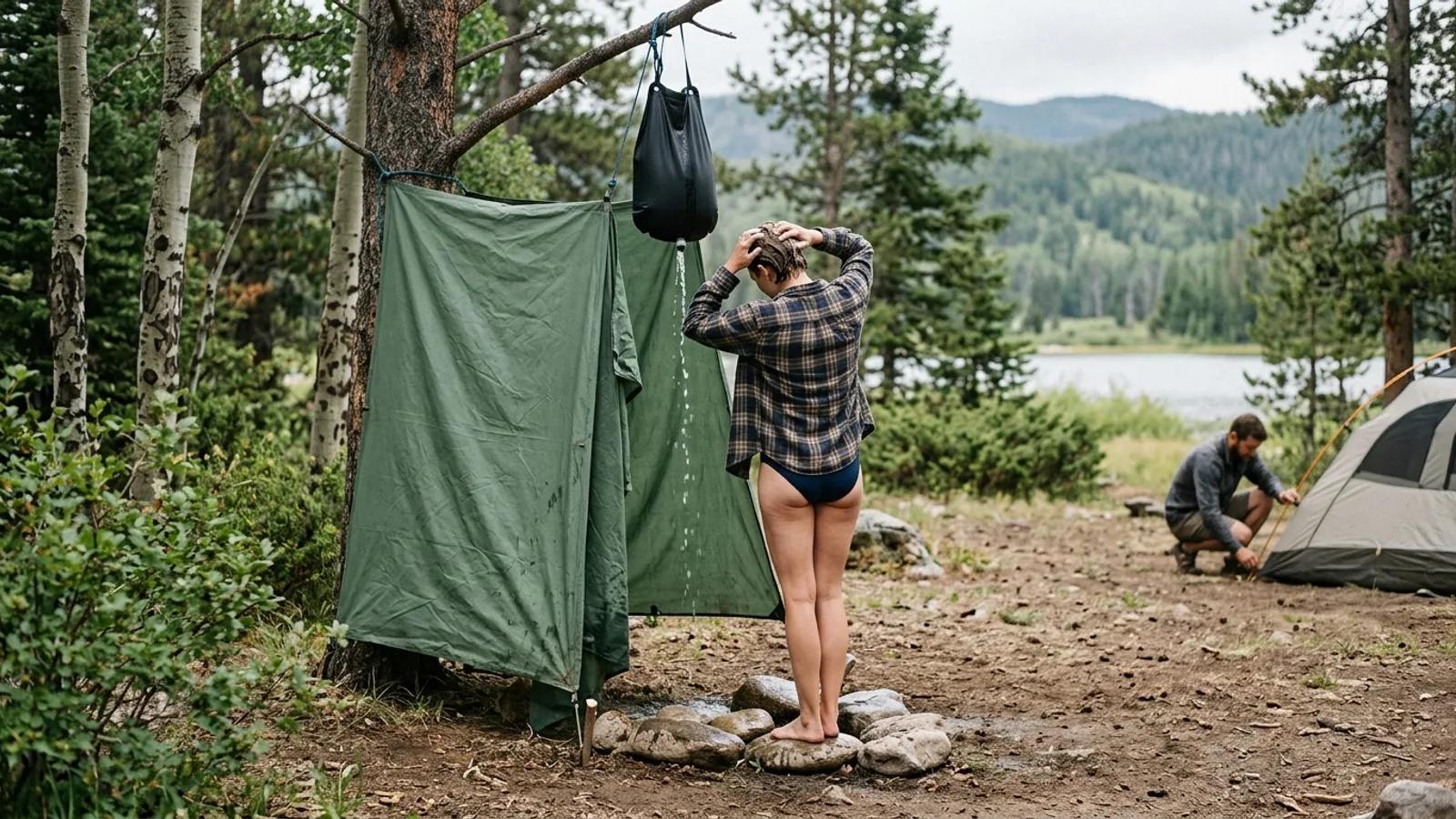
A bag shower is a flexible water container, often dark-colored to absorb sunlight and warm the water, with a hose or nozzle at the bottom. You fill it, hang it from a tree branch or vehicle, and let gravity do the work. These are lightweight, simple to pack, and require no pump or battery, though the water pressure is limited.
Pump and Tank Showers
These systems use a small reservoir or tank paired with a battery or hand-powered pump to create stronger water pressure through a handheld nozzle. They take up more space than a bag shower but deliver a more consistent stream, closer to a home shower experience.
Shower Tents and Privacy Shelters
A portable shower tent or freestanding privacy shelter gives you an enclosed space to use with either a bag or tank shower system. This is especially useful at campgrounds or group sites where you want privacy but don't have access to a permanent shower building.
Maintaining Hygiene Between Showers
On days when a full shower isn't practical, a few habits go a long way:
- Use unscented wet wipes or a damp cloth to clean sweat-prone areas like your face, neck, underarms, and feet.
- Change socks and underwear daily if possible; this alone reduces odor and skin irritation significantly.
- Keep hand sanitizer or soap and water accessible for washing before meals and after using the bathroom.
- Brush your teeth daily, using a small amount of water if you're conserving your supply.
- Air out sleeping bags and clothing when you can, since trapped moisture contributes to odor over multiple days.
Frequently Asked Questions
How often should I shower while camping?
There's no fixed rule. Many campers rinse off every two to three days, supplementing with spot cleaning in between, though this varies with climate, activity level, and personal preference.
Where can I find showers while car camping?
Look to developed campgrounds, travel centers along major routes, and local recreation centers. Calling ahead is the most reliable way to confirm availability.
How can I shower responsibly in nature?
Use biodegradable soap sparingly, wash well away from the water's edge, and follow Leave No Trace guidance for waste disposal and site selection.
What portable shower systems are available?
The main categories are gravity-fed bag showers, pump or battery-powered tank showers, and shower tents that provide privacy for use with either system.
How can I maintain hygiene without a shower?
Focus on spot cleaning with wipes or a damp cloth, changing into clean clothing regularly, and keeping your hands and teeth clean, even when a full shower isn't available.