How to Store Camping Chairs So They Last Longer
Clean and Dry Before You Store Anything
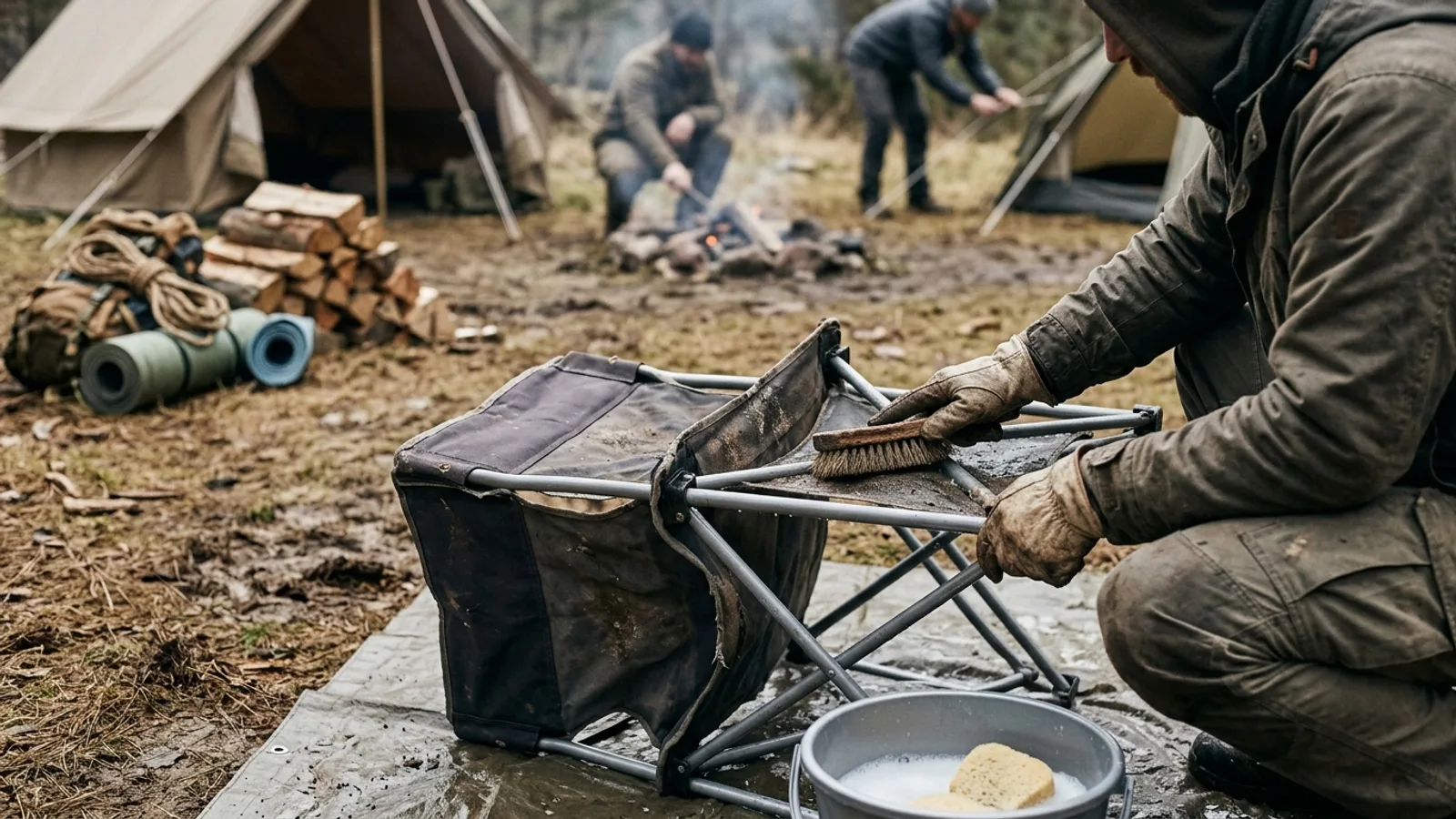
Dirt, sand, and moisture cause more long-term damage to camping chairs than actual use does. Before putting chairs away, brush off loose debris and wipe down the fabric and frame with a damp cloth. For stubborn grime, use mild soap and water rather than harsh cleaners, which can weaken fabric coatings or degrade webbing over time.
Pay attention to joints, hinges, and cup holder pockets, since dirt and moisture tend to collect in these spots. Let chairs air dry completely in a shaded, ventilated area. Storing a chair while it's even slightly damp is one of the most common causes of mold, mildew, and musty odors that are very difficult to remove later.
Once dry, check the frame for loose bolts, bent legs, or fraying fabric. Small repairs are much easier to make before storage than after a chair has sat unused for months.
Fold Correctly to Protect the Frame
Most camping chair damage happens from forcing a fold in the wrong order or at the wrong angle. Follow the folding sequence the chair was designed for, usually starting by collapsing the seat before the legs. Forcing joints that aren't aligned can bend hinges or crack plastic connectors.
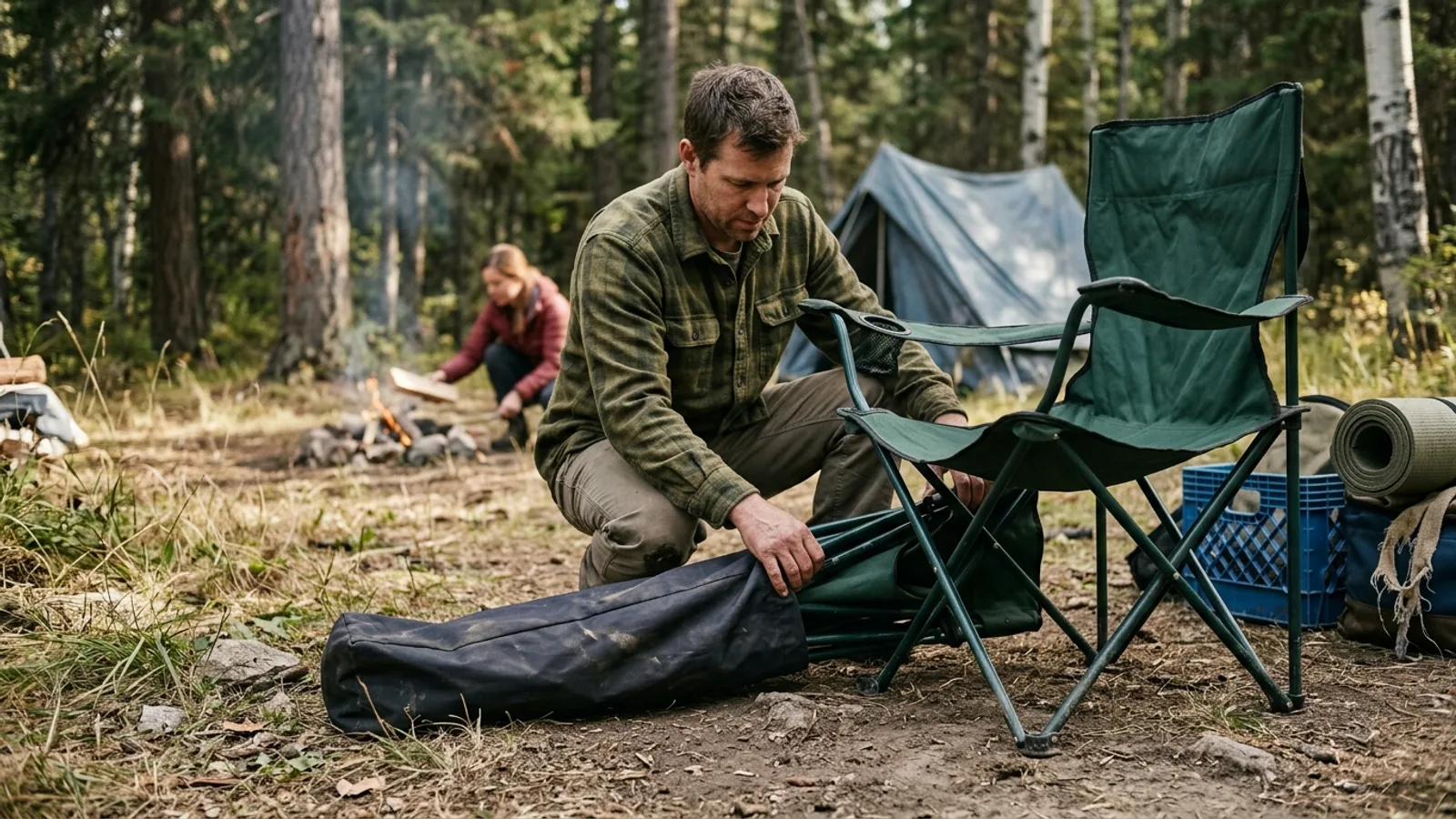
If a chair has a carry bag, use it. The bag keeps the folded shape compact, protects fabric from snags, and makes the chair easier to stack or hang.
Wall-Mounted Storage for Garages and Sheds
A wall-mounted rack or a simple row of sturdy hooks is one of the most effective ways to store folding chairs without giving up floor space. Hanging chairs also keeps them off concrete floors, where moisture and temperature swings are more likely to affect fabric and metal over time.
When installing hooks or a rack, mount into wall studs or use anchors rated for the combined weight of the chairs you plan to hang. A level and a stud finder make this straightforward. Space hooks or rack arms wide enough that folded chairs don't rub against each other, which can wear down fabric over repeated use.
Lightweight adhesive hooks can work for very light chairs in low-traffic storage areas, but they are not a substitute for hardware-mounted hooks when storing heavier or frequently used chairs. Check the weight rating before relying on them, and avoid using them in areas with high heat or humidity, since adhesive bonds weaken under those conditions.
Bins, Deck Boxes, and Outdoor Storage
If chairs need to stay outside, an enclosed storage box protects them from rain, direct sun, and blowing debris far better than a tarp or open shelf. UV exposure is one of the main reasons outdoor fabric and plastic components become brittle and faded over time, so shade matters as much as keeping out moisture.
Choose a container with some ventilation or drainage, rather than one that seals completely airtight, since trapped moisture can be worse than none at all. Elevate the box slightly off the ground if it sits directly on soil or concrete, which helps prevent moisture wicking up from below.
Indoor Options When Space Is Tight
Under-bed storage works well for folded chairs, especially lightweight camping or backpacking styles. Slide them into a bag or a shallow bin first to keep dust off and to make them easier to pull out as a set.
Closets, the backs of doors, and vertical gaps between furniture and walls are other spots where a folded chair can be tucked away without taking up dedicated floor space. The main goal indoors is the same as outdoors: keep chairs dry, out of direct sunlight, and away from sources of heat like radiators or vents, which can dry out and weaken fabric and plastic hardware.
General Storage Conditions to Aim For
- Cool, dry, and shaded rather than hot, humid, or sun-exposed.
- Off the ground rather than directly on concrete or soil.
- Loosely stacked or hung rather than tightly compressed for long periods, which can permanently crease fabric.
- Checked periodically during long-term storage for signs of moisture, pests, or fabric wear.
Before the Next Trip
Give stored chairs a quick inspection before you head out again. Open and close each chair fully to confirm the frame still locks and folds smoothly, check for any new rust spots on metal hardware, and wipe away any dust that accumulated in storage. A few minutes of pre-trip maintenance catches small problems before they become a broken chair at the campsite.