How to Clean and Maintain a Camping Chair
Why Cleaning and Maintenance Matter
A camping chair takes on dirt, sweat, sunscreen, tree sap, and moisture every time it's used. Left uncleaned, that grime breaks down fabric fibers and metal joints faster than normal wear alone. A few minutes of care after each trip keeps the chair comfortable, odor-free, and structurally sound for far longer.
General Cleaning Method
Most camping chairs fall into two categories: fabric-and-frame chairs, and chairs with hard seats or backs made of plastic or coated material. Each needs a slightly different approach.
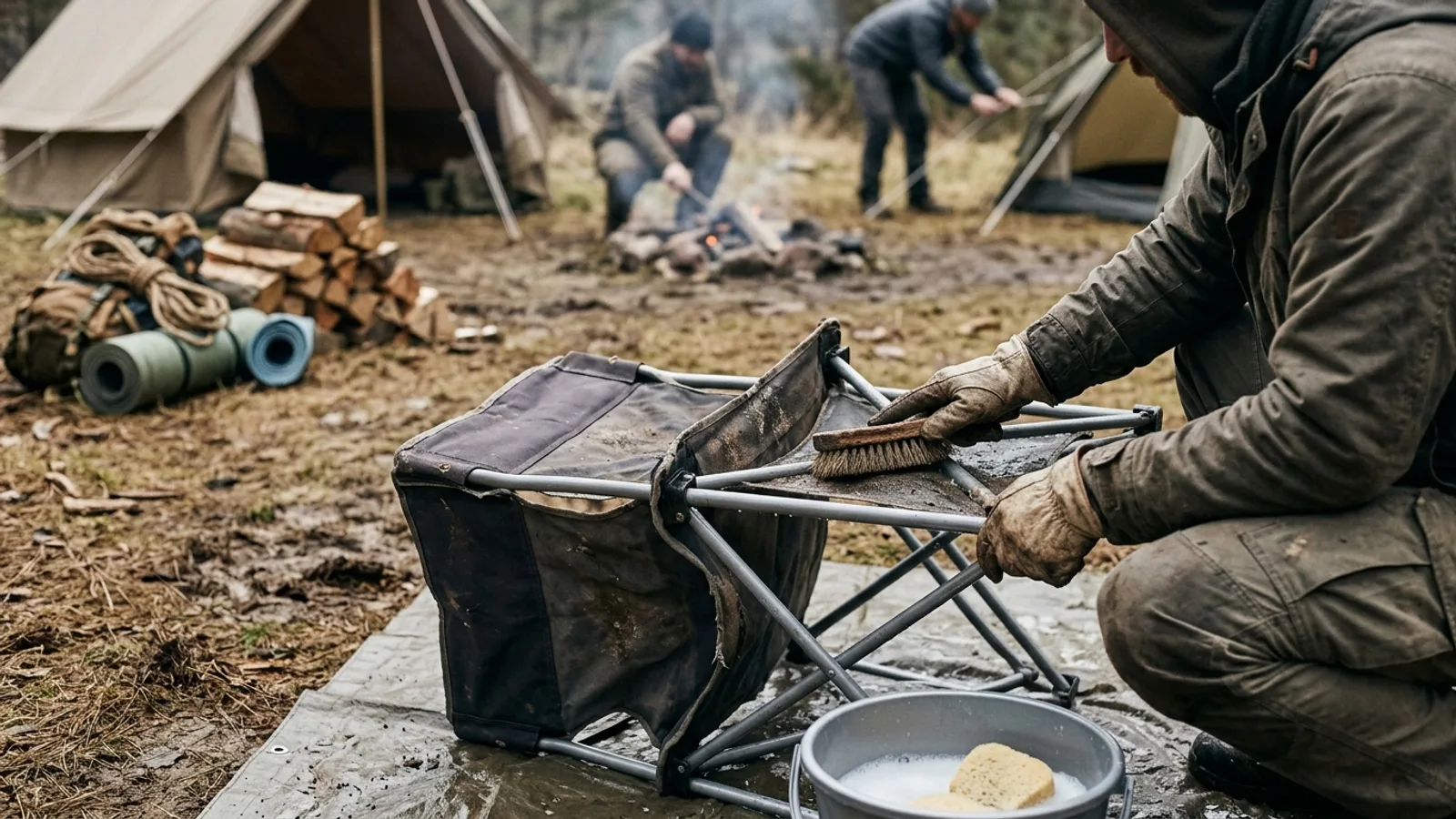
- Fabric chairs: Mix a small amount of mild soap with warm water. Use a soft cloth or sponge to scrub the fabric, working on any visible stains first. Rinse thoroughly with clean water to remove soap residue, then let the chair air dry completely before folding or storing it.
- Plastic or metal parts: Wipe down with a damp cloth. For built-up grime, add a small amount of dish soap to the cloth, scrub gently, then wipe again with a clean, damp cloth to remove any soap film.
Always test a cleaning solution on a small, hidden part of the chair first, especially with colored or coated fabrics, since some materials can fade or discolor.
Other Cleaning Techniques
Depending on the chair's material and how dirty it is, a few other methods work well:
- Vacuuming: A handheld vacuum with a brush attachment lifts dry dirt, sand, and crumbs from fabric seats without needing water.
- Steam cleaning: For fixed (non-removable) fabric covers, a handheld steamer can loosen dirt and help with mild mildew smells. Keep the steamer moving and avoid soaking any single spot, since prolonged heat and moisture can warp plastic components.
- Diluted alcohol wipe-down: A cloth dampened with rubbing alcohol can help with mold, mildew, or sticky residue. Ventilate the area while using it, and let the chair dry fully afterward.
Removing Common Stains
Grass Stains
Blot the area with a cloth dampened in rubbing alcohol to loosen the pigment, then scrub gently with a soft brush. Rinse with clean water and air dry.
Mud
Let mud dry fully, then brush off as much as possible before wetting the area. Follow with a mild soap-and-water scrub, then rinse and dry.
Bird Droppings
Wipe with a soap-and-water solution as soon as practical since droppings can stain and degrade fabric coatings over time. Rinse and dry fully before folding the chair away.
Tree Sap
Dab the sap with rubbing alcohol to soften it, then gently scrape or wipe it away with a cloth. Rinse the area with water afterward.
For any stain, work from the outside in to avoid spreading it, and avoid scrubbing so hard that you damage the fabric's coating or weave.
Drying and Preventing Mildew
Moisture trapped in fabric or folded joints is the most common cause of mildew and rust. After cleaning, or after any trip where the chair got wet or sweaty, open it fully and let it air dry in a shaded, ventilated spot before folding it away. Direct sun for long periods can weaken and fade fabric, so avoid drying chairs in full sun for extended stretches.
Routine Inspection
Before each trip, check the chair over:
- Look for tears, thinning fabric, or loose stitching.
- Check that all joints, hinges, and locking mechanisms move smoothly and lock securely.
- Look for rust or corrosion on metal frames, especially at joints.
- Tighten any loose screws or bolts.
Catching small issues early — a fraying seam, a stiff hinge — prevents a minor repair from turning into a chair that fails while in use.
Storage
Clean and fully dry the chair before every storage period, even short ones between weekend trips. Store it in its carrying bag if one came with it, or cover it with a cloth to keep dust and pests off. Choose a dry, temperature-stable space such as a closet, garage, or shed rather than a damp basement or a hot vehicle trunk. Keeping the chair off the ground, on a shelf or hook, helps avoid contact with damp floors that can encourage mold or rust.
General Care Tips
- Keep chairs away from open flames and fire pits; heat can melt or weaken synthetic fabrics and frames.
- Avoid leaving chairs out in rain or heavy dew for long periods.
- Don't exceed the chair's weight rating, and avoid using it on uneven or soft ground where legs can sink or tip.
- Fold and unfold the chair the way it's designed to, rather than forcing joints, to avoid stressing hinges over time.
Getting More Use Out of Your Chair
Camping chairs are just as useful outside of camping trips — on a porch, at a park, at outdoor sports events, or in a backyard. Treating them consistently, wherever they're used, with the same clean-dry-store routine keeps them ready and comfortable for the next outing, whether that's a weekend hike or an afternoon in the yard.