How to Wash Dishes While Camping: A Practical Guide
Why Dishwashing Method Matters Outdoors
Dirty dishwater is more than an inconvenience. Food residue and soap dumped near a campsite can pollute streams, attract animals into camp, and leave a mess for the next visitor. A good system keeps cleanup fast, uses little water, and leaves no trace.
Equipment That Actually Helps
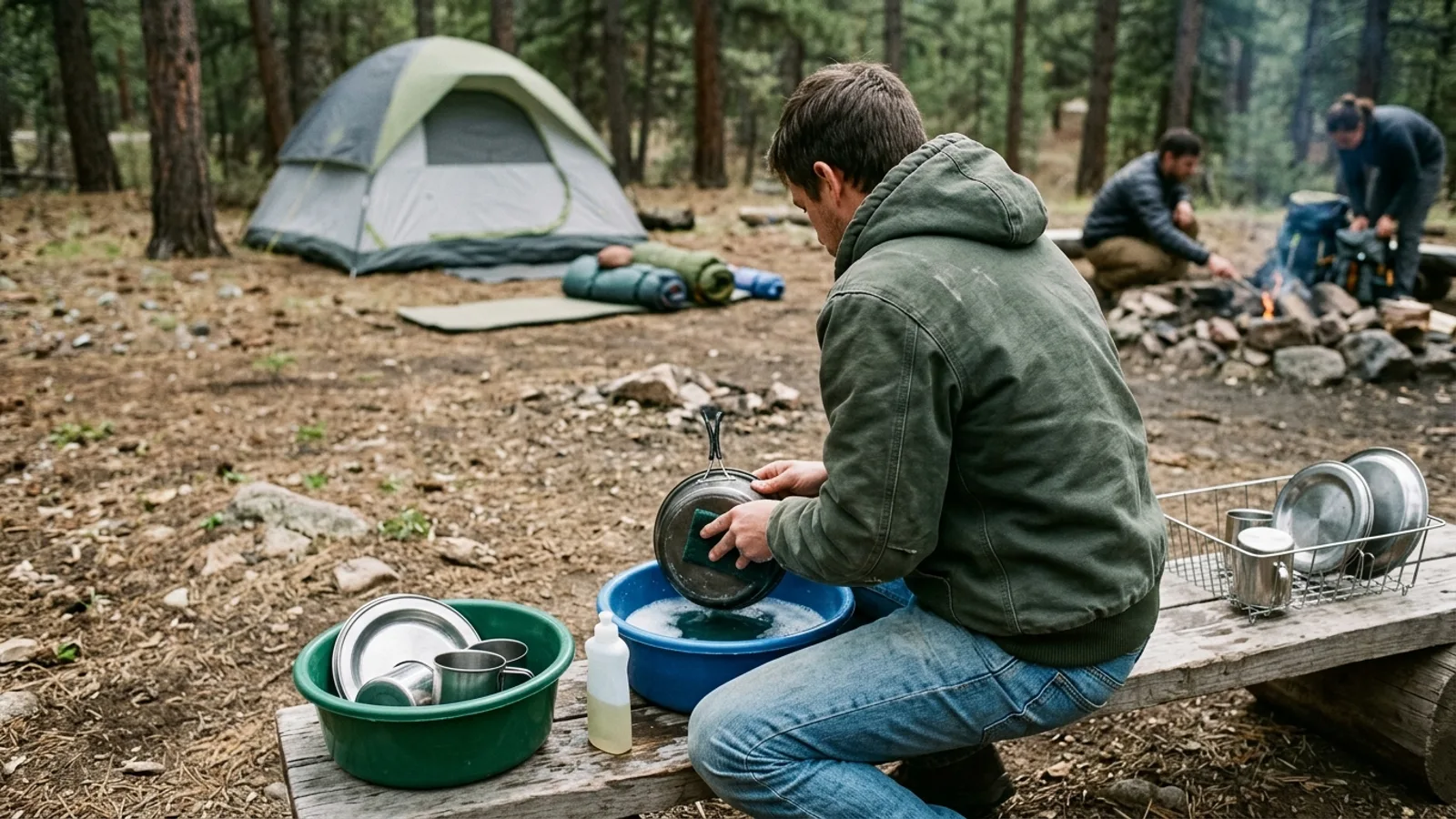
- Two basins or collapsible bins — one for wash water, one for rinse water. Working with two basins instead of running water saves a surprising amount and speeds things up.
- A scraper — a rubber spatula, old gift card, or dedicated pan scraper works well for knocking off stuck food before anything touches water.
- A sponge or small brush — pick one that dries quickly and won't hold odor or mold between uses.
- Biodegradable soap — look for one labeled for outdoor or marine use, and use only a small amount. Even biodegradable soap needs to break down in soil, not directly in a lake or stream.
- A fine-mesh strainer or small screen — catches food particles so they don't clog a drain or end up in the ground where you dump water.
- A quick-dry towel or a small drying rack — lets dishes air dry without using disposable paper towels.
Where to Wash
At a developed campground, use any dishwashing station or utility sink provided — these are built to handle food waste and greywater properly. Never wash dishes in a restroom sink or at a drinking-water spigot; both are meant for clean water only, and food residue there can clog plumbing or draw insects and animals.
At a backcountry or primitive site, wash well away from any lake, stream, or spring. A commonly used guideline is to keep washing and wastewater disposal at least 200 feet (about 70 adult paces) from any water source. Strain solids out first, pack them out with your trash, then scatter the remaining greywater widely over an area of soil or ground vegetation rather than pouring it in one spot.
Step-by-Step Process
- Scrape first. Remove all food scraps before any water touches the dish. This alone eliminates most of the work.
- Set up two basins. Fill one with warm water and a small amount of soap, the other with plain water for rinsing.
- Wash cleanest items first. Cups and utensils before greasy pots — this keeps your wash water usable longer.
- Scrub with a sponge or brush, paying attention to rims and anything that touched your mouth.
- Rinse in the second basin to remove soap residue completely; soap left on dishes can cause stomach upset.
- Strain the wash water before disposing of it, and pack out the captured solids.
- Air dry on a rack, a clean towel, or a line strung between trees, rather than drying by hand with a shared towel, which can spread germs between people.
Cutting Down on Water and Effort
The biggest efficiency gain isn't a gadget — it's sequencing. Scraping thoroughly before washing prevents most grease and residue from ever reaching your water. Letting pots soak briefly (even in cold water) loosens stuck food without scrubbing. And washing in batches, dirtiest last, means you can reuse the same basin of water for an entire meal's worth of dishes instead of refilling constantly.
If you're short on water, a stiff scrape-and-wipe with a paper towel or cloth before packing dishes out to wash later at a real sink is sometimes the most water-efficient option, especially for a short trip.
Using Heat to Loosen Stuck Food
A few minutes of soaking in hot water — heated over a stove or fire — will loosen baked-on food far more effectively than cold water and scrubbing alone. If you're heating a pot of water for another purpose anyway (coffee, cleaning, cooking), pour the leftover hot water into your wash basin instead of dumping it.
Cast iron and other bare-metal cookware generally should not be soaked in soapy water; wipe them out with hot water and a stiff brush or scraper instead, then dry immediately over low heat to prevent rust.
Safety Notes
Keep any tools used near an open flame — tongs, gloves — away from food-contact surfaces once they've touched coals or embers. Let cookware cool before handling it directly, and never leave wash water or food scraps sitting out uncovered, since both can draw wildlife into your camp.
Packing It Out
Whatever you strain from your dishwater — noodles, grease, vegetable bits — goes in your trash bag, not on the ground and not in a fire pit. Grease in particular can linger and attract animals long after a fire has gone out.