How to Stay Warm Car Camping in Cold Weather
Choosing a Safe Place to Park
Where you park matters as much as how you insulate. Look for a legal overnight spot: a campground, a rest area that permits overnight stays, or public land where dispersed camping is allowed. Avoid isolated pull-offs on active roads, private property without permission, and areas prone to flooding or falling branches.
Park somewhere reasonably level so you're not sliding toward one end of the car all night, and take note of how you'd drive out if weather turned bad overnight.
Ventilation and Carbon Monoxide Safety
Never run your engine or a fuel-burning heater inside a closed car to stay warm. Carbon monoxide has no smell and can build up quickly in a sealed vehicle, and it can be lethal even at low levels. If you use any combustion heater, it must be rated for indoor use and paired with a battery-powered carbon monoxide detector, plus a cracked window for airflow.
Even without a heater, crack a window slightly to keep fresh air moving and to reduce condensation from your own breathing.
Insulating the Vehicle
Most heat loss in a parked car happens through the windows. Reflective or foam window covers cut down radiant heat loss and help block drafts, and they also add privacy. Custom-fit shades work well, but simple foam board cut to size for each window is just as effective and far cheaper.
Seal obvious gaps around doors and windows where cold air seeps in. Thermal curtains or blankets hung across the interior can also cut down on heat loss, especially in the front seat area if you're sleeping in the back.
Condensation is the other challenge: as your breath meets cold glass, moisture collects and can soak bedding. Cracking a window and using moisture-absorbing insulation on windows helps manage this.
Sleeping Setup and Insulation From Below
Cold ground (or in this case, cold metal and glass) pulls heat out of your body far faster than cold air does. A sleeping pad or car-specific mattress with adequate insulation underneath you is not optional in cold weather — it's the single biggest factor in sleeping warm.
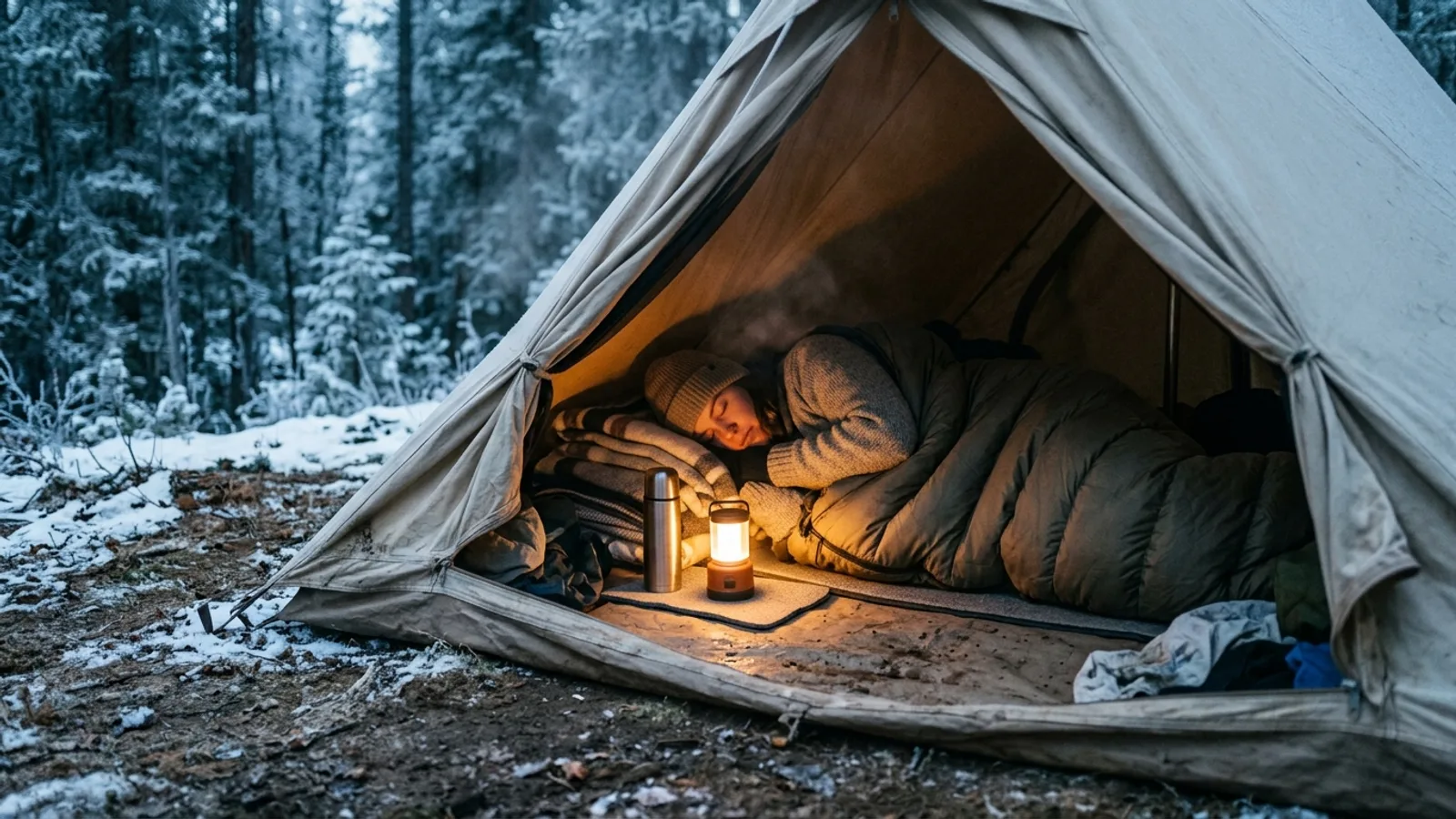
Choose a sleeping bag rated for temperatures colder than you expect to encounter, since ratings are optimistic for most sleepers. A bag with a hood and a draft collar around the shoulders makes a noticeable difference by trapping heat near your core.
Layer a blanket on top of the sleeping bag for extra warmth, and keep a hat on while you sleep — it's a simple habit that meaningfully reduces heat loss.
Clothing and Layering
Dress in loose layers rather than one bulky layer. Tight clothing restricts circulation and can actually make your hands and feet colder. Start with a moisture-wicking base layer, add an insulating mid-layer, and keep an outer layer for warmth against the car's interior air.
Change into dry sleep clothes before bed. Clothing worn during the day, even if it feels dry, often holds sweat and moisture that will chill you overnight. Keep your feet covered with dry, warm socks, and consider a hat specifically for sleeping — a surprising amount of heat is lost through an uncovered head.
Powering Heat Without Combustion
Electric options are the safest way to add heat inside a closed car. A heated blanket or mattress pad run off a portable power station avoids the ventilation risks of combustion heaters, though battery capacity limits how long it can run, so pair it with good insulation rather than relying on it alone.
Hand warmers and a hot water bottle tucked into your sleeping bag before you get in add a quick, low-tech boost of warmth without drawing on any battery.
Eating and Hydration for Warmth
A warm, calorie-dense dinner before bed gives your body fuel to generate heat overnight. Meals with slow-digesting carbohydrates tend to sustain warmth longer than a light snack.
Stay hydrated during the day, but taper water intake in the couple of hours before bed to avoid waking up cold for a bathroom trip. If you do wake up needing to go, don't put it off — holding it actually forces your body to spend energy keeping the extra fluid warm.
General Safety Reminders
- Keep your keys within reach in case you need to move the car or unlock doors quickly.
- Lock doors and windows overnight for personal security, even in quiet campgrounds.
- Pack basic emergency supplies: a first aid kit, extra blankets, a flashlight, and a way to call for help if you're outside cell coverage.
- Check tire condition and carry a tire pump or jumper cables before heading into remote cold-weather terrain, since a mechanical problem in freezing conditions is more serious than in mild weather.