How to Stay Warm Tent Camping in Cold Weather
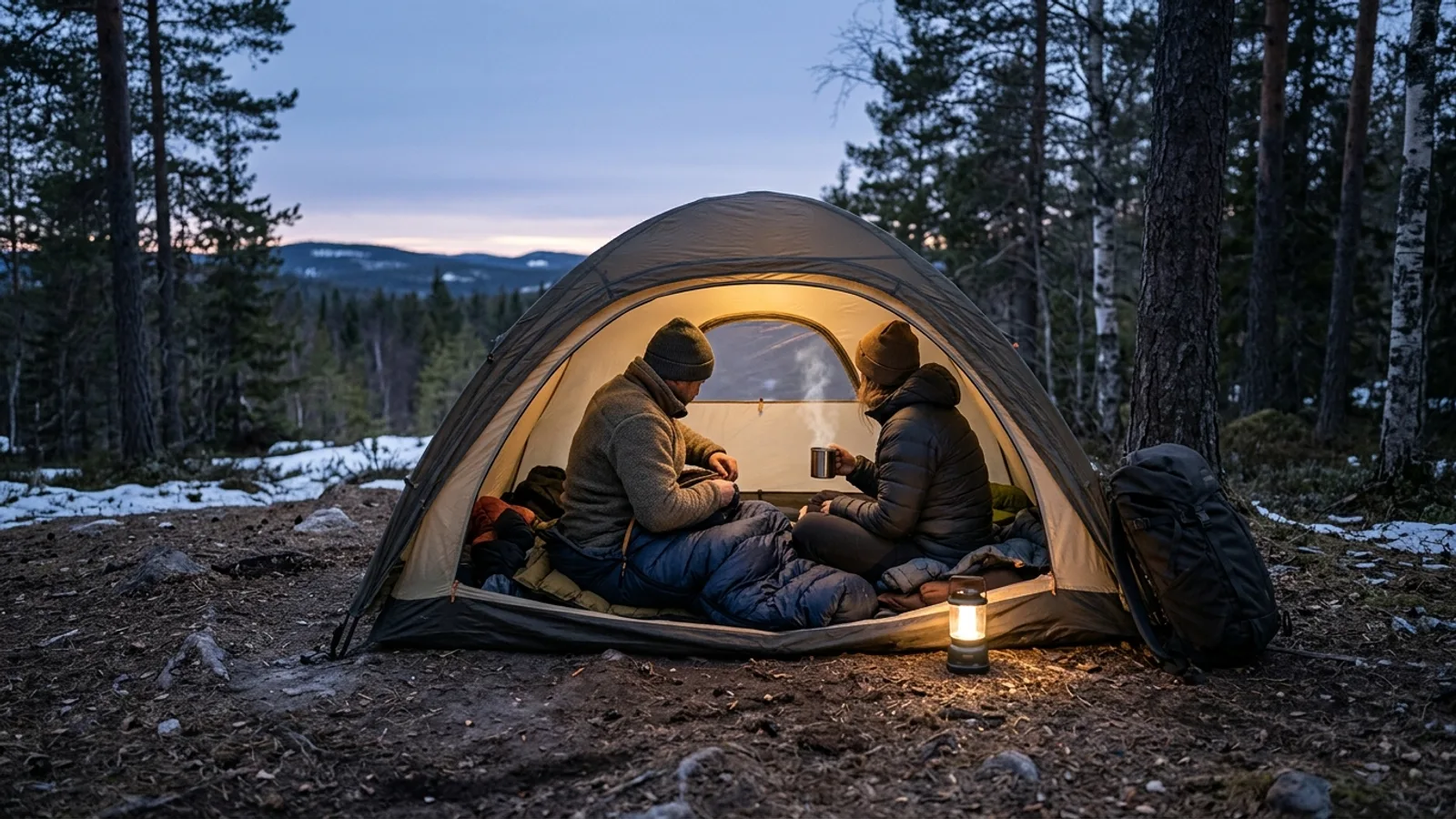
Staying warm in a tent comes down to a handful of controllable factors: the tent itself, where you pitch it, how you manage moisture, and the sleep system you bring. None of it requires exotic gear, just attention to the details that actually matter.
Choose a Tent That Matches the Conditions
Smaller tents are easier to keep warm than large ones. A tent sized close to the number of people using it has less air volume to warm with body heat alone, and less interior space for that warmth to spread thin.
Tents built for three-season use are fine for most cold-but-not-extreme trips. They rely on mesh panels for ventilation, which is good for airflow but lets more cold air move through. Tents designed for winter or expedition use trade some of that mesh for solid fabric panels, which cuts drafts and holds warmth better, at the cost of ventilation and setup weight. If you're camping in conditions with sustained freezing temperatures, heavy snow, or high wind, a tent built for those conditions is worth the tradeoff. For an occasional cold night, a well-pitched three-season tent works.
Pick a Sheltered Campsite
Wind pulls heat away from a tent much faster than still cold air. Look for natural windbreaks — a treeline, a rock outcrop, a rise in the terrain — and position your tent so it's shielded from the prevailing wind direction rather than exposed to it.
Cold air sinks, so low-lying areas like valley bottoms and depressions tend to collect the coldest air overnight, even when higher ground nearby is milder. A site with slightly higher elevation than its immediate surroundings, but still sheltered from wind, often stays warmer than a low spot.
Orienting your tent so it catches morning sun can make a real difference in how easy it is to get up and moving, since direct sun warms the tent fabric and interior air quickly once it clears the horizon.
Manage Condensation
Warm, moist air from breathing and cooking condenses on cold tent walls overnight, and that dampness makes everything feel colder. Two habits reduce it significantly.
- Pitch the tent taut. A tight pitch lets fabric and mesh breathe as designed and reduces the sagging fabric-to-skin contact that traps moisture.
- Keep a vent open. Most tents have a roof or door vent for exactly this reason. Cracking it, even in cold weather, lets humid air escape instead of condensing on the walls and dripping back down.
A dry tent interior is meaningfully warmer than a damp one, even at the same air temperature.
Bring a Sleeping Bag Rated for the Cold
Sleeping bags carry a temperature rating meant to indicate the lowest temperature at which an average sleeper stays comfortable. Treat that number as a rough guide rather than a guarantee — individual cold tolerance varies, and it's generally safer to choose a bag rated colder than the lowest temperature you expect.
A hood that cinches around the head and a draft collar around the shoulders both matter more than people expect, since a surprising amount of body heat is lost through an open bag collar or an uncovered head.
Fit affects warmth too. A bag with a lot of unused space inside has to warm that extra air, which works against you. A snug, properly sized bag warms up faster and holds heat better. If you need extra margin, a liner or an added blanket inside the bag adds warmth without needing a whole different bag.
Insulate Yourself From the Ground
Lying on bare ground draws heat out of your body through direct contact, regardless of how warm the air around you is. A sleeping pad interrupts that heat loss, and its insulating value is described by an R-value: higher numbers mean more insulation. For genuinely cold nights, look for a combined R-value on the higher end of what's available, and know that many people stack two pads — for example, a foam pad under an inflatable one — for the same effect.
An air mattress alone is a poor substitute here. It's comfortable, but the air layer inside does very little to stop heat loss, so you can end up with a warm sleeping bag on top of a cold mattress and still feel chilled from below.
A Few Additional Habits That Help
- Change into dry sleep clothes before bed rather than sleeping in whatever you wore during the day, since even light dampness from sweat saps warmth overnight.
- A hot drink or warm food before sleep can help you feel warmer heading into the night, though it's not a substitute for adequate insulation.
- Keep your head, hands, and feet covered — a hat is one of the simplest ways to reduce heat loss while sleeping.
- Avoid going to bed already cold. A short bit of movement to warm up before getting into the sleeping bag makes it easier for the bag to maintain that warmth rather than trying to generate it from scratch.