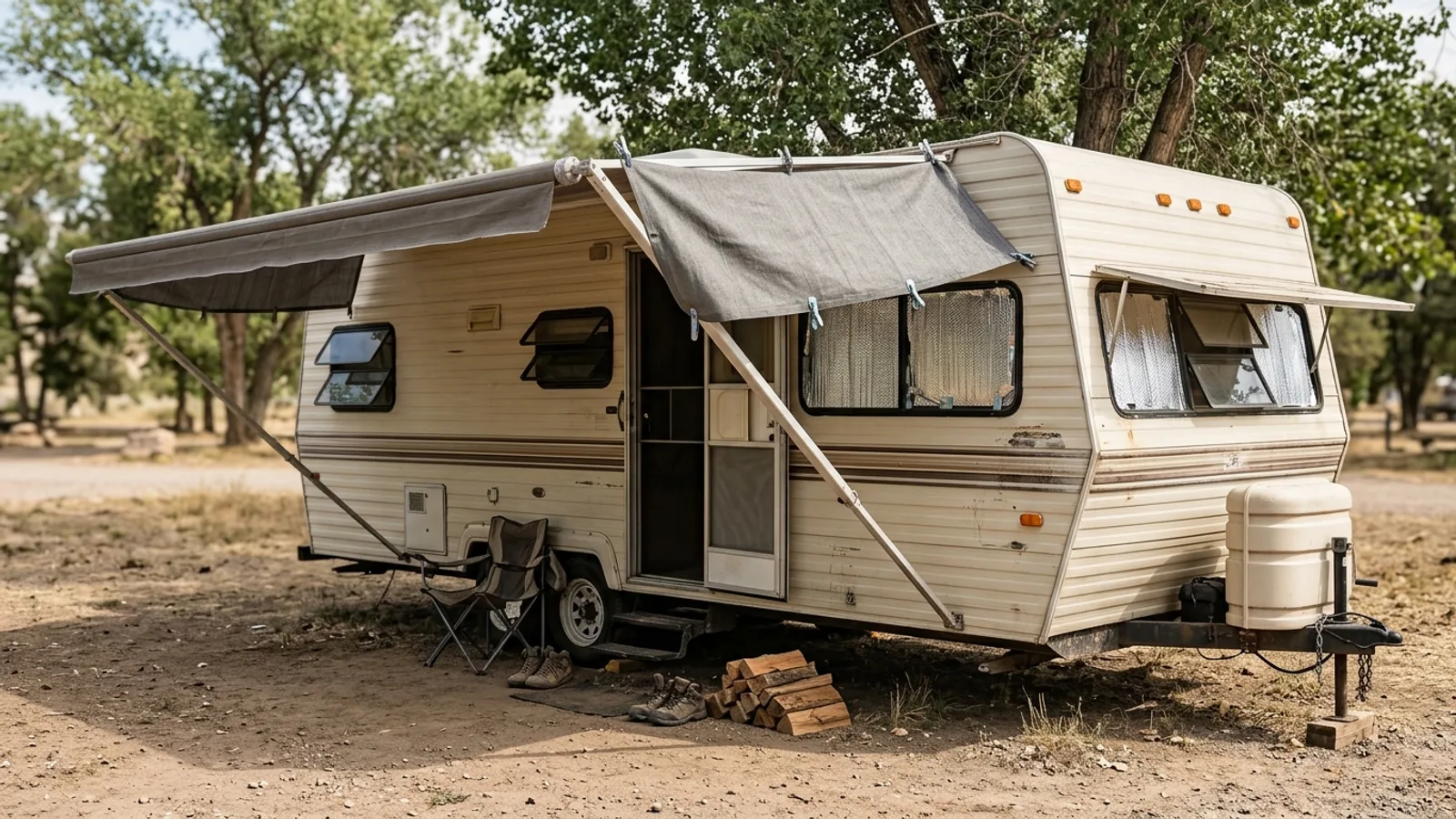
How Much Living Space Is in a 40-Foot RV?
The Basic Math
A simple way to estimate an RV's square footage is to multiply its overall length by its width. Most RVs are close to 8 to 8.5 feet wide, the maximum allowed for travel on public roads without special permits. So a 40-foot RV multiplied by roughly 8.5 feet of width gives a rough figure in the range of 320 to 340 square feet.
That number is only a starting point. It assumes the entire length and width of the vehicle is usable living space, which is never actually true. Engine compartments, storage bays, wheel wells, tanks, and wall thickness all eat into the total. The livable interior is always smaller than the exterior footprint suggests.
Why the Real Number Is Different
Manufacturers design around structural and mechanical needs first, then fit living space around them. Two RVs of identical exterior length can have noticeably different interior square footage depending on how much of the chassis is dedicated to storage, tanks, or a garage area for hauling gear.
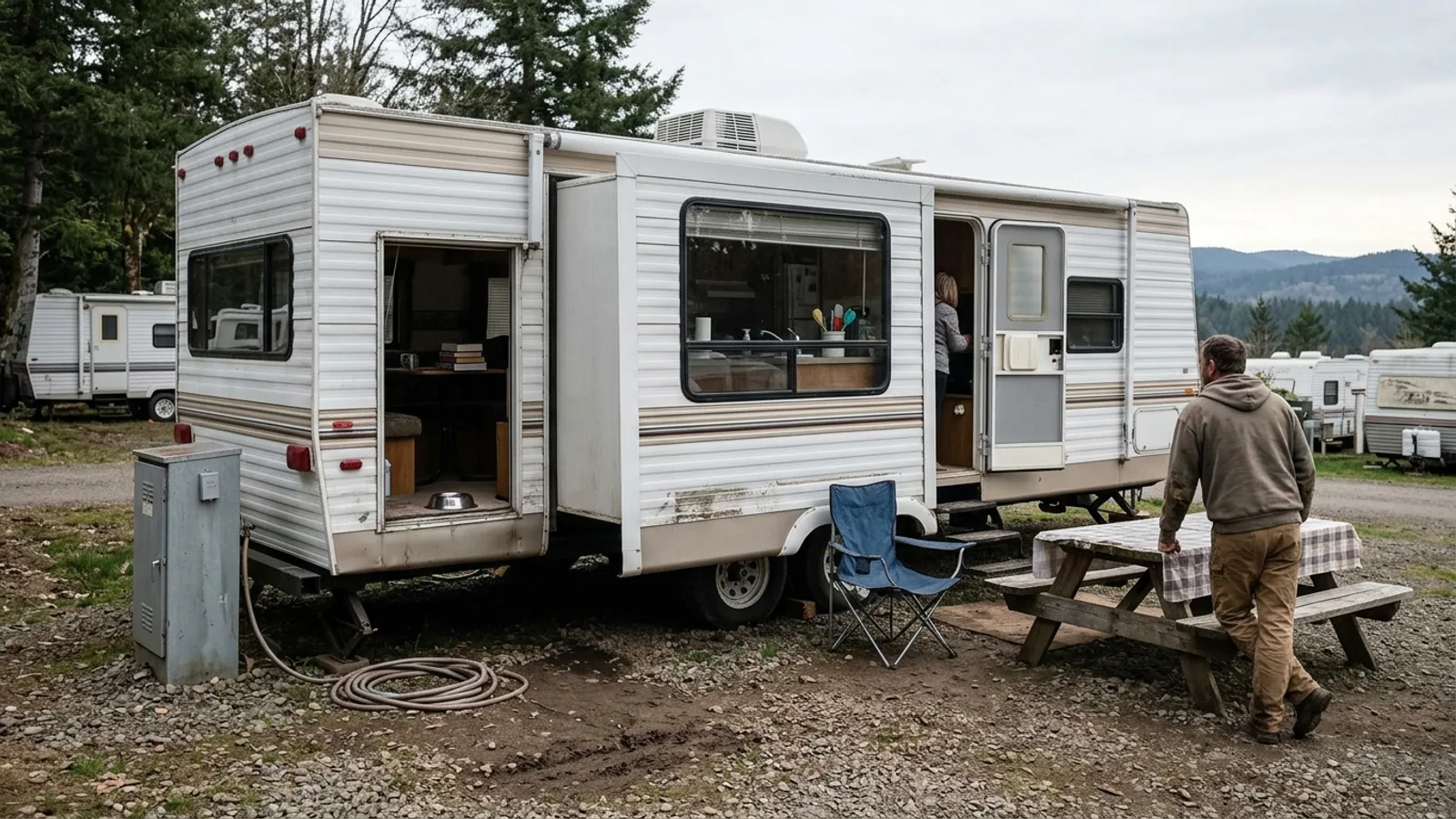
Slide-outs make the biggest difference. These are sections of wall, floor, and roof that extend outward once the RV is parked, adding several feet of width to a room. An RV with multiple slides can gain a meaningful amount of usable space compared to a similarly sized unit without them. The catch is that this space disappears while driving, so the true "on the road" footprint is smaller than the "parked and set up" footprint.
Layout matters just as much as raw square footage. An open floor plan with a shared living and kitchen area tends to feel more spacious than a chopped-up layout with the same total square footage. Ceiling height, window placement, and how furniture is arranged all affect how usable a space feels day to day.
Don't Rely on Model Numbers
Some manufacturers include a number in the model name that hints at overall length, but this convention is inconsistent across brands and has become less reliable over time. Many manufacturers now keep model numbers under a certain length threshold specifically because campgrounds and parks often have length restrictions for sites, and a number that reads as too long can turn away potential buyers regardless of the RV's actual footprint.
The safest approach is to ignore the model number as a sizing tool entirely. Look instead at the floor plan diagram, the listed interior dimensions, and, if possible, walk through the actual unit or a comparable one before assuming anything about its livable space.
Comparing RVs the Right Way
When comparing different RVs, square footage alone can be misleading. A smaller unit with a well-designed layout can feel more livable than a larger one with wasted or awkward space. A few practical steps help:
- Walk through the floor plan with slides both extended and retracted, since retracted space is what you'll have while driving or at rest stops.
- Picture your daily routine in the space: cooking, sleeping, working, and moving between rooms.
- Check where major furniture pieces sit relative to walkways, and make sure the bathroom and bedroom are functional at their actual dimensions, not just as they appear in photos.
- Note storage volume separately from floor space. Cabinets, exterior bays, and closets don't count toward square footage but are essential for longer trips.
Motorhomes vs. Towable Campers
Motorhomes and towable campers (travel trailers and fifth wheels) both come in a range of sizes, and length alone doesn't guarantee more space. Large motorhomes often dedicate significant length to the driving cab and engine area, which reduces the proportion of the vehicle available for living space compared to a towable of the same overall length.
Fifth wheels, which connect over a truck bed, can often use that raised forward section for a bedroom or loft, effectively adding usable volume without adding much to the overall length. Travel trailers, connected via a standard hitch, tend to have a more uniform single-level layout.
The right choice depends less on which category typically offers more square footage and more on how a specific floor plan matches your travel style, group size, and how often you plan to tow or drive versus stay parked.
Trade-Offs of More Space
A larger RV generally offers more room to spread out, more separation between sleeping and living areas, and more storage for extended trips or larger groups. These benefits come with real trade-offs worth weighing before buying.
Bigger rigs are harder to maneuver on narrow roads, mountain switchbacks, and tight campground loops. Some campgrounds and scenic routes have length or width restrictions that limit where a larger RV can go at all. Larger interiors also mean more surface area to heat, cool, and power, which affects how long you can comfortably stay off-grid on batteries and propane alone.
Smaller and mid-size RVs trade some living space for easier driving, more flexibility in where you can park or camp, and generally simpler systems to maintain. For travelers who prioritize access to remote or tight sites over interior square footage, a more compact RV is often the more practical choice.
What Actually Matters
Square footage is a useful rough filter, but livability comes down to layout efficiency, how the space functions with slides in and out, and how well it matches your specific travel habits. Before deciding on size, spend time walking through actual floor plans, picture your typical day inside the space, and weigh storage and maneuverability alongside the raw square-foot number.