Overlanding Electronics: A Practical Checklist
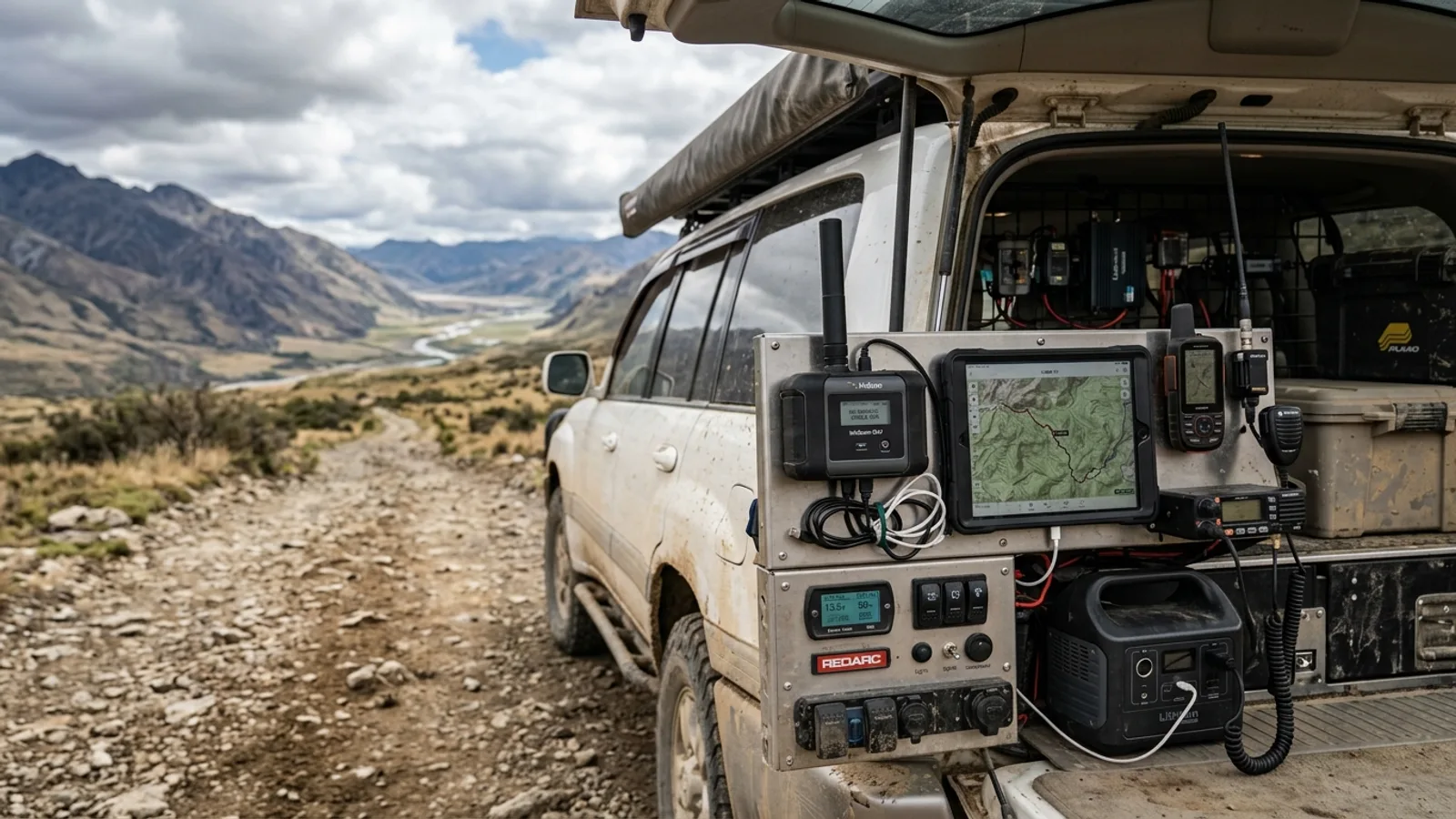
What Overlanding Electronics Actually Need to Do
Overlanding means driving to remote places, often for multiple days, without reliable access to shore power, cell service, or a mechanic. Every electronic device you bring should serve one of three jobs: keep you found, keep you connected, or keep your gear powered. Anything else is extra weight.
Navigation
Cell signal disappears quickly once you leave paved roads, so plan to navigate without it. A GPS unit loaded with offline topographic or trail maps is the core tool. A paper map and compass are worth carrying as a backup that never runs out of battery and doesn't depend on satellites working correctly.
Before a trip, download offline maps for your phone's mapping app as well, since it can serve as a second reference even in airplane mode. Confirm route and elevation data before you lose signal, not after.
Communication
Standard cell phones are unreliable once you're away from towns. A satellite messenger or satellite phone gives you a way to send updates or call for help from areas with no cell coverage at all. Two-way radios are useful for keeping in contact between vehicles traveling together, since they don't depend on any external network.
If you're traveling in a group, agree on a communication plan before you leave cell range: check-in times, channels, and what to do if someone doesn't respond.
Portable Power
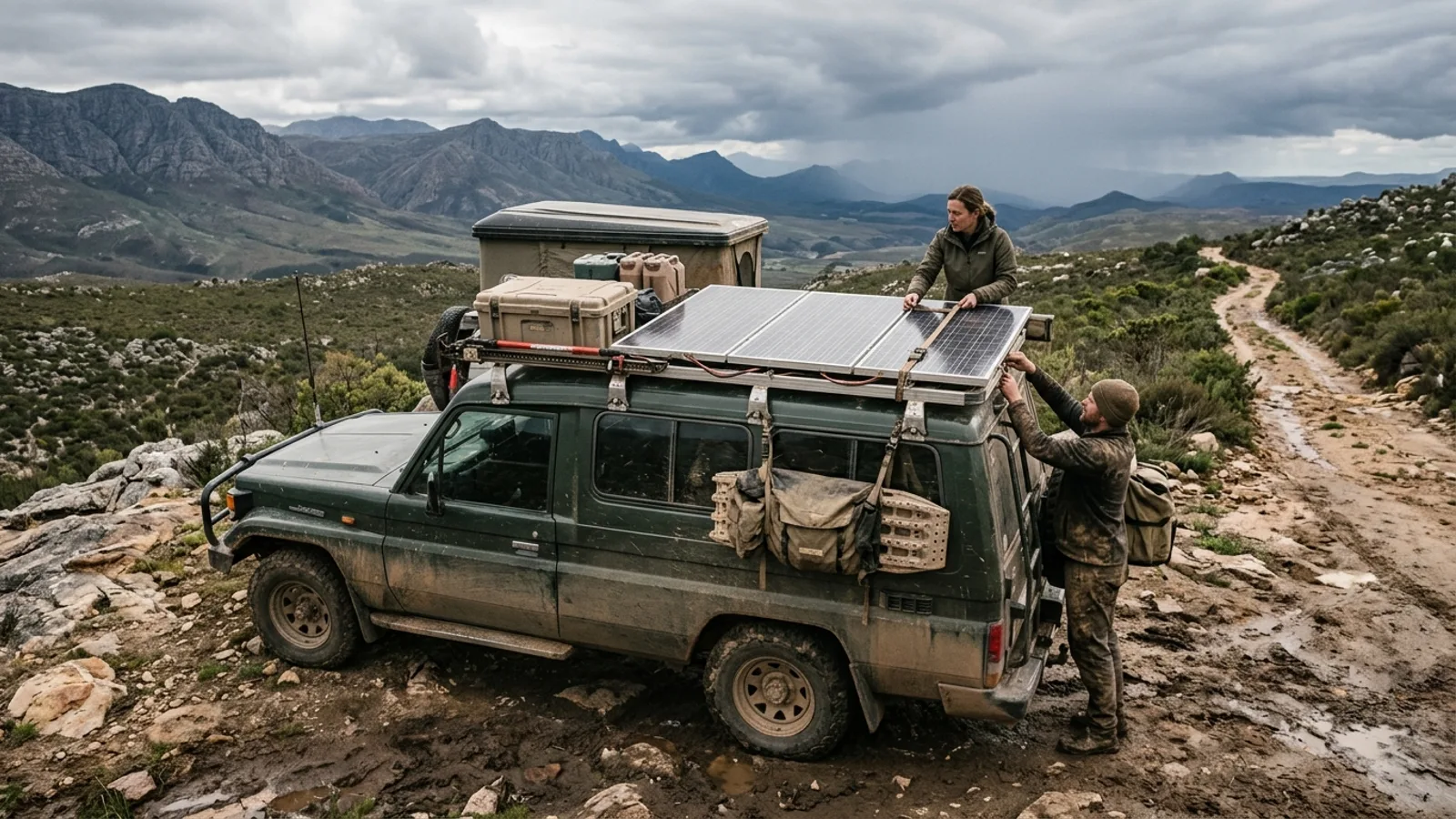
Modern overlanding setups often run refrigerators, lights, charging ports, and sometimes small appliances off battery power rather than the vehicle's engine. A dedicated portable power station, charged either from your vehicle's alternator while driving or from folding solar panels while parked, keeps these running without draining your starter battery.
When choosing a power setup, think in terms of capacity and recharge speed rather than brand names. Estimate what you'll actually run — a cooler and a few small devices need far less power than a fridge, lighting, and a laptop combined — and size your battery and solar input to that real load, with some margin for cloudy days or shorter charging windows.
Keep devices dry and out of direct sun when not in use, and give solar panels a clear, unobstructed angle toward the sun rather than leaving them flat on a dashboard.
Lighting
Headlamps free up your hands for cooking, repairs, or setting up camp in the dark, and are more useful than a single flashlight for most tasks. A separate lantern or string lights around camp reduces how often you reach for a headlamp and helps preserve its battery. Carry spare batteries or a way to recharge lights independently of your main power station, in case that system fails.
Vehicle-Related Electronics
A tire pressure monitoring system helps you catch a slow leak before it becomes a flat, which matters more on rough or remote roads where a blowout is harder to deal with safely. A 12-volt tire inflator lets you adjust pressure for different terrain and reinflate after a repair.
Some overlanders also carry a basic multimeter or vehicle diagnostic reader to help identify electrical issues on the road, though this is optional and depends on your comfort with vehicle systems.
Charging and Cable Management
Bring the actual charging cables your devices need rather than assuming compatibility, and carry at least one spare cable for anything critical like your satellite communicator or GPS unit. A small organizer or dedicated bag for cables and adapters prevents the common problem of arriving at camp with a dead device and no way to charge it.
Battery Care in the Field
Batteries perform worse in extreme heat and cold. Keep spare batteries and battery-powered devices insulated from temperature extremes when possible, and don't leave power stations or lithium batteries baking in direct sun for extended periods. Charge devices when convenient rather than waiting until they're empty, so you always have a buffer if weather or terrain delays your trip.
Building a Realistic Checklist
- GPS unit with offline maps, plus a paper map and compass as backup
- Satellite messenger or satellite phone for areas without cell service
- Two-way radios if traveling with other vehicles
- Portable power station sized to your actual electrical load
- Solar panels or another way to recharge power stations away from the vehicle
- Headlamp for each person, plus a camp lantern or lighting
- Tire pressure monitor and a 12-volt inflator
- Charging cables and adapters for every device, with spares for critical ones
- Spare batteries for headlamps, GPS units, and other essential devices
Planning Around Your Electronics, Not Just Packing Them
The gear on this list only helps if you've thought through how you'll use it. Check that your GPS maps actually cover your route before you leave. Test your satellite communicator's signal and confirm your emergency contacts know how to respond. Run your power station through a full charge-and-discharge cycle before a trip so you know its real capacity, not just its rated one.
Electronics are a supplement to good judgment and preparation, not a replacement for them. Carry the tools, but also carry the skills — reading a paper map, changing a tire, treating a minor injury — for the moments when a device fails or a battery runs out.