RV Battery Disconnect Switch: On or Off When Plugged In or in Storage?
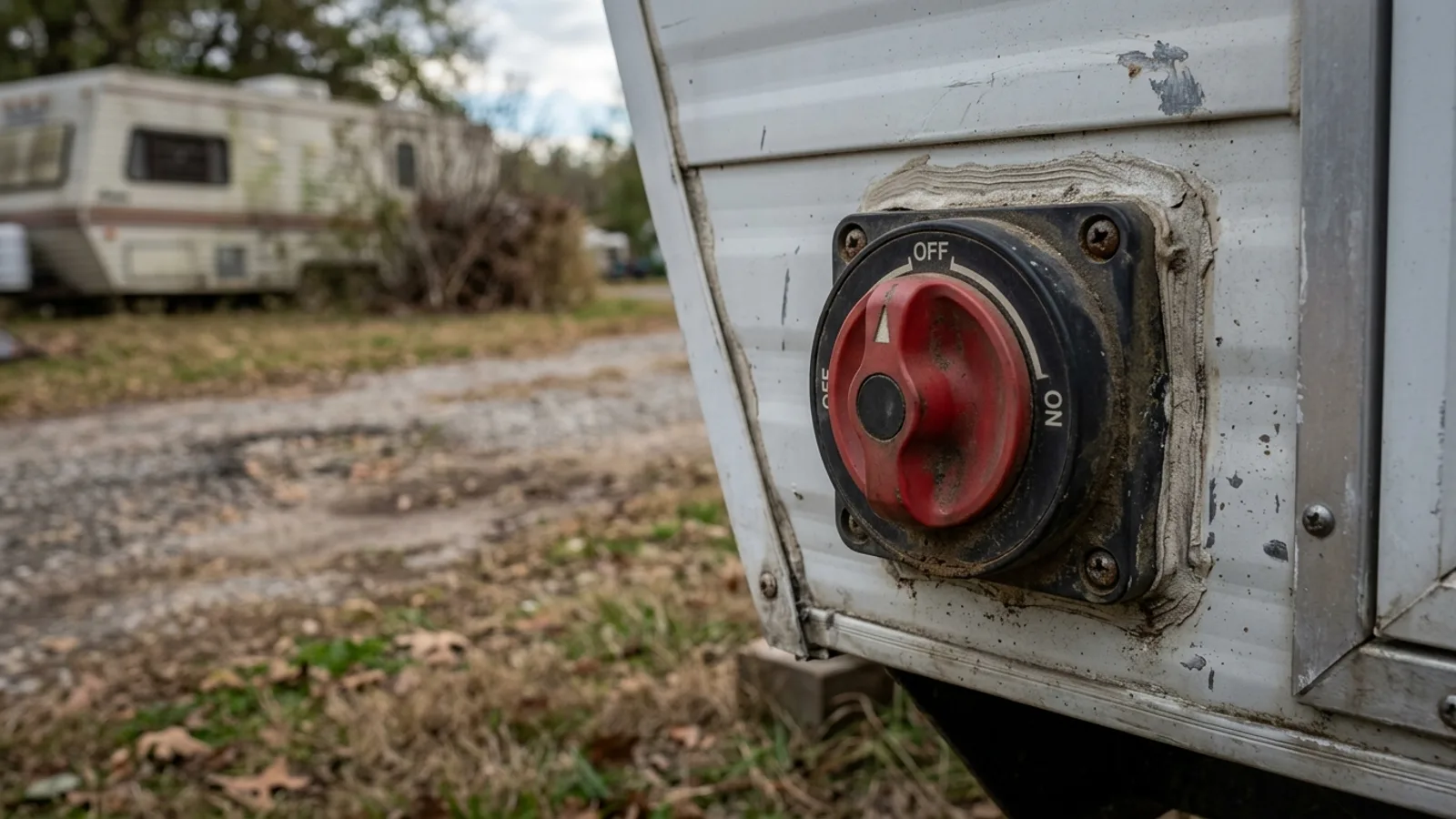
What a Battery Disconnect Switch Does
A battery disconnect switch is a manual switch, usually mounted near the battery bank, that breaks the connection between the battery and the rest of the RV's 12-volt electrical system. It's typically wired into the negative cable. Flip it off, and the battery is electrically isolated from the coach's wiring. Flip it on, and power flows normally to lights, fans, the refrigerator control board, slide-out motors, and everything else that runs on 12-volt power.
Its main job is to stop slow battery drain when the RV isn't in use. Even when everything inside looks "off," many RVs have small loads running constantly — a propane leak detector, a clock, a stereo memory circuit — and those loads pull from the battery around the clock. The disconnect switch lets you stop that draw without disconnecting cables by hand.
Switch Position While Plugged Into Shore Power
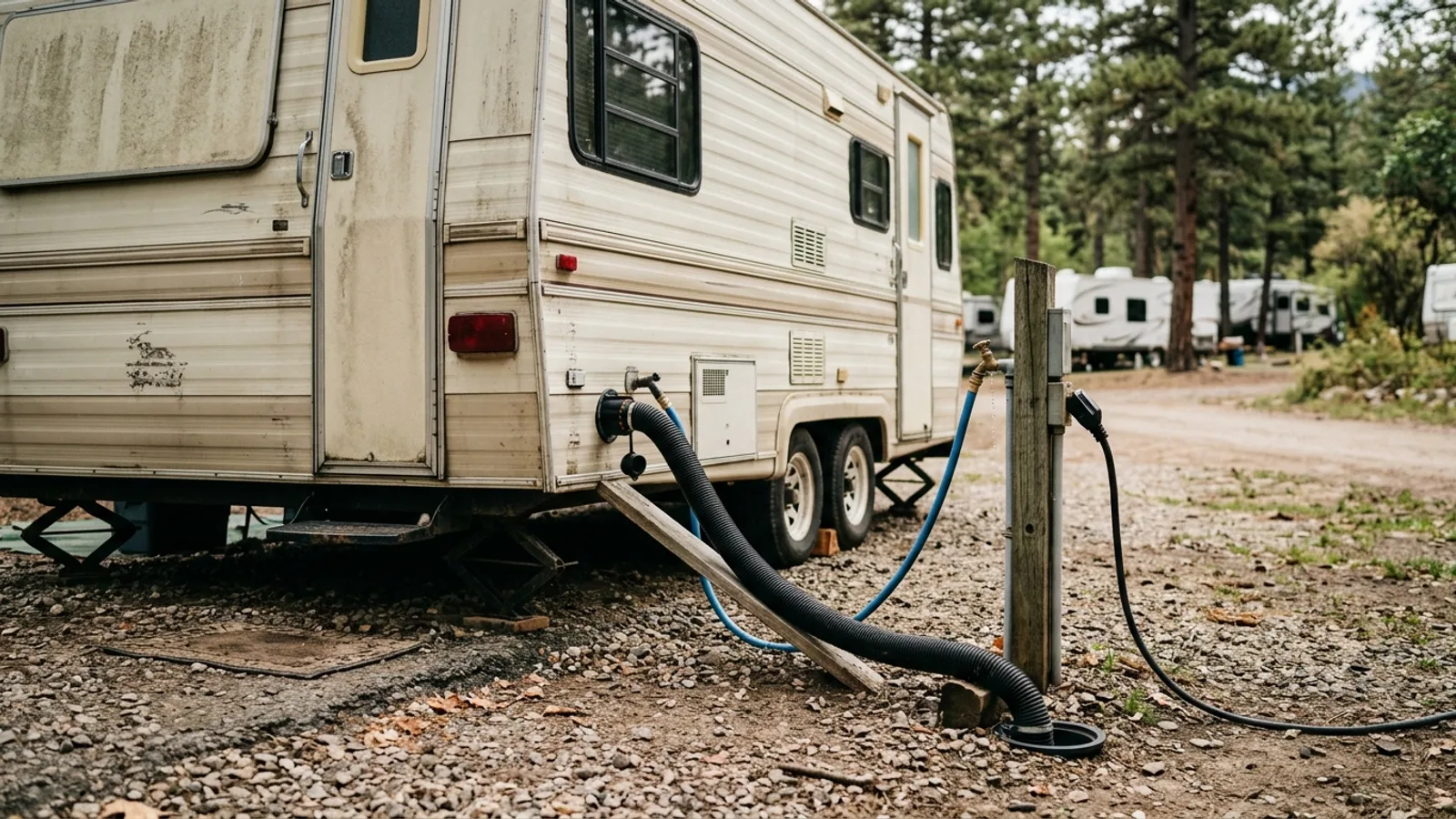
When your RV is plugged into shore power and the converter or charger is functioning normally, it's generally fine to leave the disconnect switch on. Shore power runs the converter, which in turn keeps the battery topped off, so the battery isn't doing the work of supplying the coach's 12-volt loads.
There are two situations where people choose to switch it off anyway even while plugged in:
- Extended storage: if the RV will sit connected to shore power for a long stretch unattended, some owners prefer to disconnect the battery and let a dedicated maintenance charger handle it separately, rather than trust the coach's converter to manage a long-term float charge correctly.
- Older or unknown converters: a charging system that overcharges or doesn't properly taper off can shorten battery life over time. If you're not sure how your converter behaves during long idle periods, disconnecting the battery and using a purpose-built trickle charger is the safer bet.
For day-to-day plugged-in use at a campground, leaving the switch on is standard practice and lets the RV function normally.
Switch Position During Storage Without Shore Power
If the RV will sit without shore power for more than a couple of weeks, switch the disconnect off. This prevents parasitic loads from draining the battery down to a level that causes permanent capacity loss. Deeply discharged lead-acid batteries, especially if left flat for a long time, often don't recover their full capacity even after recharging.
For very short storage — a few days to a week — leaving the switch on is usually not a problem if the RV has few or no parasitic loads. When in doubt, switch it off; there's little downside to disconnecting, and it takes only a moment to switch back on.
Why the Switch Doesn't Stop Every Drain
A disconnect switch interrupts the main circuit, but some components are sometimes wired directly to the battery ahead of the switch, bypassing it entirely. Depending on how the RV was built, this can include propane/CO detectors, some stereos, and certain built-in clocks or control boards. These devices can keep drawing a small amount of power even with the switch off.
This is normal and, by itself, usually isn't fast enough to cause damage over a few weeks. But over months of storage, even a small constant draw adds up. If you're storing the RV for an entire season, don't rely on the disconnect switch alone.
Reducing Drain During Long Storage
- Disconnect the battery cables entirely for extended storage, rather than relying only on the switch.
- Where practical, remove batteries from small standalone devices like clocks or detectors that have their own battery backup.
- Use a smart maintenance charger (sometimes called a battery tender) designed to float-charge a battery over long periods without overcharging it. This is more reliable for multi-month storage than leaving the RV plugged into shore power unattended.
Cold-Weather Storage Considerations
Temperature affects battery health independently of the disconnect switch. A battery that is already partially discharged is more vulnerable to freezing damage than one that's fully charged, because a charged battery's electrolyte has a lower freezing point. For winter storage:
- Fully charge the battery before storing it.
- Disconnect it from the RV's electrical system, and consider removing it entirely if the RV will sit somewhere unheated for months.
- Store batteries in a space that stays above freezing when possible, such as a garage or basement, rather than leaving them in an unheated RV parked outside.
- Keep the battery on a maintenance charger through the storage period if you can access power at the storage location.
- Check the charge level periodically rather than assuming it will hold steady untouched all winter.
General Battery Care Habits
A disconnect switch is one tool among several. Good long-term battery health also depends on:
- Keeping terminals clean and free of corrosion, and connections tight.
- Checking state of charge periodically with a battery monitor or multimeter, rather than assuming it's fine.
- Avoiding letting the battery sit fully discharged for any length of time.
- Following the charging guidance that came with your specific battery type, since charging needs differ between battery chemistries.
- Handling batteries carefully — wearing eye protection and gloves when working directly on terminals or cables reduces the risk of injury from sparks or contact with battery acid.
Bottom Line
Leave the disconnect switch on for normal use and typical shore-power stays. Switch it off for storage lasting more than a couple of weeks, especially without shore power. For long-term or winter storage, don't rely on the switch alone — disconnect the cables, keep the battery charged with a maintenance charger, and store it somewhere that won't freeze if you can.