Desert Camping: A Practical Guide to Staying Safe and Comfortable
Understanding Desert Camping Rules
Deserts within public lands are often fragile ecosystems that recover slowly from damage. Most parks and preserves set rules around where you can camp, how many nights you can stay, and how large your group can be. These limits exist to spread out human impact and protect delicate soil crusts, plant life, and wildlife habitat.
Before any trip, check the specific regulations for the park or preserve you're visiting. Rules vary by location and by season, and backcountry camping often requires a permit. Pay attention to:
- Maximum stay limits per campsite or per trip
- Group size restrictions, especially in backcountry zones
- Whether campfires are allowed, and where
- Pet policies, including leash requirements and waste disposal
If you're bringing a pet, plan on keeping it leashed at all times and packing out its waste just as you would your own trash. Desert wildlife can be unpredictable, and an off-leash pet can stress animals or wander into dangerous terrain.
Leave No Trace in the Desert
Leave No Trace principles matter everywhere, but the desert is especially unforgiving of careless footprints. Recovery from a single set of tire tracks or a trampled patch of biological soil crust can take far longer here than in wetter climates.
- Plan ahead: Know the terrain, water sources, and weather forecast before you go.
- Stick to durable surfaces: Camp on established sites or bare ground, not on vegetation or soil crust.
- Pack out all waste: This includes food scraps, toilet paper, and anything else you bring in.
- Leave natural and cultural features untouched: Rocks, plants, and artifacts should stay where you find them.
- Keep fire impact low: Use a camp stove where possible, and only build fires in designated fire rings.
- Give wildlife space: Observe from a distance and never approach or feed animals.
- Be a good neighbor: Sound travels far in open desert terrain, so keep noise low, especially at night.
Choosing a Desert Campsite
National parks, preserves, and state parks across the desert Southwest and Great Basin offer a range of camping styles, from developed campgrounds with water and restrooms to primitive backcountry sites reachable only on foot.
Developed campgrounds typically offer:
- Defined sites for tents or RVs, sometimes with electrical hookups
- Restroom facilities and occasionally showers
- A waste disposal or dump station
Backcountry sites usually offer more solitude and closer contact with the landscape, but require greater self-sufficiency: you'll need to carry in your own water, pack out all waste, and be prepared for limited or no cell service.
When picking a destination, consider the season. Many desert parks are most comfortable in cooler months, while summer heat can make daytime activity dangerous in lower elevations.
Staying Hydrated
Dehydration is the single biggest risk in desert camping, and it can develop faster than people expect, especially in dry heat where sweat evaporates quickly and you may not feel as thirsty as you actually are.
- Carry more water than you think you need. A common baseline is at least a gallon per person per day for drinking alone, with more required for cooking, cleaning, or strenuous hiking.
- Drink consistently, rather than waiting until you feel thirsty. Thirst is a lagging signal in dry climates.
- Watch for warning signs such as headache, dizziness, fatigue, or dark-colored urine. These suggest you need to rehydrate and rest in shade.
- Know your water sources in advance. Natural water in the desert is often scarce, unreliable, or unsafe to drink without treatment, so don't count on it.
Lightweight, leak-resistant water containers and a hydration reservoir for hiking can make it easier to carry and track your intake throughout the day.
Clothing and Sun Protection
Sun exposure and heat are constant companions in desert environments, even when temperatures feel bearable.
- Cover up. Lightweight, breathable long sleeves and pants made from natural fibers like cotton or linen can protect skin while still allowing airflow.
- Wear a wide-brimmed hat to shade your face, ears, and neck.
- Use sunscreen with strong UV protection and reapply regularly, particularly after sweating heavily.
- Protect your eyes with sunglasses that block UV rays, since glare off light-colored sand and rock can be intense.
- Time your activity. Plan strenuous hikes for early morning or late afternoon, and rest in shade during the hottest part of the day.
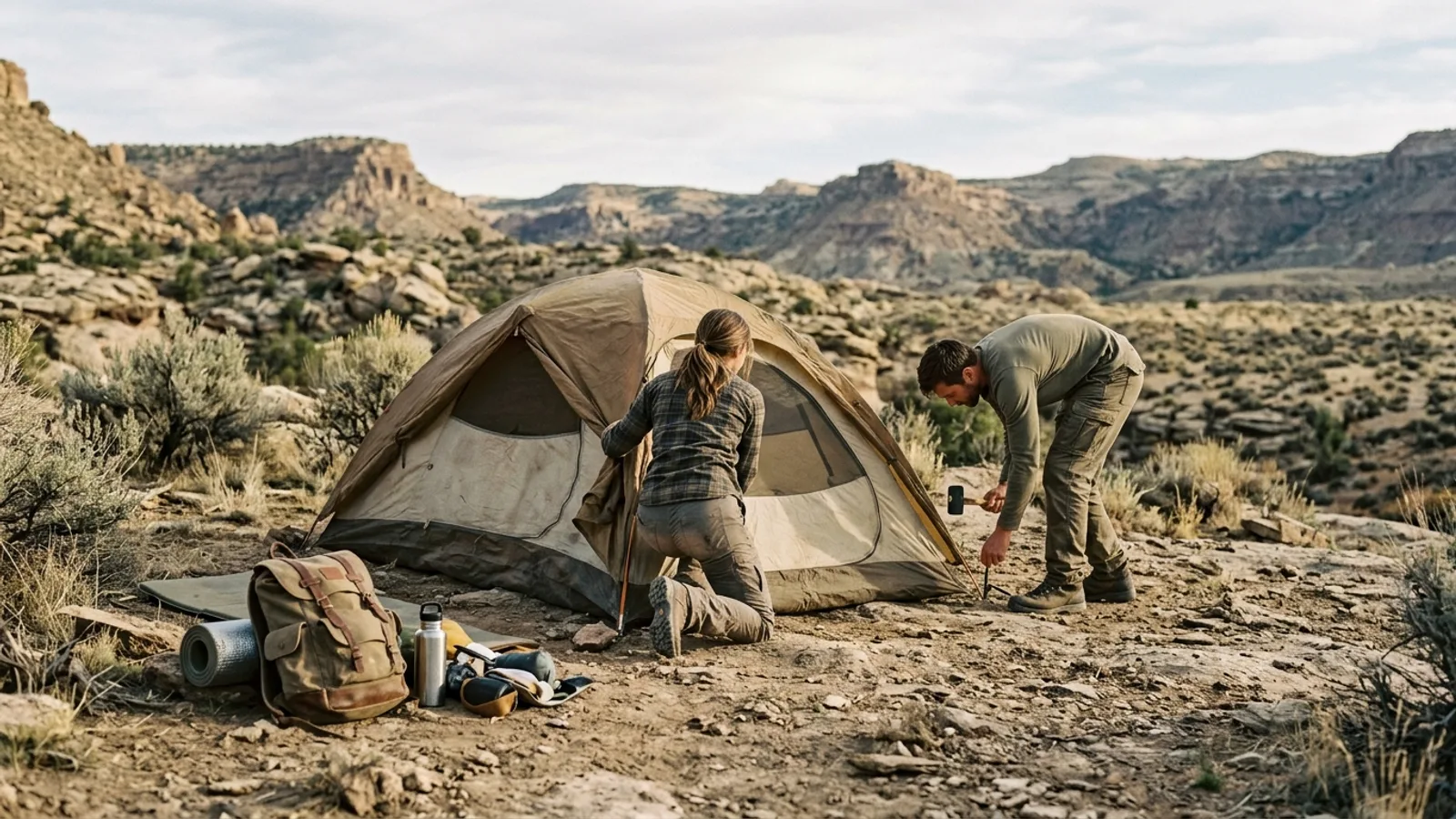
Setting Up Camp in the Desert
A little care in choosing and preparing your site goes a long way toward a comfortable night.
- Pick level, clear ground. Avoid depressions where rain could pool, and check for cacti, sharp rocks, or ant colonies before staking down.
- Prioritize airflow. A tent with good ventilation and mesh panels helps manage heat, while a solid rainfly or vestibule keeps out blowing sand.
- Use a groundsheet or tarp under your tent to add a barrier against rocky or abrasive terrain.
- Anchor everything securely. Desert winds can pick up suddenly, so use extra stakes or guy lines where needed.
- Store food carefully. Sealed containers help keep curious wildlife away from your campsite.
With the right preparation, a desert camping trip offers some of the most striking scenery and quiet solitude available in the outdoors. Respecting the rules, planning for heat and water needs, and setting up a smart camp are what make the difference between a rough trip and a memorable one.