RV Water Heaters Explained: Gas, Electric, and How to Maintain Them
Identifying Your RV Water Heater Type
Most RV water heaters fall into one of three categories: gas-only, electric-only, or combo units that can run on either. Tankless (on-demand) heaters are also common, especially in newer or higher-end rigs.
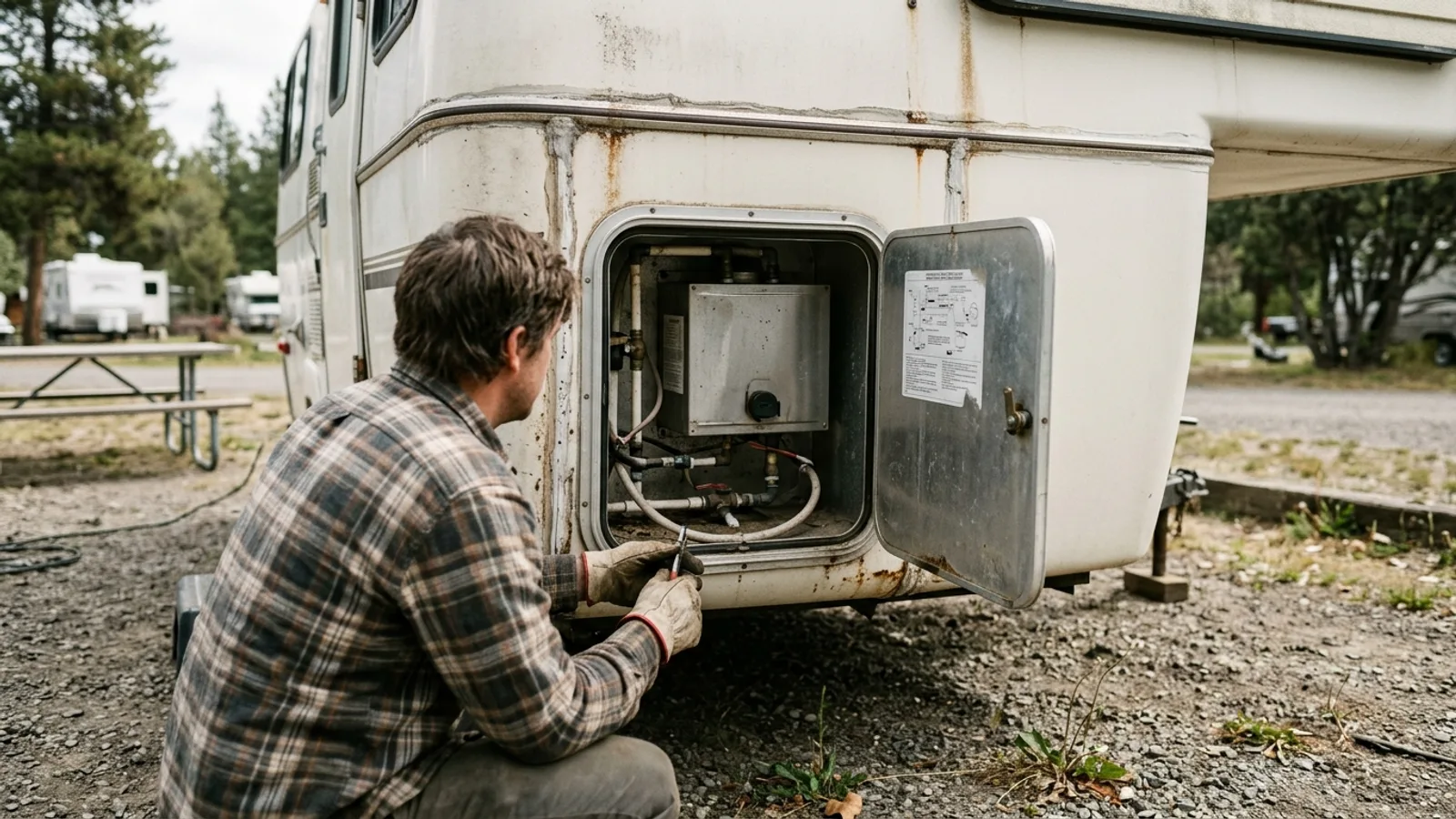
The easiest way to tell what you have is to look at the exterior access panel, usually a small door on the outside of the RV near the heater's location. Gas models will show a burner compartment and a way to light a pilot or ignite electronically. Electric-only units typically have a simple heating element with no combustion parts. Combo units have both a heating element and a burner, along with a switch or panel inside the RV that lets you pick the power source.
Check the interior control panel as well. If it has separate switches or a selector for "gas" and "electric," you have a combo unit. If there's only one option, your heater is dedicated to that power source.
Tank-Style vs. Tankless Heaters
Tank-style heaters store and heat a set volume of water, commonly in smaller or larger capacities depending on the RV. They take time to heat a full tank but can supply that volume continuously once hot.
Tankless heaters heat water as it flows through the unit, so there's no waiting for a tank to fill and heat. They tend to take up less space and only use energy when water is actually running. They do require adequate water pressure and flow to ignite and operate consistently, so performance can vary with your RV's plumbing setup.
Using an RV Water Heater
Filling the Tank
Before turning on a tank-style heater, make sure it's full of water. Connecting to a campground water hookup will usually fill the system automatically as you open faucets and let air bleed out. If you're relying on your onboard freshwater tank, run the water pump and open a hot water faucet until water flows steadily and without sputtering, which indicates the heater tank is full.
Never run a tank-style heater dry. Operating it without water in the tank can damage the heating element or tank lining.
Turning It On
Locate the water heater switch, usually on an interior control panel labeled for the water heater. Combo units let you choose gas, electric, or sometimes both at once. Gas offers faster recovery and works without shore power, which is useful when boondocking. Electric is quieter and convenient when you're plugged into shore power, though it generally heats more slowly than gas.
Some gas heaters use an electronic ignition powered by the RV's battery; others require manually lighting a pilot. Check your owner's manual for your specific ignition method.
Heating Time
A full tank typically takes somewhere between twenty minutes and an hour to heat, depending on tank size and power source. Gas heaters generally recover faster than electric ones. Tankless units heat on demand, so there's no wait, though the water may take a few seconds to reach full temperature after you open the tap.
Routine Maintenance
Sanitizing the System
Periodically sanitizing your freshwater system helps prevent bacteria and odor buildup, especially after long storage periods or if the RV has sat unused. A common approach is flushing the system with a diluted household bleach solution, letting it sit for several hours, then thoroughly flushing with clean water until no bleach smell remains. Always bypass the water heater during this process if your RV has a bypass valve, since prolonged bleach exposure isn't necessary for the tank itself and disconnecting power beforehand is a good safety habit.
Removing Sediment and Scale
Minerals in water can build up inside the tank over time, reducing efficiency and capacity. Flushing the tank with a descaling solution such as household vinegar, then rinsing thoroughly with clean water, can help clear this buildup. Doing this once or twice a year, or more often in areas with hard water, keeps the heater working efficiently.
Draining the Tank
You don't need to drain the water heater after every trip, but you should drain it before extended storage or whenever freezing temperatures are a risk. To drain, relieve pressure at the pressure relief valve first, then open the drain plug at the bottom of the tank and let it empty completely. Always let the tank cool before draining if the heater has been running, since hot water and pressure can cause injury.
Inspecting the Anode Rod
If your water heater has a metal tank, it likely includes a sacrificial anode rod that helps prevent corrosion. Check it periodically for pitting or significant wear, and replace it when it's noticeably deteriorated. Aluminum-tank heaters typically don't use an anode rod, so check your owner's manual to confirm which type you have.
Winterizing the Water Heater
If you're storing your RV anywhere temperatures may drop below freezing, draining the water heater is essential to prevent the tank and lines from cracking. After draining, bypass the water heater if possible so that antifreeze used elsewhere in the plumbing system doesn't fill the tank unnecessarily. Once winterized, leave the drain plug out and the pressure relief valve open until you're ready to use the RV again, so any residual moisture can escape.
Frequently Asked Questions
How can I tell if my RV water heater is gas or electric?
Check the exterior access panel for a burner and ignition source, and look at the interior control panel for switches labeled gas, electric, or both.
What types of RV water heaters are common?
Tank-style heaters (gas, electric, or combo) and tankless on-demand heaters are the main types found in RVs.
How long does it take for an RV water heater to heat up?
Typically twenty minutes to an hour for tank-style units, depending on size and power source; tankless units heat instantly as water flows.
How often should I maintain my RV water heater?
Sanitize and descale it once or twice a year, and inspect the anode rod (if equipped) at the same time.
Do I need to winterize my RV water heater every year?
Yes, if the RV will be exposed to freezing temperatures while stored, draining and bypassing the heater is necessary to prevent damage.