Pop-Up Tents for Camping: What to Know Before You Buy
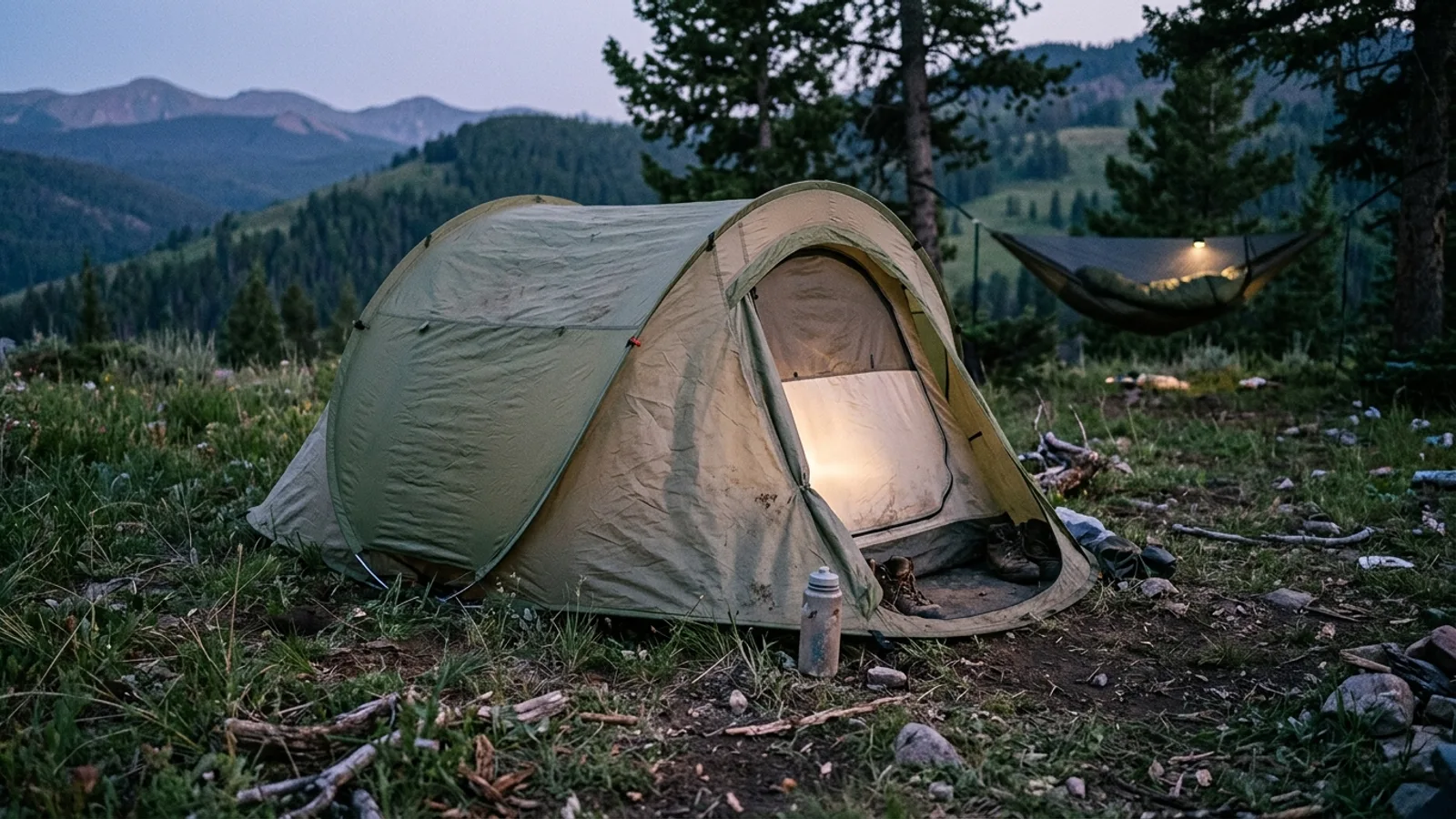
Pop-up and instant tents trade a bit of long-term durability for speed. Instead of threading poles through sleeves, the poles are pre-attached or spring-loaded, so the tent either unfolds itself or locks into shape with a few clicks and pulls. For weekend car camping, festivals, or trips where you'll be setting up and breaking down camp repeatedly, that convenience is a real advantage. This guide covers what actually matters when choosing one, rather than any specific product.
How Pop-Up Tents Differ From Traditional Tents
In a traditional tent, you insert flexible poles through fabric sleeves or clip them to the tent body, which takes a few minutes but gives you control over tension and pitch. A pop-up tent ships with the poles already integrated into the structure. Some fold flat and spring open when released; others use a hub-and-pole system that extends like an umbrella when you lift the canopy. Either way, most of the work is done for you, and setup usually takes well under five minutes.
The trade-off is flexibility. Traditional tents can often be tensioned, staked, and guyed out in ways that improve wind resistance and rain shedding. Pop-up tents are more fixed in their geometry, so how well they handle wind and rain depends heavily on their design and materials rather than on how you pitch them.
Size and Capacity
Manufacturer capacity ratings (the "4-person" or "6-person" label) usually describe how many sleeping bags could theoretically fit shoulder-to-shoulder on the floor, with no room for gear, bags, or shoes. A practical rule of thumb is to size down: if you want a comfortable fit for a family of four with some gear inside, look at a tent rated for six or more. If you're backpacking or want minimal packed weight, a two-person-rated tent will feel adequately roomy for one person plus gear.
Check the floor dimensions and peak height in addition to the capacity rating. A tent with a low peak height can feel cramped even if the floor area is generous, especially if you plan to change clothes or sit upright inside.
Ease of Setup
Almost all pop-up tents are fast to pitch, but take down and repacking is where they vary the most. Some fold back into their carry bag easily once you learn the technique; others are notoriously difficult to compress back to their original folded shape, especially the first few times. If possible, practice folding the tent at home before your first trip, in good light and without time pressure. Watching how the fold is supposed to work before you're standing in a windy campsite trying to remember will save frustration.
Also consider the number of people needed for setup and takedown. Larger cabin-style pop-ups may need two people to release and fold safely, since the spring tension can be strong.
Weather Resistance and Ventilation
Waterproofing in a tent comes from a few features working together: a rainfly that fully covers the tent body (not just the top), taped or sealed seams, and a floor material that's raised at the edges (a "bathtub" floor) so water can't seep in from the ground. A tent advertised as waterproof but lacking a full-coverage rainfly may still leak in wind-driven rain. Ventilation matters just as much as waterproofing. Mesh panels, adjustable vents, and a rainfly that can be partially rolled back on clear nights all help manage condensation, which builds up inside any enclosed tent from body heat and breath. A tent that seals out water completely but has no ventilation will often feel damp and stuffy from the inside instead.
Wind performance is harder to judge from a spec sheet. Lower-profile tents with a rounded or dome shape generally handle wind better than tall, boxy cabin-style tents. If you expect exposed or windy conditions, choose a lower profile and make sure you stake out every guy point provided, even on a pop-up design.
Durability
Pop-up tents are generally built for frequent, easy use rather than years of rugged backcountry abuse. Fabric weight, pole material, and zipper quality all affect how long a tent lasts. Zippers in particular are a common failure point — keep them clean of dirt and sand, avoid forcing them if they snag, and consider zipping slowly rather than yanking, which is the most common way a zipper pull separates from its track.
Storing the tent completely dry before packing it away extends its life significantly. Packing away a damp tent, even for a short time, encourages mildew and can degrade waterproof coatings over repeated trips.
Additional Features Worth Considering
- Vestibule or gear storage: A covered area outside the sleeping space keeps muddy boots and packs out of the main tent without taking up sleeping room.
- Interior pockets and gear loops: Useful for keeping a headlamp or phone accessible at night.
- Multiple doors: Helpful for larger tents so campers don't have to climb over each other to get outside.
- Removable rainfly: Lets you leave the mesh canopy exposed on clear, bug-free nights for stargazing while still having full weather protection available if conditions change.
Choosing the Right Tent for Your Trip
Match the tent to how you actually camp. If you're mostly car camping at established campgrounds in mild weather, prioritize interior space, ventilation, and ease of folding over rugged weatherproofing. If you camp in more exposed or unpredictable conditions, prioritize a lower profile, a full-coverage rainfly, and a floor design that keeps ground moisture out — even if that means a slightly longer setup process.
No single tent excels at everything. A tent roomy enough for a large group will always be heavier and bulkier to carry than a compact two-person model, and a tent designed to pop up in seconds will generally offer less adjustability in wind than one you pitch by hand.