How to Choose a Camping Cot: A Practical Buying Guide
Why Use a Cot Instead of the Ground
Sleeping directly on the ground puts you in contact with cold, damp earth, which pulls heat away from your body all night. A cot lifts you into an air gap that acts as insulation, so you stay warmer with the same sleeping bag or blanket. It also keeps you above uneven or rocky ground, away from crawling insects, and dry if a bit of water pools under your tent.
The tradeoff is size and weight. A cot takes up more space in a vehicle or pack than a sleeping pad, and most are best suited to car camping rather than backpacking. Knowing what you actually need it for makes the decision easier.
Frame and Fabric
Most cot frames are steel, aluminum, or a composite pole material. Steel is heavy but inexpensive and holds up well to repeated use. Aluminum is lighter and resists corrosion, which matters if you camp near salt air or in wet climates. Composite poles show up mostly on lightweight or backpacking-style cots and can be more prone to fatigue over years of folding and unfolding.
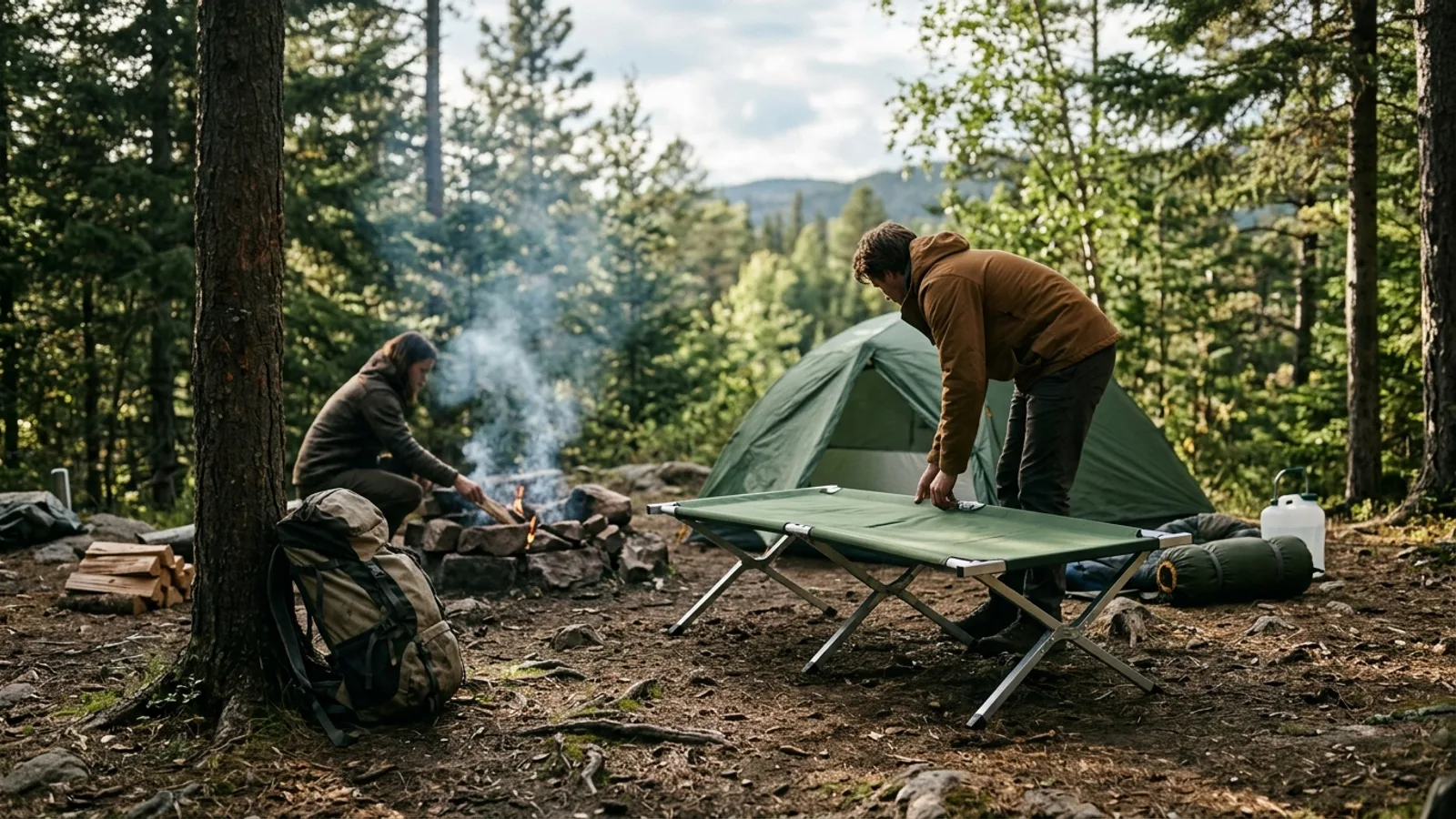
The sleeping surface is usually a tightly woven synthetic fabric such as ripstop nylon or polyester, sometimes with a coating to resist water and abrasion. This fabric is under real tension, so on a brand-new cot it can feel stiff or difficult to stretch into place the first time you set it up. That eases with a few uses as the material relaxes slightly.
Check how the legs and feet are finished. Rounded or capped feet distribute weight better and are less likely to poke through a tent floor than sharp-edged or narrow feet.
Weight Capacity and Sleep Surface
Manufacturers list a maximum weight capacity, but it's worth choosing a cot rated comfortably above your own weight rather than right at the limit, since capacity ratings typically assume a static load rather than shifting around during sleep. If you move a lot at night or share a tent with someone larger, err toward a higher-capacity, wider model.
Length and width matter as much as capacity. Taller campers should check the listed length before buying, since a cot that's too short leaves your feet hanging off the end. Wider cots offer more room to turn over but take up more floor space in the tent.
Portability and Setup
Cots fold in one of two basic ways: hinged frames that collapse into a long, flat bundle, or cots that break down into shorter sections stacked in a bag. The flat-folding style is usually quicker to set up but produces a longer package that can be awkward in a smaller trunk. Sectional designs pack more compactly but take a bit longer to assemble.
Setup on any new cot is often stiffer than it will be after a few trips. Practicing the fold and unfold at home before your trip saves frustration at the campsite, especially in the dark or in bad weather.
If you'll be carrying the cot any distance from a vehicle to a campsite, weight becomes a real factor. Lighter aluminum-frame cots are easier to haul but often cost more and may have a lower capacity than heavier steel models.
Comfort Add-Ons
Some cots include a thin foam pad or integrated padding sewn into the fabric. This adds comfort and a bit of insulation but also adds bulk and weight. If the included padding feels thin, most cots are compatible with a separate sleeping pad placed on top, which also boosts warmth on cold nights since a cot's underside is still exposed to moving air.
Side pockets, attached tables, or head-end risers are convenient but are extra features to weigh against the added bulk and weight, especially if packability matters more to you than a place to set a book down.
Care and Longevity
Let a cot air dry fully before folding it away, since packing it up damp encourages mildew on the fabric. Store it somewhere dry rather than in a hot car trunk for extended periods, as heat can degrade coatings and fabric over time. Periodically check pivot points and locking joints for wear, since these are the parts most likely to loosen or fail with heavy use.