ATVing for Beginners: Essential Tips and Basics
Start With Safety Basics
Before you ride anywhere, understand that ATVs handle very differently from cars or bikes. They're top-heavy, have no seatbelts or roll cages, and respond quickly to shifts in body weight. Most serious incidents happen when a rider is unfamiliar with how the machine behaves on uneven ground or during turns.
Take a hands-on ATV safety course if one is available in your area. Many are taught by certified instructors and cover hazard recognition, basic controls, and emergency procedures in a controlled setting. Reading about technique helps, but practicing under supervision builds real skill faster and more safely.
Always check the owner's manual for your specific machine before riding. It will tell you the ATV's weight limits, recommended tire pressure, and any model-specific quirks in controls or handling. This matters more than general advice, since machines vary.
Choose an Appropriately Sized Machine
Bigger is not better for a new rider. Choose an ATV that matches your size, strength, and experience level rather than the most powerful model available. A machine that is too large or fast to control comfortably increases risk without adding enjoyment.
Many parks and rental operations offer entry-level or mid-size machines suited to beginners. If you're renting, ask staff to help match you to a model appropriate for your height and experience.
Wear the Right Gear Every Time
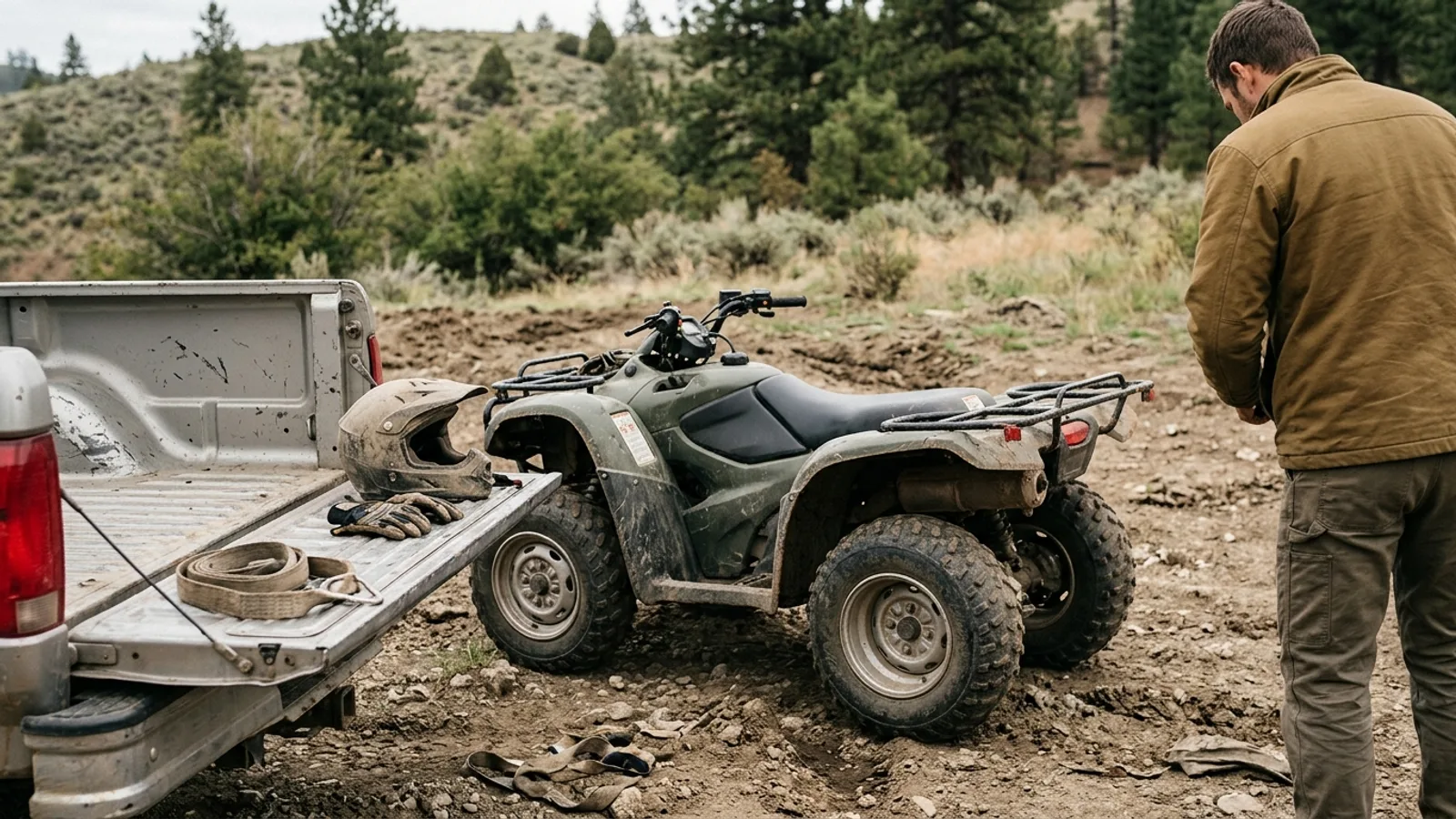
Protective gear should be non-negotiable, even for short or slow rides. At minimum, wear a properly fitted helmet rated for off-road use, eye protection, over-the-ankle boots, gloves, and long sleeves and pants. Avoid loose clothing that could catch on levers or foot pegs.
Closed-toe, non-slip footwear is essential for maintaining solid contact with the foot pegs and brake and shift controls. Sandals or slip-on shoes significantly increase the risk of losing footing during a turn or bump.
Learn Throttle Control
The throttle controls your speed and is usually operated with your thumb or a lever, depending on the model. New riders should practice throttle control at low speed on flat, open ground before attempting trails or turns.
Apply throttle smoothly and progressively rather than snapping it on. A sudden burst of power can cause the front end to lift unexpectedly or make the machine harder to control, especially on loose or uneven surfaces.
Keep a relaxed grip on the handlebars and throttle. Gripping too tightly makes it harder to modulate speed smoothly and tires your hands and forearms more quickly over a long ride.
Understand Shifting, If Your ATV Has a Manual Transmission
Some ATVs use manual or semi-manual transmissions with a clutch, while many recreational models use automatic or continuously variable transmissions. Know which type you're riding before you start.
If your ATV has a clutch, practice coordinating throttle and clutch release in a flat, open area first. The goal is a smooth transition between gears without stalling or lurching. This takes repetition, and it's normal to need practice before it feels natural.
Downshift before a descent rather than relying only on brakes. This gives you more control over your speed and reduces strain on the braking system going downhill.
Body Position and Weight Distribution
Your body position affects the ATV's balance and traction more than most beginners expect. On turns, shift your weight toward the outside footpeg and lean your upper body slightly into the turn while keeping the machine itself more upright. This helps prevent the inside wheels from lifting or the ATV tipping.
Stand slightly on the footpegs when crossing rough or uneven terrain. This lets your legs absorb bumps instead of your seat and lower back, and it improves your view of the trail ahead so you can react to obstacles sooner.
Keep your knees and elbows slightly bent rather than locked. A loose, ready stance lets the ATV move under you over bumps and ruts without throwing you off balance.
Stay on Legal, Designated Trails
Ride only on trails and areas designated for ATV use. Riding on public roads is dangerous and often illegal, since ATVs generally lack the safety equipment and stability required for road speeds and traffic.
Rules vary by location and land manager, covering things like minimum age, required safety certification, seasonal trail closures, and noise or emissions restrictions. Check with the specific park, forest, or riding area before you go, since posted rules can differ significantly between public and private land.
Practice Deliberately
Skill comes from repetition in a low-stakes setting. Find a flat, open area free of obstacles and traffic to practice throttle control, braking, and turning before heading onto varied trails.
Work on one skill at a time — tight turns, hill starts, or slow-speed balance — rather than trying to improve everything at once. Short, focused practice sessions build muscle memory more effectively than long, unstructured rides.
As you gain confidence, introduce different terrain types gradually: gentle slopes, then loose gravel or sand, then rockier or wooded trails. Each surface demands slightly different throttle and body-position adjustments, and building this range makes you a more capable and safer rider overall.