BLM Camping: A Practical Guide to Camping on Public Lands

What BLM Camping Means
The Bureau of Land Management oversees a large share of public land in the United States, concentrated in the West. Much of this land is open to camping, which makes it a favorite option for travelers who want more space, lower cost, and fewer crowds than national parks typically offer.
BLM camping generally falls into two categories: staying in a developed campground with facilities, or camping in a dispersed area with no infrastructure at all. Both are legitimate ways to camp on BLM land, and many trips combine the two depending on the route.
Developed Campgrounds
Developed campgrounds on BLM land usually include basic infrastructure such as a defined parking spot, a fire ring, and a picnic table. Some also have vault toilets or potable water, though many do not. Facilities vary widely from one site to another, so it helps to look up what a specific campground offers before you arrive.
These campgrounds are a good middle ground: you get some structure and predictability, but the settings are usually quieter and less crowded than campgrounds in more heavily visited parks.
Campsites in developed BLM campgrounds are often first-come, first-served, though some locations accept advance reservations. If you're traveling during a busy season or a holiday weekend, arriving earlier in the day improves your odds of getting a site.
Permits, Fees, and Stay Limits
Many developed BLM campgrounds charge a fee, typically collected through a self-pay station at the entrance or by a campground host. Dispersed camping is commonly free, though some specific areas may require a permit, especially in places that see heavy seasonal use or have fire restrictions.
Stay limits are common on BLM land to prevent any one camper from occupying a site indefinitely. A typical structure limits camping to a set number of days within a longer time window, after which you're expected to move a meaningful distance away. Limits vary by region, so check with the local field office or posted signage for the area you're visiting.
Don't leave gear or a vehicle unattended at a site for an extended period without checking local rules — many areas have limits on how long a site can be "reserved" by unattended property.
Weather and fire conditions can close campgrounds or entire areas with little notice, particularly during dry seasons. Checking current conditions before you go, and having a backup plan, is worth the extra few minutes.
Dispersed Camping
Dispersed camping means camping outside of a designated campground, without hookups, toilets, or trash service. It's typically allowed across most BLM land as long as it doesn't interfere with other permitted uses, damage sensitive resources, or violate a local closure.
The appeal is straightforward: more solitude, more flexibility in choosing a spot, and no fee in most cases. The tradeoff is that you're fully self-sufficient — no water, no waste disposal, and often no cell signal.
Rules on distance from roads, trails, and water sources are common in dispersed camping areas, since camping too close to a water source can affect wildlife that depends on it. Local field offices can tell you the specific distance rules for an area.
Choosing a Dispersed Campsite
Dispersed sites are often found along secondary roads branching off larger routes. These roads can be unpaved and rough, so check that your vehicle and tires are suited to the terrain, and avoid pushing into an area you can't safely turn around in or drive out of.
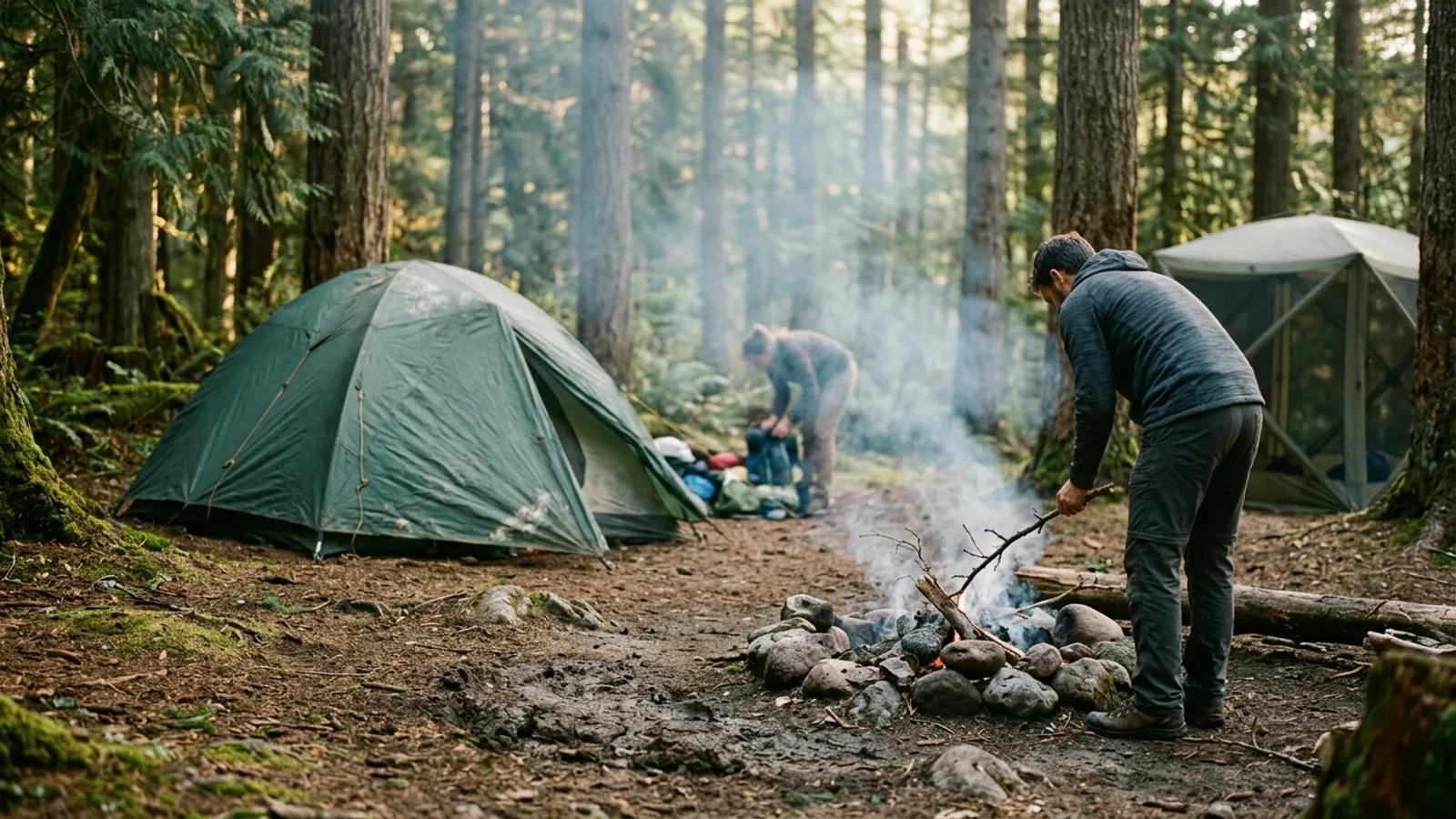
Look for spots that show signs of previous use — a flattened, cleared patch of ground, an existing fire ring — rather than clearing a new area yourself. Reusing an established site keeps your impact concentrated instead of spreading damage across untouched ground.
Avoid camping directly on vegetation, in a dry wash or drainage (flash flooding is a real risk even under clear skies overhead), or in a spot that blocks a road or trail.
Leave No Trace principles apply fully to dispersed camping: pack out all trash, bury or pack out human waste according to local guidance, keep fires small and fully out before leaving, and leave the site as you found it or better.
Checking Local Rules
BLM land is managed through local field offices, and specific rules — fees, stay limits, fire restrictions, road closures — can differ significantly between offices even within the same state. Before a trip, it's worth checking the website of the field office responsible for the area, or calling ahead if information is unclear.
State-level rules can also layer on top of federal ones, particularly around campfires, hunting seasons that might overlap with your camping area, and off-road vehicle use.
Finding BLM Land to Camp On
The most reliable way to find BLM camping areas is through official BLM maps and field office pages, which outline campground locations, dispersed camping zones, and any current closures. Paper or offline digital maps are also worth carrying, since many BLM areas have no reliable cell service once you're off the highway.
Ranger stations and field offices are a good resource if you have questions about a specific area, including current road conditions, fire restrictions, or wildlife activity.
Why Camp on Public Land
Time spent in undeveloped outdoor settings is widely valued for its ability to lower stress and provide a break from constant connectivity. Beyond the personal benefits, public land camping supports a broader appreciation for open space and often encourages more careful, sustainable use of natural areas over time.
BLM land in particular tends to offer a rawer, less curated experience than more heavily developed parks — which is exactly the draw for campers who want space, quiet, and a bit more self-reliance.