Choosing a Motorcycle for Overlanding: A Practical Guide
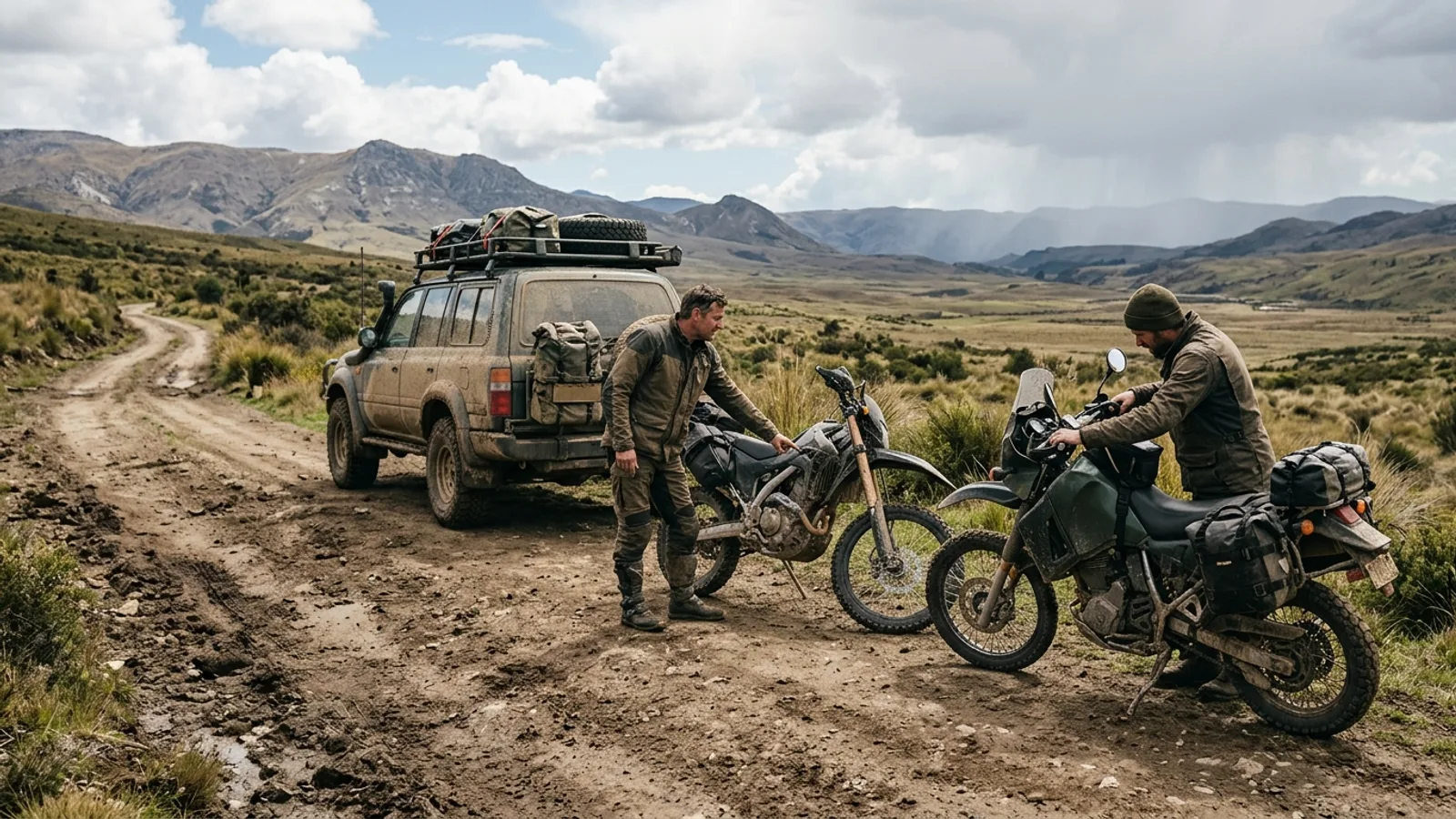
What Overlanding Actually Demands of a Motorcycle
Overlanding is self-supported travel, usually mixing pavement, gravel, and rougher trail, with camping gear along for the ride. The right motorcycle depends less on brand and more on three things: how much weight you can comfortably manage off-pavement, how far you'll ride between fuel and services, and how technical the terrain gets.
Every motorcycle choice is a trade-off between capability off-road and comfort or range on-road. There is no single best bike, only the best fit for a given trip and rider.
Weight Is the Central Trade-Off
A heavier motorcycle carries more fuel, more gear, and often rides more smoothly on highway stretches. But weight becomes a serious liability the moment you're off pavement: picking up a fallen heavy bike alone, in sand or mud, is physically demanding and sometimes not possible without help.
Lighter motorcycles are easier to muscle through technical sections, easier to pick up solo, and generally more forgiving for less experienced off-road riders. The trade-off is smaller fuel tanks, less wind protection, and typically less carrying capacity for gear.
Before choosing a bike, be honest about how much genuinely technical riding you plan to do versus how much will be gravel roads and pavement. Most overlanding trips are mostly the latter.
Lightweight Dual-Sport Motorcycles
Smaller-displacement dual-sport bikes are the most capable option for genuinely rough, narrow, or technical trails. Their light weight rewards good technique over raw power, and they're the easiest category to recover if you drop the bike on a slope or in sand.
The trade-off is range and comfort: smaller fuel tanks mean more frequent stops, and less wind protection makes long paved highway stretches more tiring. These bikes suit riders whose routes prioritize technical trail time over long-distance pavement travel.
Mid-Size Dual-Sport and Adventure Motorcycles
This is the broadest and often most practical category for overlanding: bikes built to handle real off-road terrain while still being tolerable for multi-hour highway stretches. They typically offer a reasonable balance of fuel range, luggage capacity, and manageable weight.
Within this category, look for adjustable or long-travel suspension, spoked wheels (which tolerate impacts better than cast wheels on rough terrain), and a seat height you can comfortably flat-foot or nearly flat-foot, since balance at a stop matters as much as power on the move.
Large Adventure Touring Motorcycles
Bigger adventure-touring bikes offer strong highway comfort, larger fuel ranges, and more sophisticated rider aids such as traction control and switchable ABS. They're well suited to routes that are mostly gravel roads and pavement with only occasional light off-road sections.
Their weight is the limiting factor on genuinely technical terrain. Deep sand, steep loose climbs, and tight technical trail riding are all harder and riskier on a heavier machine, particularly for less experienced riders traveling solo.
Touring Motorcycles for Road-Focused Trips
If your version of overlanding is mostly long paved routes with camping stops rather than singletrack, a road-oriented touring motorcycle can be a legitimate choice. These bikes prioritize comfort, wind protection, and cargo capacity over any off-road ability.
Their size and weight generally rule out anything beyond smooth, well-maintained dirt or gravel roads. Match this choice to a route you've planned around pavement and established campgrounds rather than backcountry trail.
Matching Gear and Skills to the Bike
Whatever category you choose, off-road capability comes as much from tires, suspension setup, and rider skill as from the motorcycle itself. Practicing low-speed control, learning to pick up a dropped bike, and building comfort standing on the pegs will do more for a successful trip than any specification.
Carry a way to repair a flat, know your fuel range on the specific bike loaded with gear (which is shorter than the unloaded rated range), and plan routes with realistic exit points in case terrain or weather turns worse than expected.
Key Takeaways
- Weight is the single biggest factor in how a motorcycle behaves off-road; more weight means more highway comfort but less off-road margin.
- Lightweight dual-sports suit technical trail riding; mid-size adventure bikes suit mixed routes; large touring bikes suit road-heavy trips with light gravel.
- Suspension travel, spoked wheels, and manageable seat height matter more than horsepower for backcountry travel.
- Rider skill and trip planning affect safety and success at least as much as the motorcycle you choose.