Is RV Antifreeze Toxic? What to Know Before You Winterize
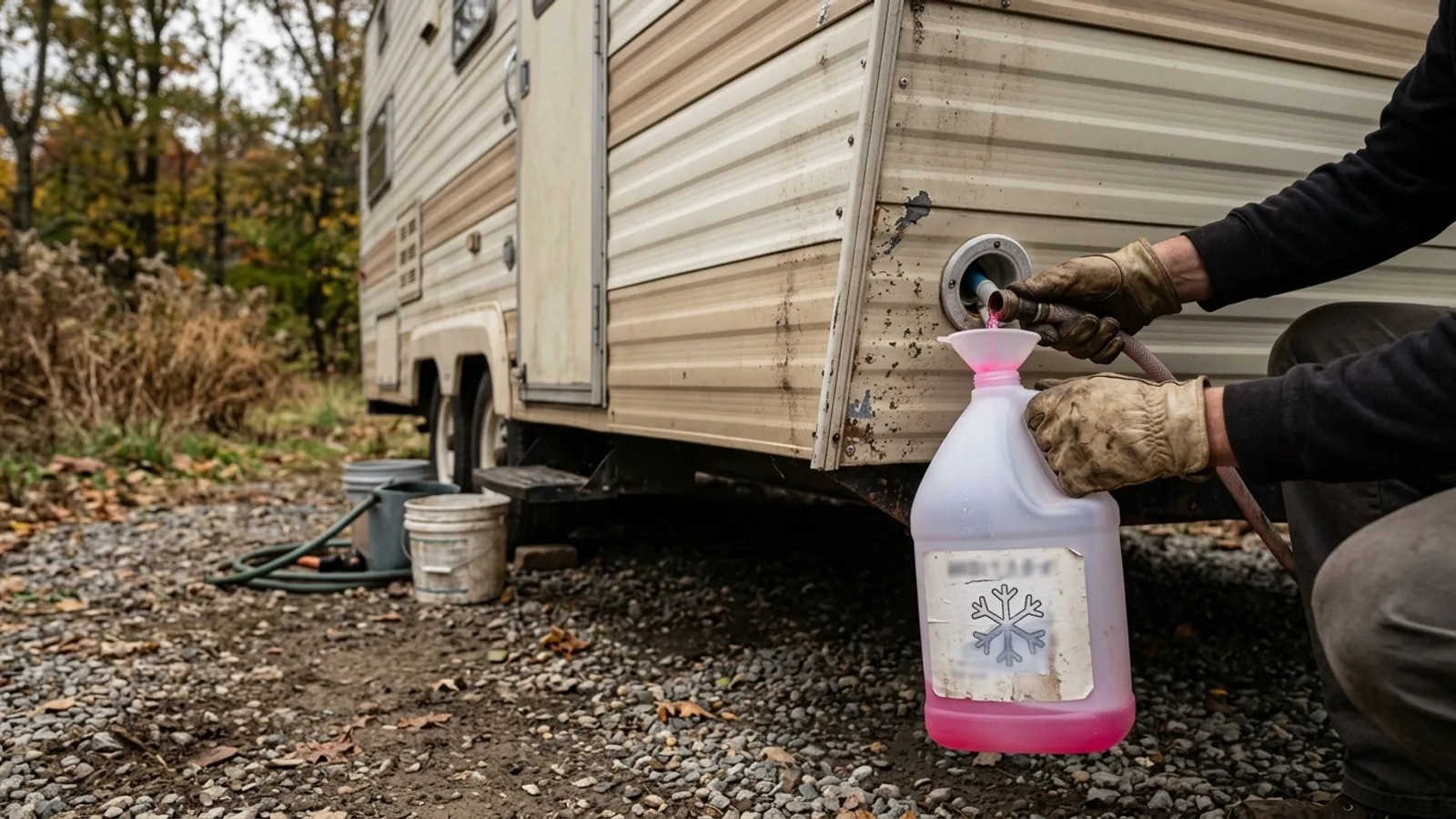
Winterizing an RV means protecting its plumbing from freeze damage, and that usually involves running antifreeze through the water system. Before you do, it helps to understand what's actually in the bottle and how to handle it safely.
The Two Main Types of RV Antifreeze
Most RV antifreeze on the market is made from either propylene glycol or ethanol. These are chemically distinct from the ethylene glycol used in automotive antifreeze, which is genuinely poisonous and should never be used in a drinking water system.
Propylene glycol-based antifreeze is the type designed specifically for RV freshwater systems. It's formulated to be low in toxicity when used as intended, though it's still not something to drink deliberately.
Ethanol-based antifreeze is less common and tends to leave a noticeable taste or odor in water lines. Some people avoid it for that reason alone, separate from any toxicity concern.
Always check the label on the container you're using rather than assuming — formulations and labeling can vary, and the label is the most reliable source for handling instructions.
Handling RV Antifreeze Safely
Even a product labeled non-toxic deserves sensible precautions:
- Wear gloves if you have sensitive skin or will be handling it repeatedly.
- Avoid splashing it in your eyes; rinse thoroughly with water if contact happens.
- Keep containers sealed and stored somewhere children and pets can't reach.
- Never transfer it to an unlabeled container that could be mistaken for a beverage.
Risk to Pets and Wildlife
Antifreeze of any kind has a reputation for being attractive to animals because of its faint sweetness, and ingestion can be dangerous even in small amounts. This is one of the more important reasons to avoid spills, wipe up drips promptly, and never leave open containers where pets, farm animals, or wildlife might access them. Treat any animal antifreeze exposure as a reason to contact a veterinarian promptly.
Using Antifreeze in Your Freshwater System
Propylene glycol-based antifreeze is designed to be compatible with the hoses, seals, and pumps found in RV plumbing. Running it through the system lowers the freezing point of any residual water and helps prevent lines and fittings from cracking in cold storage.
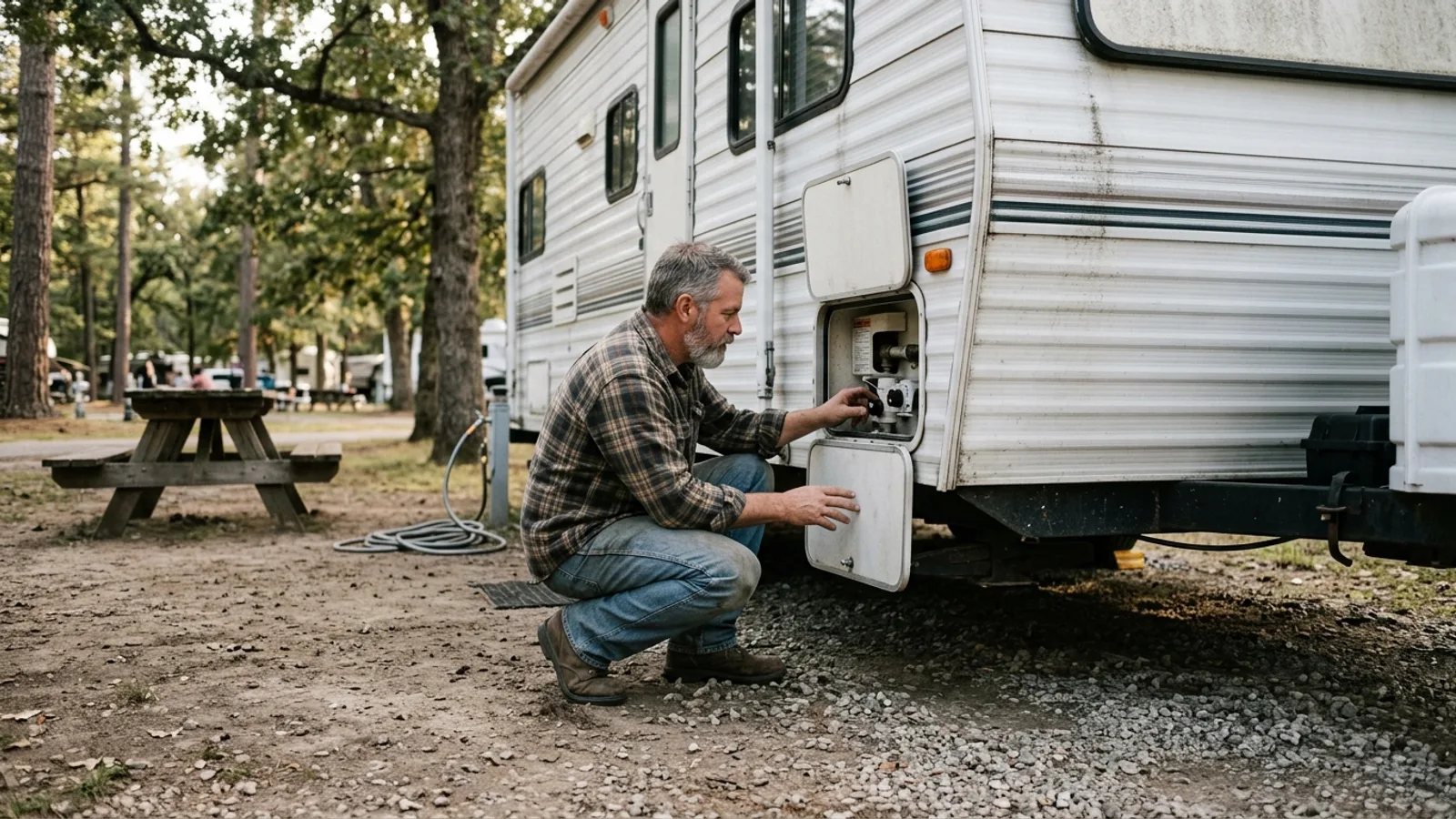
Follow the manufacturer's instructions for how much to use and how to introduce it into the system — typically through the water pump or a dedicated winterizing kit. Run it through every faucet, the shower, the toilet valve, and any outdoor spigots so all lines are protected.
Come spring, de-winterize thoroughly: flush the system with fresh water, run it through every fixture, and sanitize the tank before relying on it for drinking water. Don't assume a quick rinse is sufficient — residual antifreeze can linger in low points of the plumbing.
Disposal: Don't Pour It on the Ground
Dumping antifreeze on soil or into a storm drain isn't a good practice, even with a formulation considered low-toxicity. Storm drains typically lead directly to natural waterways without treatment, and antifreeze can affect soil, groundwater, and small animals or insects that encounter it.
Better disposal options:
- Pour it down a household drain connected to a municipal sewer system, where it will reach a wastewater treatment facility.
- Use a designated RV dump station, which is built to handle these kinds of fluids.
- Check with your local waste authority if you're unsure — some areas have specific guidance or collection sites for this kind of waste.
Avoid pouring it into a septic system unless you've confirmed it won't disrupt the septic system's biological processes; when in doubt, a sewer-connected drain or dump station is the simpler choice.
Choosing an Antifreeze
For freshwater systems, a propylene glycol-based product is the standard choice: it's designed for potable water systems, doesn't leave a strong aftertaste, and won't leave your plumbing smelling like alcohol. It's also non-flammable, which makes it easier to store safely compared to some alternatives.
Whatever product you choose, read the label closely — some antifreeze products are marketed for non-potable systems only, and those aren't appropriate for a freshwater tank you intend to drink from later.
Quick Reference
- Use propylene glycol-based antifreeze for freshwater systems, not automotive antifreeze.
- Don't drink RV antifreeze, even low-toxicity formulas.
- Keep it away from pets and wildlife — it can be genuinely dangerous to animals.
- Dispose of it via a sewer-connected drain or an RV dump station, never on the ground.
- Flush and sanitize your system fully before using it for drinking water again in spring.