How Long Do Travel Trailer Tires Last, and How to Make Them Last Longer
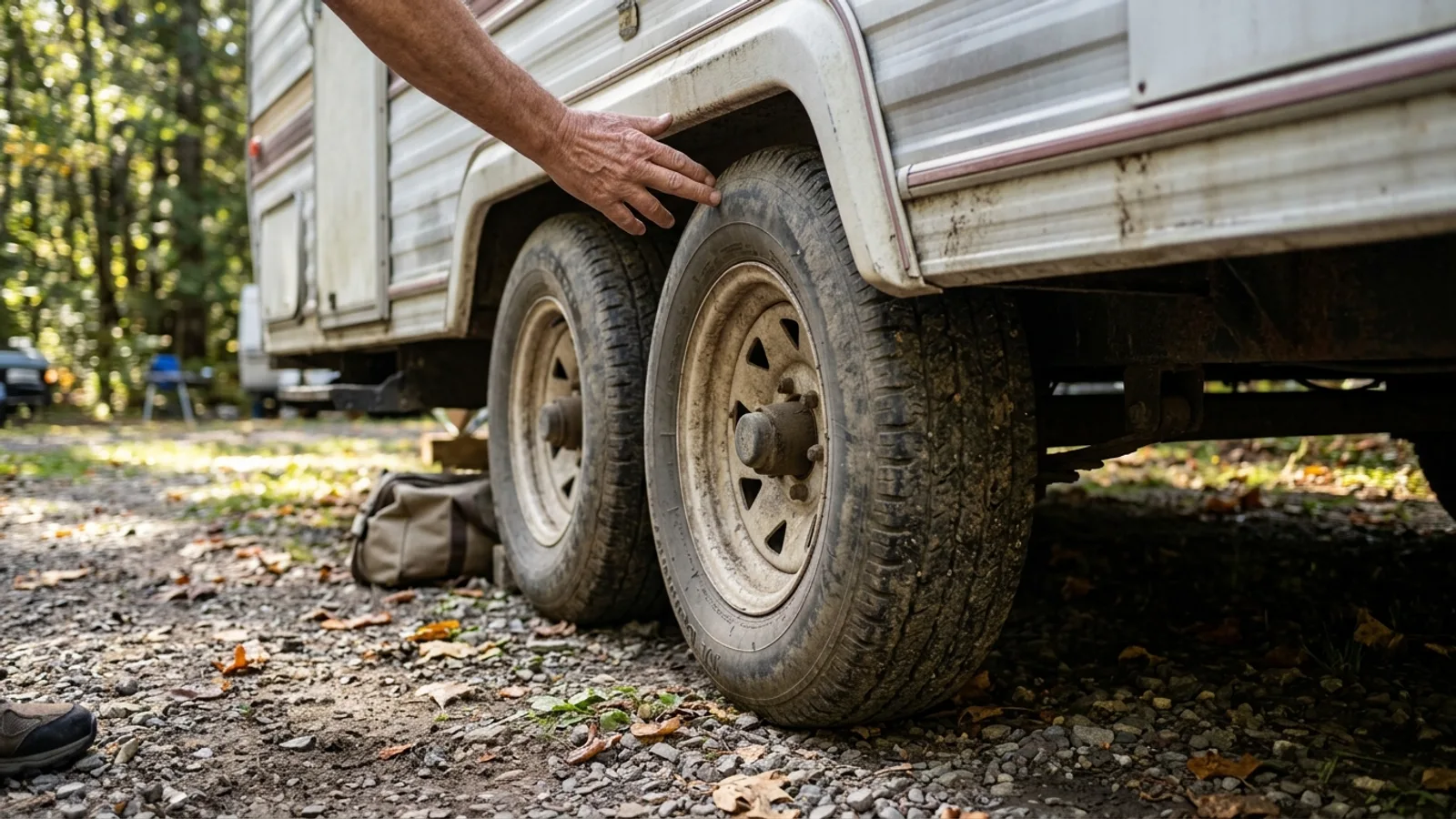
Age Matters More Than Mileage
Travel trailers rarely rack up enough miles to wear out a tire's tread. Instead, the rubber itself degrades over time, regardless of how far the trailer has traveled. Heat, oxygen, and UV exposure slowly change the chemical structure of the rubber, making it stiffer and more prone to cracking.
Most trailer tires reach the end of their useful life within five to seven years from the date they were manufactured, not the date of purchase or how much tread remains. Many manufacturers recommend replacement within this window even if the tires look fine, because internal degradation isn't always visible from the outside.
You can find the manufacture date on the tire's sidewall in the Department of Transportation (DOT) code, usually the last four digits, which represent the week and year of production.
What Shortens Tire Life
Several factors combine to determine how well a set of tires holds up:
- Load: Trailer tires are rated for a maximum weight, and running consistently near or over that limit generates excess heat and accelerates wear.
- Inflation pressure: Underinflated tires flex more, building up heat that breaks down the internal structure. Overinflated tires wear unevenly and are more vulnerable to impact damage.
- Sun and heat exposure: Tires stored or parked in direct sun age faster than those kept shaded or covered.
- Road conditions: Rough pavement, gravel, and frequent potholes cause faster tread wear and increase the chance of cuts or punctures.
- Time spent sitting idle: Tires that sit in one position for long stretches, especially under a heavy load, can develop flat spots or uneven stress points.
Signs a Tire Needs Attention
Check your tires before every trip and periodically while the trailer is in storage. Look for:
- Cracking: Fine lines in the sidewall or in the grooves of the tread indicate the rubber is aging and losing flexibility.
- Bulges or bubbles: These point to internal damage and mean the tire should be taken out of service.
- Uneven tread wear: Wear that's heavier on one side, or a scalloped pattern, often signals an inflation, alignment, or weight distribution problem.
- Shallow tread: Measure tread depth with a gauge; tread that's worn down close to the wear bars no longer grips reliably, especially in wet conditions.
Any of these signs is reason to have the tire inspected by someone experienced with trailer tires, even if the tire is still within its expected lifespan by age.
Everyday Maintenance
A few habits go a long way toward getting the most safe life out of a set of tires:
- Check tire pressure when the tires are cold, before driving, and adjust to the pressure specified for your trailer's actual loaded weight.
- Do a visual walk-around before each trip, looking for cracks, embedded debris, or uneven wear.
- Rotate tires periodically to even out wear, following the pattern recommended for your axle configuration.
- Keep tires clean and free of oil or petroleum-based products, which can degrade rubber over time.
- Use tire covers when the trailer is parked outdoors for extended periods to block UV exposure.
- Park on level, dry ground when possible, and avoid leaving a loaded trailer sitting on soft or uneven surfaces for long stretches.
When Replacement Makes Sense
Replace a tire if it shows cracking, bulges, or tread wear near the indicator bars, regardless of its age. Separately, plan on replacing tires once they reach the age range recommended for their type, even if they look usable, since age-related deterioration happens on the inside first. If one tire on an axle fails or is replaced, consider replacing its pair as well, since mismatched wear or construction can affect handling and load sharing.
Driving and Handling Habits That Help
Smooth, moderate driving reduces stress on trailer tires. Gradual acceleration and braking, avoiding sharp swerves, and keeping speeds within the tire's rated limit all reduce heat buildup. Watch for potholes and debris, and give extra space when passing over rough pavement or gravel shoulders. Keeping the trailer properly aligned and the wheels balanced also helps tires wear evenly.
Special Trailer (ST) Tires vs. Light Truck (LT) Tires
Trailers are commonly fitted with one of two tire categories:
- Special Trailer (ST) tires are built specifically for towing. They have reinforced sidewalls designed to carry heavier loads at the pressures typical for trailer axles, but they are not designed to be steered or driven directly like a vehicle's own tires.
- Light Truck (LT) tires are designed for vehicles that both steer and carry load, with a different balance of sidewall flexibility and tread design. Some trailer owners choose LT tires as an alternative to ST tires, but the two are engineered differently and it's worth understanding those differences, or asking a tire professional, before switching from the type your trailer came with.
Whichever type is on your trailer, match replacement tires to the load rating and size specified for your trailer, not just the size that looks similar.
Storing Tires Properly
When a trailer will sit unused for weeks or months:
- Keep tires out of direct sunlight using covers or by storing the trailer in shade or indoors.
- Inflate to the recommended pressure before storage, and check periodically since tires lose air slowly over time.
- Use leveling blocks or place a barrier between tires and bare concrete or asphalt, especially in extreme temperatures, to reduce surface degradation.
- If possible, move the trailer slightly every so often to avoid flat spots from prolonged pressure on one section of tread.
- Keep tires away from generators, motors, or other sources of ozone, which can accelerate rubber breakdown.