Camper vs. RV: What's the Real Difference?
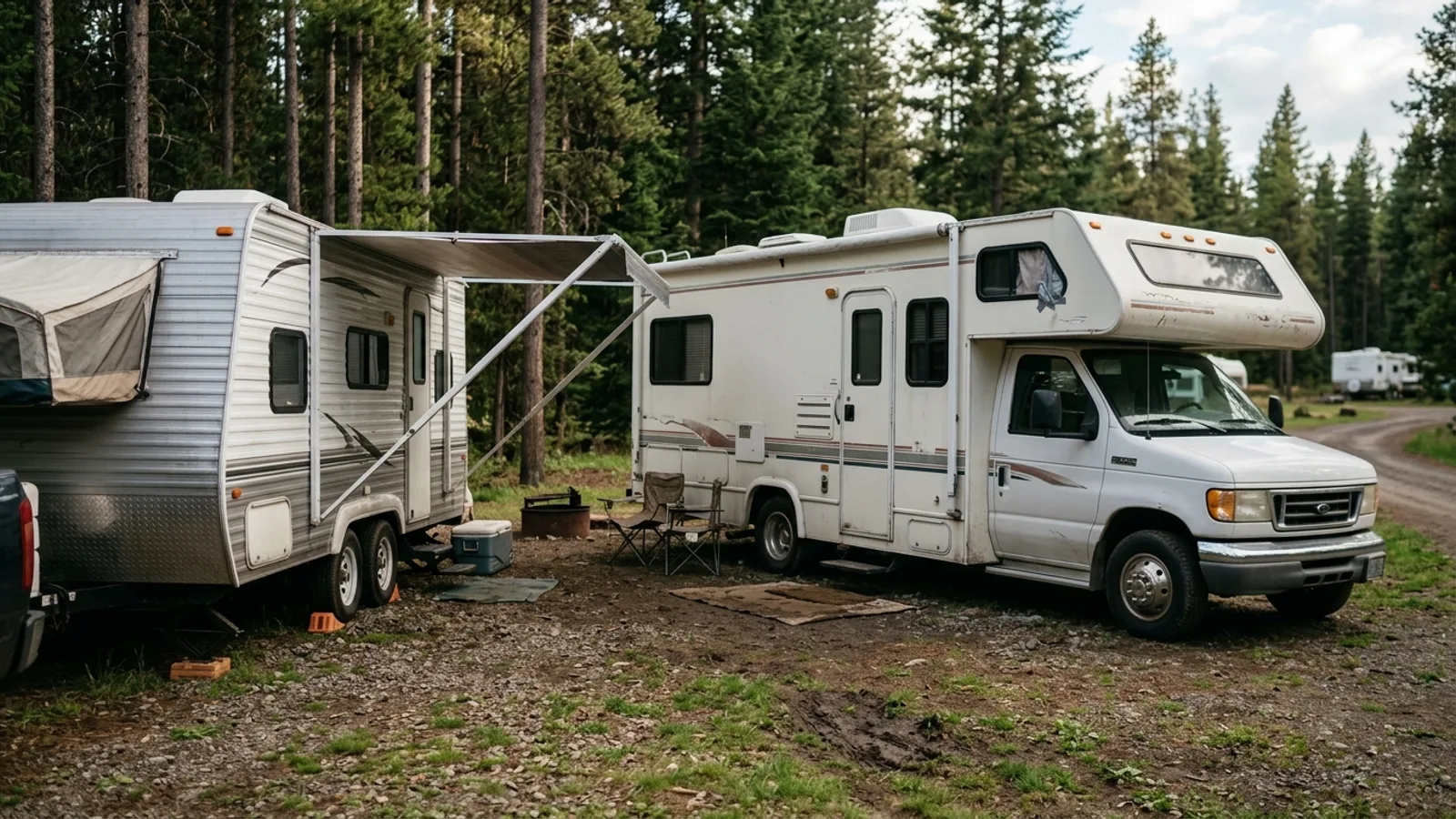
"Camper" and "RV" get used as if they mean the same thing, but the distinction matters once you're actually shopping, renting, or planning a trip. The short version: an RV is a self-propelled vehicle you drive, while a camper is a towable or truck-mounted unit that rides behind or on top of a separate vehicle. Everything else — cost, space, how you use it on the road — flows from that basic split.
What Counts as a Camper
A camper has no engine of its own. It's either towed by a truck or SUV, or it sits in the bed of a pickup. Because it detaches from the tow vehicle, you can set up camp and then drive off in just the truck or car, leaving the living space behind at the site.
Pop-Up Trailer
These fold down flat for towing and storage, then unfold at the campsite into a low-profile living space with canvas or soft-sided walls. They're light enough for many midsize SUVs to tow, which makes them a common entry point for first-time trailer owners. Trade-offs are thinner insulation and less sound and weather protection than a hard-sided trailer.
Travel Trailer
A rigid, non-folding trailer that ranges from small and lightweight to large enough to sleep a family with a separate bedroom. Because sizes vary so widely, the towing vehicle needed varies too — always match trailer weight to your vehicle's rated towing capacity rather than guessing.
Fifth-Wheel Camper
Fifth-wheels connect via a hitch mounted in the bed of a full-size pickup rather than a rear bumper hitch. That connection point sits over the truck's rear axle, which generally makes for a more stable tow than a standard trailer hitch, especially at highway speed or in crosswinds. These units tend to be larger and can rival small RVs in interior space, but they require a truck rated for the hitch and weight.
Truck Camper
This is a cabin that slides into or over a pickup bed rather than attaching behind the vehicle. It can be removed at the destination, turning the truck back into a regular pickup while the camper stays put. It's a good fit for reaching remote or rough terrain, since a pickup with a truck camper is typically easier to handle off-pavement than a trailer combination.
What Counts as an RV
An RV, short for recreational vehicle, is built on its own chassis with an engine — you drive it directly rather than towing it.
Class A Motorhome
The largest and most house-like option, built on a bus or heavy truck chassis. Interior space and storage are the main draw, along with amenities closer to a small home than a vehicle. They're the least maneuverable class and take some practice to drive and park, particularly in tight campgrounds or city streets.
Class B Motorhome (Camper Van)
Built on a standard van chassis, these are the smallest motorhomes and the easiest to drive and park. Interior space is limited, so amenities are usually condensed — a small kitchenette and a convertible sleeping area rather than separate rooms. They suit solo travelers or couples who want to drive like a normal vehicle and still sleep on board.
Class C Motorhome
Recognizable by the sleeping area that extends over the cab. It splits the difference between A and B: more interior room than a camper van, easier to drive than a full Class A. This makes it a common choice for families who want real living space without stepping up to the largest motorhome class.
Trade-Offs of Campers
Campers are generally lighter, less expensive to buy and maintain, and easier to store than a motorhome. Unhitching at a campsite frees up your tow vehicle for day trips, which is a real advantage if you want to explore without breaking camp.
The trade-off is space and finish level. Interiors are smaller, storage is tighter, and amenities — especially bathrooms and kitchens in the smaller trailer types — may be minimal or absent altogether.
Trade-Offs of RVs
RVs offer more consistent interior space, fuller kitchens and bathrooms, and a more comfortable base for longer trips or bigger groups. Everything travels together in one vehicle, so there's no separate tow setup to manage.
In exchange, motorhomes cost more to buy, insure, and maintain, use more fuel than a smaller tow vehicle would on its own, and — particularly in the larger classes — take more skill and attention to drive and park.
How to Choose
Start with how you actually camp. If you value being able to detach your living space and use your vehicle separately, or you want the lightest, least expensive way to get off the ground and into a bed, lean toward a camper. If you want everything — sleeping, cooking, storage — built into one vehicle you can drive as-is, and you don't mind a larger vehicle on the road, an RV fits better.
Match the specific type to your trips. Remote, rough-road destinations favor smaller, lighter setups like a truck camper or compact trailer. Established campgrounds with full hookups can support larger trailers, fifth-wheels, or motorhomes comfortably.
Check towing capacity and licensing requirements before committing to any trailer or fifth-wheel — your vehicle's rated capacity, not the trailer's advertised weight alone, determines what's safe and legal to tow. For motorhomes, consider your comfort driving and parking a larger vehicle, since that skill doesn't come with the purchase.
There's no universally "better" option — only the one that matches your travel style, group size, and the vehicle you already have or are willing to buy.