How Long Do RV Tires Last? Lifespan, Warning Signs, and Care Tips
Age Matters More Than Tread on RV Tires
Unlike car tires, RV tires often reach the end of their useful life due to age rather than tread wear. Many RVs sit parked for long stretches, so the rubber compound degrades from sunlight, heat, and ozone exposure long before the tread wears down. This means an RV tire with plenty of tread left can still be unsafe to use if it's old.
As a general guideline, most RV tires are considered due for replacement somewhere in the range of five to seven years from their manufacture date, regardless of how many miles they've covered. Heavier use, harsh climates, or poor storage can shorten that window; light use and careful storage can sometimes stretch it.
You can find a tire's age by looking for the Department of Transportation (DOT) code on the sidewall. The last four digits typically indicate the week and year of manufacture. This is worth checking on any RV you buy used, since tires can look fine but still be old.
What Shortens Tire Life
Several factors accelerate wear and aging beyond simple mileage:
- Underinflation: Running below the recommended pressure causes excess flexing, heat buildup, and uneven wear. It's one of the most common causes of premature tire failure on RVs.
- Overloading: Exceeding the weight rating for your tires and axles stresses the sidewalls and accelerates breakdown, even if pressure looks correct.
- Sun and ozone exposure: UV light and ozone break down rubber over time, leading to surface cracking known as weather checking.
- Heat: High ambient temperatures, hot pavement, and sustained highway speeds all generate heat that ages rubber faster.
- Infrequent use: Tires that sit still for long periods can develop flat spots and are more prone to sidewall cracking from lack of flexing.
- Poor alignment or suspension issues: These cause uneven tread wear patterns that shorten usable tire life even when the rubber itself is otherwise healthy.
How to Extend the Life of Your RV Tires
Small habits make a meaningful difference in how long tires last and how safely they perform.
- Check pressure cold, before driving. Use a reliable gauge and check every tire, including any spare, before each trip and periodically during long stays.
- Match pressure to actual load. Recommended pressure depends on how much weight the tires are carrying, not just a single number on the sidewall. Weighing your rig loaded as you actually travel gives a more accurate picture.
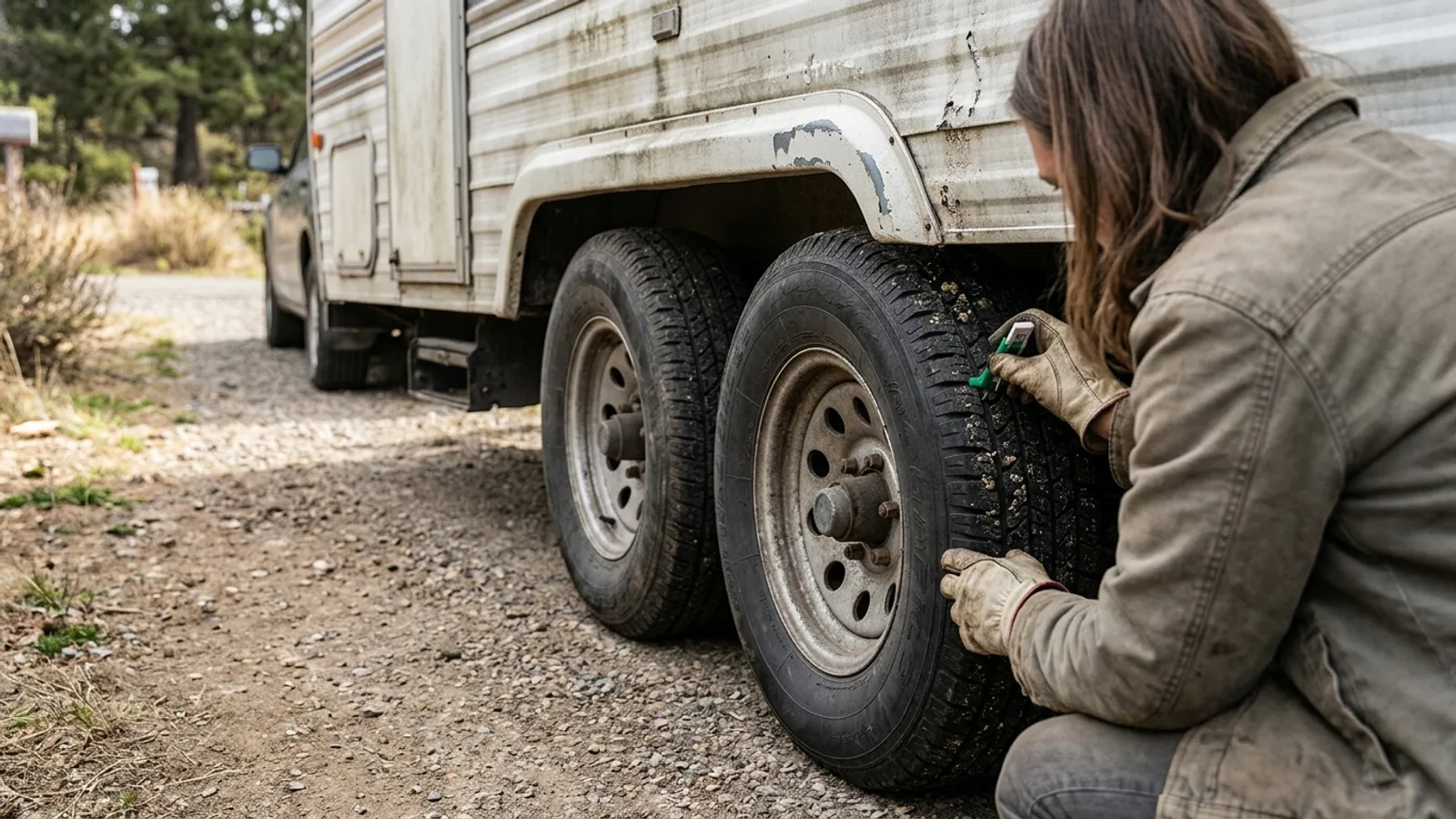
- Inspect visually on a regular basis. Look for cracking in the sidewall grooves, bulges, uneven tread wear, and anything embedded in the tread.
- Rotate tires periodically to help even out wear, especially if you notice uneven patterns developing.
- Keep alignment and suspension in good order. Uneven wear is often a sign something mechanical needs attention, not just the tires.
- Use tire covers when parked. Blocking direct sun significantly slows the surface cracking caused by UV exposure.
- Move the rig occasionally during long-term storage. Rolling the tires even a short distance every so often helps prevent flat spots and keeps the rubber flexing.
- Store on a clean, dry surface. Avoid parking directly on grass, gravel, or oil-stained pavement for extended periods; a barrier between the tire and ground helps.
Signs It's Time to Replace
Don't wait for a blowout to tell you a tire has failed. Watch for these warning signs on every inspection:
- Sidewall cracking (often called weather checking), especially cracks that are deep or run close together.
- Bulges or blisters anywhere on the tire, which indicate internal structural damage.
- Uneven or excessive tread wear, which can signal both tire aging and alignment problems.
- Visible cord or belt material showing through the tread or sidewall.
- Punctures or cuts that a qualified tire professional determines cannot be safely repaired.
- Age alone, once a tire has passed the general replacement window, even if tread depth looks adequate.
A simple tread depth check, such as inserting a coin into the tread grooves, can tell you whether there's enough tread for traction. But on RV tires, this test only addresses one part of the picture — cracking and age matter just as much, sometimes more.
Basic Safety Practices
Because RV tires carry a heavy, top-heavy load at highway speeds, a little diligence goes a long way:
- Check all tires, including duals and the spare, before every trip.
- Watch for warning signs of an overheating or failing tire while driving, such as vibration, pulling to one side, or unusual noise, and pull over safely if you notice them.
- Consider a tire pressure monitoring system if you don't already have one; catching a slow leak early can prevent a blowout later.
- Replace tires in sets or axle pairs when possible, so wear and performance stay consistent side to side.
- When in doubt about whether a tire is safe, have it inspected by a qualified tire professional rather than guessing.
Treat tires as a safety system, not just a wear item. Regular attention costs little compared to the risk of a failure on the road.