Cold Weather Camping: How Cold Is Too Cold, and How to Stay Safe
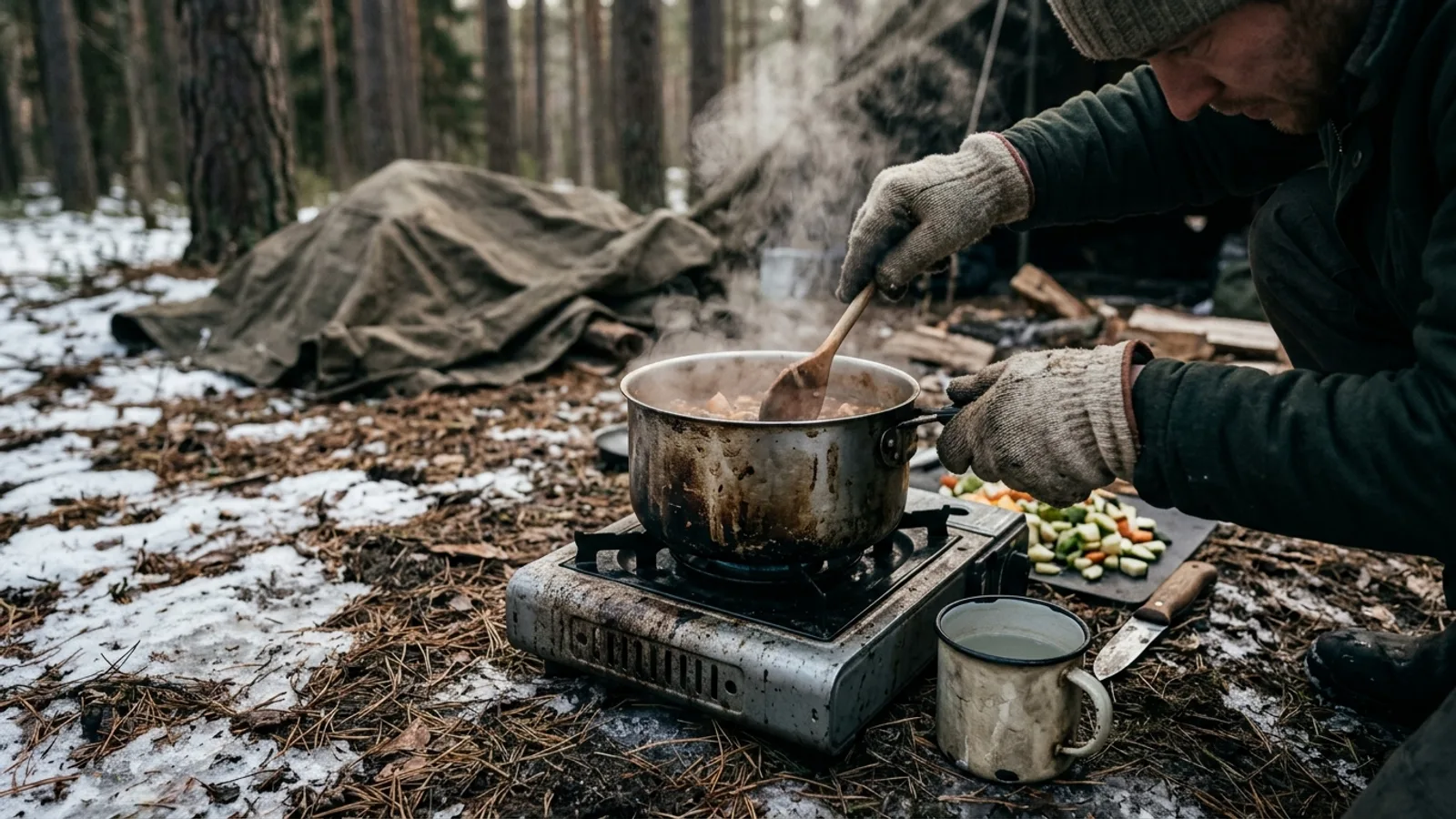
There's No Single Cutoff Temperature
There is no universal answer to how cold is too cold for camping. Tolerance depends on your gear, your experience, your body, and how much moisture and wind you'll be dealing with. A well-equipped, experienced camper can be comfortable well below freezing, while someone with the wrong gear can struggle even in mild fall temperatures.
Instead of chasing a specific number, think in terms of ranges and what each demands of you:
- Cool nights (roughly 40s°F): A standard three-season bag and normal layering are usually enough.
- Cold nights (roughly 20s to 30s°F): You need a bag rated for the conditions, a real insulating layer under you, and a plan for keeping water from freezing.
- Very cold nights (below 20°F): This is where mistakes become dangerous quickly. It's best attempted only with cold-weather-specific gear and prior experience, ideally alongside someone who has done it before.
Wind and dampness matter as much as the thermometer. A calm, dry 25°F night is far more manageable than a windy, wet 35°F night.
Sleeping Warm
Your sleeping system is the single most important piece of cold-weather gear, because you're motionless and vulnerable to heat loss for hours.
Choose a sleeping bag rated at or below the coldest temperature you expect. Temperature ratings are a rough guide, not a guarantee — treat the rating as the point where you'll survive, not necessarily sleep comfortably.
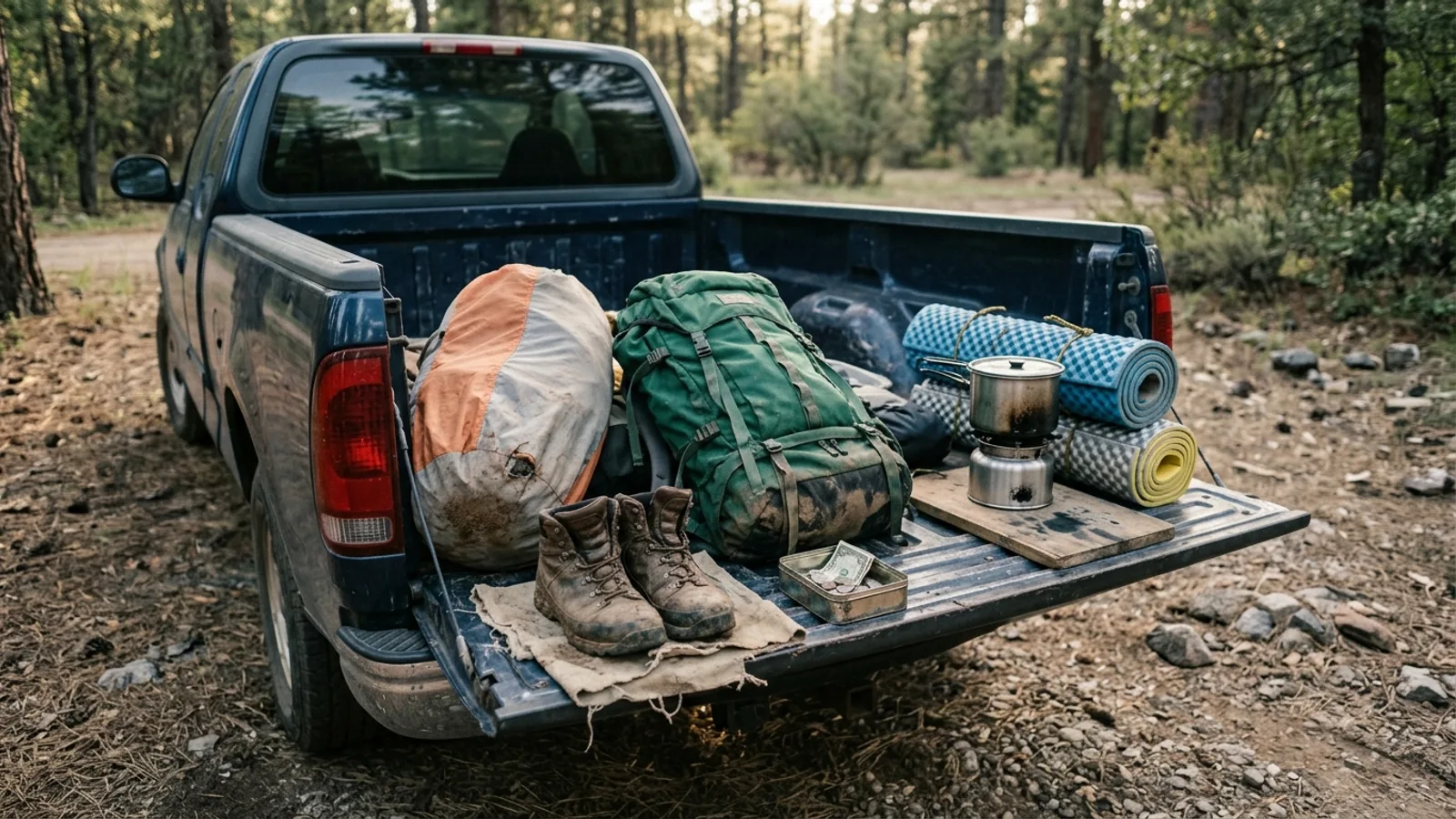
Ground insulation matters just as much as the bag itself. Cold ground pulls heat out of your body far faster than cold air does. Use an insulated sleeping pad, and consider stacking a foam pad under an inflatable one for extra protection and a backup if the inflatable fails.
A few other habits help: keep a wide-mouth bottle of warm water in your bag on the coldest nights, eat something before bed so your body has fuel to generate heat, and avoid going to sleep already cold — do some light movement beforehand to warm up first.
Choosing and Setting Up Shelter
A tent designed for cold or winter conditions will handle wind and snow load better than a basic warm-weather tent, and will manage condensation more effectively. Look for a design with adequate ventilation, since trapped moisture from breathing can freeze on interior walls and dampen gear.
Where you pitch matters more than what you pitch. Choose a spot sheltered from prevailing wind, away from slopes where cold air pools or snow could slide, and elevated slightly if possible so cold air drains away from the tent rather than settling around it.
In snow, packing down the tent footprint before pitching keeps you from sinking into softer snow overnight and improves insulation underneath. A layer of snow blocks or a built-up wall on the windward side can meaningfully cut wind chill inside the tent.
Snow shelters such as caves or quinzhees can offer excellent insulation because snow itself is a good insulator, but building one safely and correctly takes practice. Learn and rehearse the technique before relying on it, and never treat it as a first-time experiment in an actual emergency.
Dressing for the Cold
Layering lets you adjust to changing activity levels and temperatures throughout the day. The usual structure is a moisture-wicking base layer against skin, an insulating mid layer to trap warmth, and a wind- and water-resistant outer layer.
Avoid cotton next to skin in cold conditions — it holds moisture and loses its insulating value when wet. Synthetic or wool fabrics stay warmer even if damp.
Pay particular attention to extremities. Hands, feet, ears, and head lose heat quickly, so bring reliable insulated gloves or mittens, warm socks, and headwear that covers your ears. Carrying a spare pair of dry socks is one of the simplest ways to improve comfort on a cold trip.
Manage sweat carefully. Getting too warm during activity and sweating through your layers, then cooling down afterward, is one of the most common ways campers get dangerously cold. Vent or remove layers before you start sweating heavily, not after.
Food, Water, and Heat
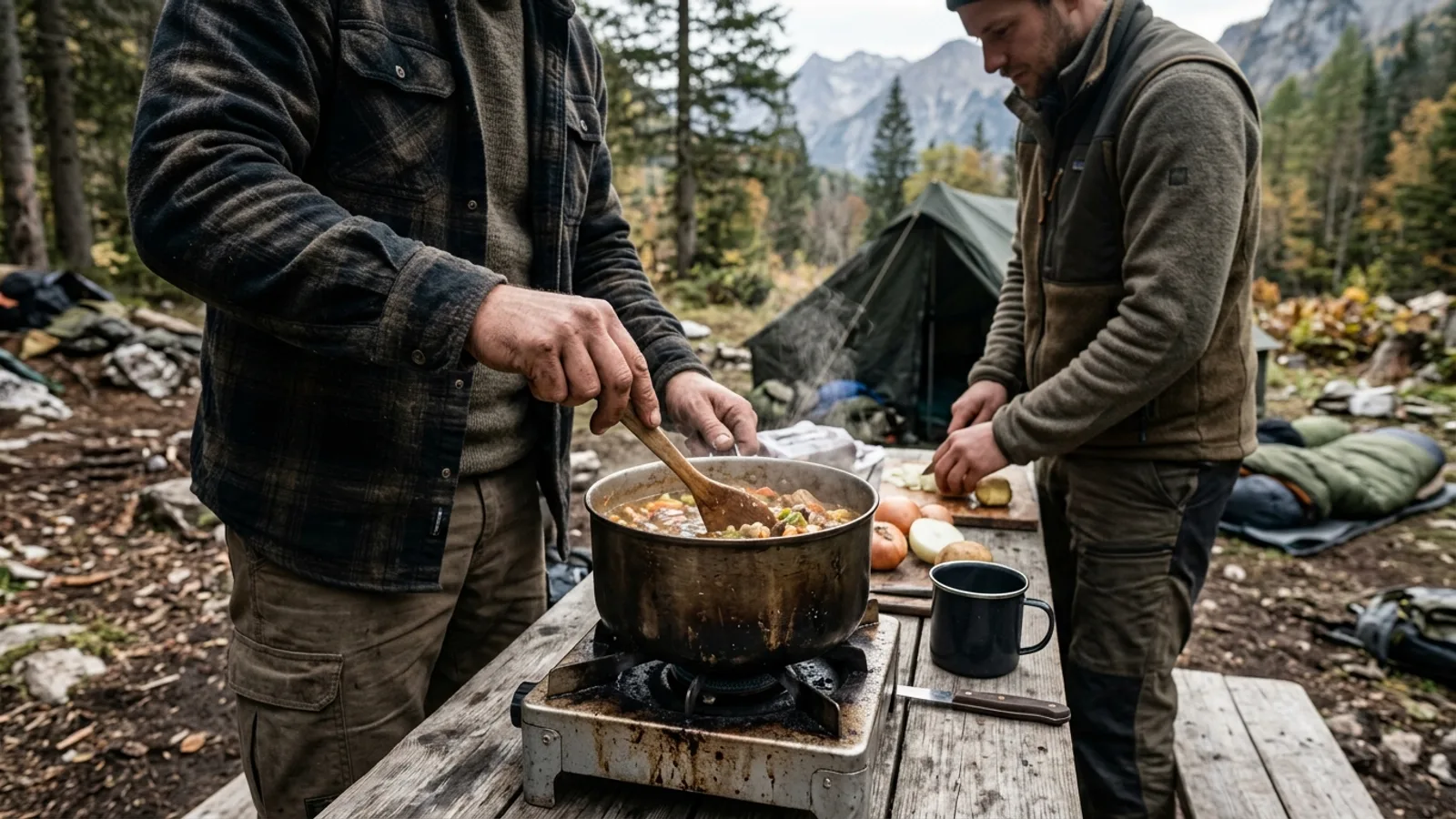
Your body needs fuel to generate warmth, so eat more than you would in mild weather, and favor foods that are easy to prepare in the cold. Warm drinks and meals also boost morale, which matters over a long, cold night.
Cold air is often deceptively dry, and dehydration can sneak up on you even when you don't feel thirsty. Drink water regularly throughout the day. If temperatures drop below freezing, keep water containers insulated or store them where they won't freeze solid, such as inside your sleeping bag at night.
If you use a stove, camp heater, or any combustion device, only run it in a space with proper ventilation. Carbon monoxide buildup inside an enclosed tent or shelter is a serious, sometimes fatal risk, and it can occur even with a small flame. Never leave an open flame or heater unattended, and check that fuel-burning equipment is rated for the conditions you're using it in.
Recognizing Cold-Related Trouble
Learn to recognize the early signs of hypothermia: persistent shivering, clumsiness, slurred speech, or confusion. Because impaired judgment is itself a symptom, it's often a companion who notices the problem first, which is one reason cold-weather trips are safer with a partner.
If someone shows these signs, the priority is to get them dry, warm, and sheltered from wind as quickly as possible, and to seek medical help if symptoms are more than mild or don't improve.
Also watch for numbness or color changes in fingers, toes, ears, or nose, which can indicate frostbite starting. Keeping skin covered and dry, and moving fingers and toes periodically to maintain circulation, helps prevent it.
Planning Ahead
Check the forecast close to departure, since cold-weather conditions can shift quickly, and be ready to adjust plans if a storm or extreme cold snap is expected.
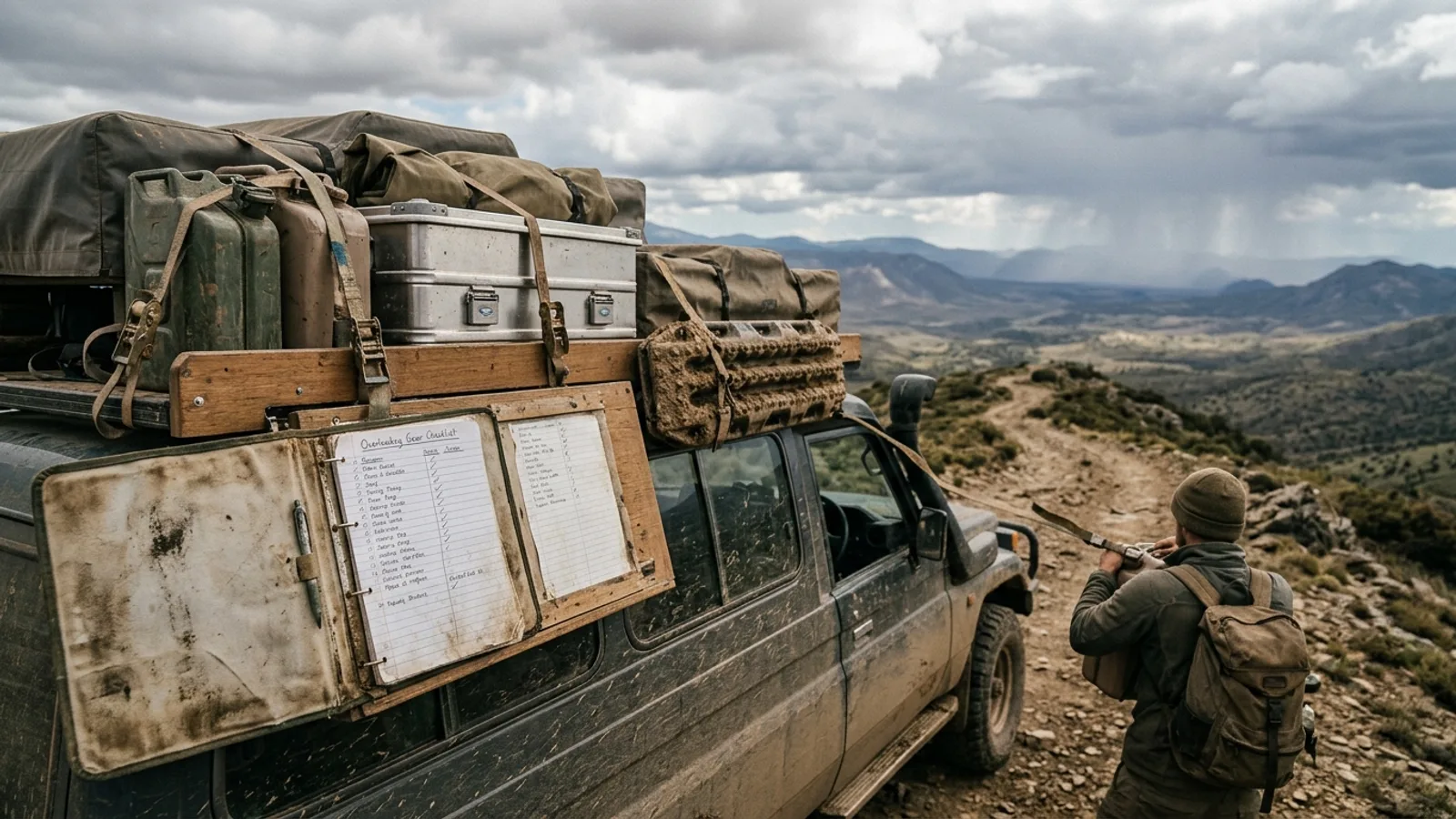
Pack a few redundancies: an extra warm layer, a way to start a fire, and a basic emergency kit. In cold conditions, small problems — a wet glove, a dead flashlight — become bigger problems faster than they would in mild weather.
Finally, match your ambitions to your experience. Each cold-weather trip you take safely builds the judgment and gear knowledge that make the next, colder trip safer too.