Camping Food Planning: What to Pack and How to Cook It
Good camp food planning comes down to three things: minimizing what you have to cook, minimizing what you have to clean, and packing ingredients that hold up without refrigeration for longer than you'd expect. Build your menu around those constraints and the rest falls into place.
Planning Your Menu Before You Pack
Plan meals day by day rather than shopping by category. Write out breakfast, lunch, and dinner for each day of the trip, then build a shopping list from that plan. This keeps you from overpacking perishables and helps you portion ice and cooler space accurately.
Prep as much as possible at home: chop vegetables, portion spices into small containers, marinate meat in a sealed bag, and pre-mix dry ingredients like pancake batter or oatmeal packets. Anything you can do in your own kitchen is one less task at the campsite.
Pack perishables in the order you'll use them, with items needed last at the bottom of the cooler. Keep raw meat sealed and separate from other food to avoid cross-contamination, and use a separate cooler or container for drinks so it doesn't get opened as often.
Breakfast
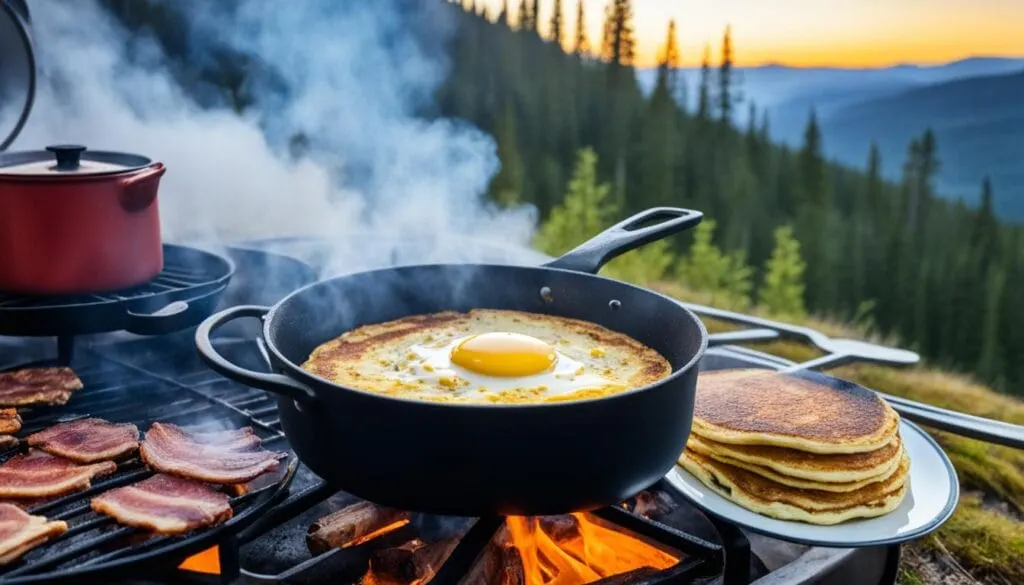
Instant oatmeal, granola with shelf-stable milk, or breakfast bars require no cooking and work well for early starts or rainy mornings. For a heartier meal, eggs and precooked sausage or bacon cook quickly in one pan. Pancake or biscuit mixes that only need water are lighter to pack than mixes requiring eggs and milk.
A fruit, yogurt, and granola parfait travels well in a sealed container for the first day or two before yogurt needs to be used up. Coffee drinkers should decide in advance between instant coffee, a manual pour-over, or a French press, since each has different gear needs.
Lunch
Lunch works best as a no-cook or low-cook meal so you can eat quickly and get back outside. Sandwiches or wraps with shelf-stable ingredients like nut butter, hard cheese, and cured meats hold up without refrigeration better than soft cheeses or deli meat in warm weather. Pre-made tuna, chicken, or egg salad should stay well chilled and be eaten early in the trip.
If you want something warm, instant noodles or a simple quesadilla cook in minutes on a camp stove and only need one pan.
Dinner
Dinner is where a single cooking method can simplify your whole trip. Foil packet meals let you combine a protein and vegetables, seal them, and cook directly on coals or a grate with almost no cleanup. Grilling works well for kabobs, corn, and other vegetables, and for burgers or sausages that don't need much attention.
One-pot meals, such as a simple pasta or rice dish with added vegetables and protein, reduce the number of dishes you need to bring and wash. Bring a small set of seasonings, such as a salt blend, garlic powder, and pepper, to keep meals flavorful without packing a full spice rack.
Snacks
Snacks should require no preparation and travel well in a pack. Good options include:
- Trail mix with nuts, dried fruit, and seeds for steady energy
- Whole fruit that doesn't bruise easily, like apples or oranges
- Jerky or other shelf-stable protein
- Chips paired with a shelf-stable dip
- Popcorn, either pre-popped or popped fresh over a fire in a covered pan
Keep snacks in resealable bags or containers to keep them fresh and to keep food smells contained, which also matters for wildlife safety in bear country.
Desserts
S'mores remain the simplest camp dessert: a toasted marshmallow and a piece of chocolate between graham crackers. For something more filling, a pie iron can turn two slices of bread and a sweet filling into a hot sandwich cooked directly over coals.
Foil packets also work for dessert. Fruit with a bit of sugar and a crumble topping, wrapped and set over coals until warm, makes a simple cobbler-style treat. If you'd rather skip cooking altogether, sturdy baked goods like muffins or cookies travel well and need no prep.
Condiments, Spices, and Drinks
A small kit of condiments goes a long way: something acidic like mustard or hot sauce, something rich like mayonnaise, and a cooking oil for sautéing or grilling. Pack these in small, leak-proof containers rather than bringing full-size bottles.
Water is the priority drink to plan for, both for hydration and for cooking and cleanup. Bring more than you think you'll need, or plan a reliable way to treat water from a natural source if you're in the backcountry. Coffee, tea, and powdered drink mixes are easy additions that don't take up much space.
Food Storage and Safety
Keep raw meat and perishables cold for as long as possible, and use a thermometer or your best judgment to avoid eating anything that's been in the temperature range where bacteria grow quickly for an extended period. When in doubt, cook meat thoroughly and don't rely on smell or appearance alone to judge safety.
In areas with bears or other wildlife, store all food, trash, and scented items in a hard-sided container or hung according to local guidance, never in your tent. Clean up food scraps and grease promptly to avoid attracting animals overnight.