How to Wash Dishes While Camping: An Eco-Friendly Method
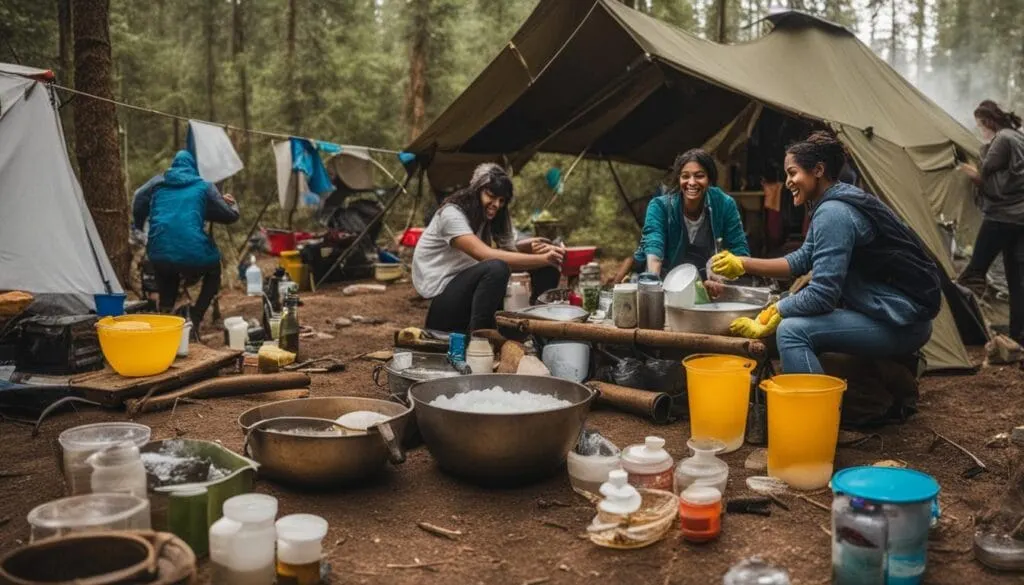
Why Dishwashing Is Different in the Backcountry
At home, wastewater disappears down a drain into a treatment system. At a campsite, it doesn't. Whatever you pour out ends up in the soil or, if you're careless, in a stream or lake. Food residue attracts wildlife and can foul water sources. A good camp dishwashing routine is really about managing water and waste as much as it's about getting dishes clean.
Gear to Bring
- Two containers — collapsible sinks, buckets, or large plastic bins work. One for wash water, one for rinse water.
- A pan scraper or old spatula to remove stuck-on food before it hits the water.
- A sponge or brush dedicated to dishes, kept separate from other camp cleaning tools.
- A small bottle of biodegradable, concentrated camp soap. A little goes a long way.
- A fine-mesh strainer to catch food particles before you dispose of wastewater.
- A quick-dry towel or a small mesh drying rack.
- A trash bag for scraped-off food scraps and strained solids.
Step-by-Step: The Two-Basin Method
1. Scrape First
Before any water touches a dish, scrape off every bit of leftover food into your trash bag. This single step prevents most of the mess and clogging problems people run into.
2. Set Up Away From Water
Choose a flat spot well away from any stream, lake, or spring — general backcountry guidance is at least 200 feet, roughly 70 to 80 steps for an adult. Fill one basin with warm water and a small amount of biodegradable soap. Fill the second with plain water for rinsing.
3. Wash, Then Rinse
Wash each item in the soapy basin, working from least greasy to greasiest so the water stays usable longer. Dunk and swish in the clean rinse basin afterward. Change out water in either basin if it gets too dirty or greasy to work with.
4. Air Dry Completely
Let dishes air dry on a rack or clean towel rather than toweling them dry with something that's already damp — a damp cloth spreads moisture and bacteria around more than it removes them. Fully dry dishes before packing them away; residual moisture is what allows mold and odors to develop in a stored cook kit.
Disposing of Dishwater Properly
Never pour wash or rinse water directly into a stream, lake, or storm drain. Soap, even biodegradable soap, and food residue can affect aquatic life.
Strain the water through your fine-mesh strainer first, and pack out the solids with your other trash. Then:
- If the campground has a designated greywater disposal area, use it.
- If not, disperse the strained water by broadcasting it in a wide arc over a large area of durable ground, well away from water sources and campsites. Spreading it thinly lets the soil filter it naturally, rather than concentrating it in one spot.
Choosing Soap
Look for a soap labeled biodegradable and formulated for outdoor or camp use — these are usually concentrated, low-foaming, and free of heavy dyes or fragrance additives. Biodegradable doesn't mean harmless in concentrated form, so use sparingly and always dispose of wastewater away from natural water sources regardless of what soap you use.
For cutting boards or utensils that touched raw meat, a brief soak in hot water with extra scrubbing is usually enough for a short camping trip. If you want additional sanitizing, plain unscented household bleach diluted well below full strength and used only briefly, followed by a thorough rinse, is a standard low-tech option — but treat any bleach product with care and keep it away from food, skin, and eyes.
Reducing Dishes in the First Place
The easiest dish to wash is the one you never dirty. Cooking only what you'll eat, using one pot for multiple steps of a meal, and lining plates or bowls with foil for messy foods all cut down on both water use and cleanup time.
Keeping the System Running Smoothly in a Group
On group trips, dishwashing goes faster when tasks are split — one person scraping and stacking, another washing, another rinsing and drying. Deciding on this rotation before the meal, rather than after, avoids the usual post-dinner stall where dishes pile up.
Quick Reference
- Scrape food scraps into trash before washing anything.
- Wash and rinse at least 200 feet from any water source.
- Use biodegradable soap sparingly.
- Strain wastewater and pack out the solids.
- Broadcast strained greywater over a wide area, or use a designated disposal basin if one exists.
- Dry dishes fully before packing them away.