How to Stay Warm Tent Camping in Cold Weather
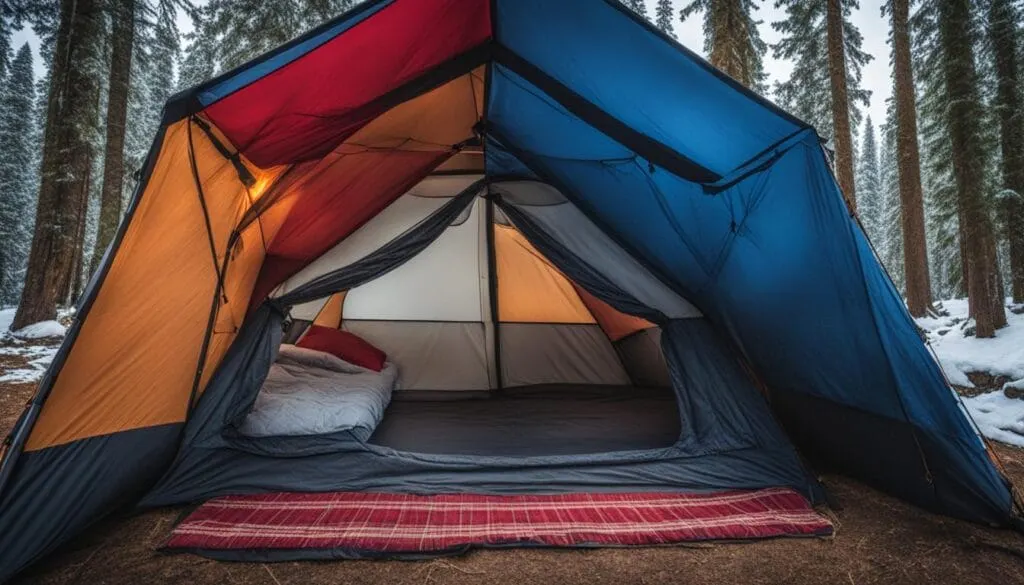
Staying warm in a tent comes down to a few controllable factors: the tent you pitch, where you pitch it, and the insulation between you and the ground and air. Get those right and cold-weather camping becomes far more comfortable.
Choose the Right Tent
A smaller tent is easier to keep warm than a large one because there's less air volume for your body heat to fill. If you're choosing between tent sizes for a given group, the more snugly it fits your party and gear, the warmer it will feel.
For genuinely cold or snowy conditions, a tent built for winter use will outperform a standard three-season tent. These typically have fewer mesh panels, sturdier poles, and a design meant to shed wind and snow load rather than just rain. If you mostly camp in mild shoulder-season weather, a well-pitched three-season tent with a full rainfly is usually enough.
Pick a Good Campsite
Terrain and placement affect the temperature inside your tent as much as the tent itself does.
Block the Wind
Wind strips heat away quickly, even through tent fabric. Look for natural windbreaks — a tree line, a rock formation, or the lee side of a hill — and pitch your tent so the lowest, most solid side faces the prevailing wind direction. Avoid open ridgelines and exposed meadows in cold or windy weather.
Take Advantage of Morning Sun
A campsite that catches early sun will warm up faster once you wake, which makes breaking camp far more pleasant. Facing your tent door toward where the sun rises, when terrain allows, helps the interior warm quickly.
Consider Elevation and Air Drainage
Cold air sinks and pools in low spots, so the very bottom of a valley or a depression can actually be colder overnight than a site slightly above it. Aim for a site that's elevated just enough to avoid being a collection point for cold air, without being so exposed that you lose wind protection.
Manage Condensation
Moisture inside a tent makes the air feel colder and dampens gear and sleeping bags. Pitch the tent so the fabric and rainfly are taut, since a loose pitch traps more moist air against the walls. Keep vents open, especially higher ones, so humid air generated by your breathing can escape rather than condensing on cold fabric overhead. Avoid cooking or drying wet gear inside the tent body, since both add moisture to the air.
Bring a Warm Sleeping Bag
Your sleeping bag is your main defense against overnight cold. Bags are usually labeled with a comfort or limit rating that reflects the lowest temperature at which an average sleeper should stay warm; choose a bag rated for temperatures colder than what you expect, since actual warmth varies by person and conditions.
A hood that cinches around your head and face makes a significant difference, since a lot of heat is lost through an uncovered head on a cold night. A draft collar around the neck and a draft tube along the zipper help keep warm air from escaping as you move.
Dry clothing worn or tucked inside the bag adds a layer of insulation. Avoid sleeping in clothing that's damp from the day's activity, since it will pull heat away from your body rather than adding warmth.
Use an Insulated Sleeping Pad
Ground contact draws heat away from your body faster than air does, so insulation underneath you matters as much as the bag on top. A standard inflatable mattress without built-in insulation will leave you cold no matter how warm your bag is.
Look for a sleeping pad with an R-value suited to the season — higher R-values indicate more resistance to heat loss into the ground, and cold-weather trips call for pads at the higher end of that range. Closed-cell foam pads are simple, durable, and reliably insulating; inflatable pads filled with down or synthetic insulation pack smaller and offer more cushioning while still insulating well. Many cold-weather campers combine a foam pad underneath an inflatable one for extra warmth and a backup if the inflatable pad fails.
Other Habits That Help
- Change into dry sleep clothes before bed rather than sleeping in what you wore during the day.
- Eat a warm meal or snack before sleeping — digestion generates body heat overnight.
- Keep a hat on while sleeping if your bag doesn't fully cover your head.
- Empty your bladder before bed; your body spends energy keeping unnecessary fluid warm.
- Store tomorrow's clothes inside your sleeping bag so they're warm when you dress in the morning.