Staying Cool While Camping in Hot Weather
Pick a Campsite That Works With the Heat
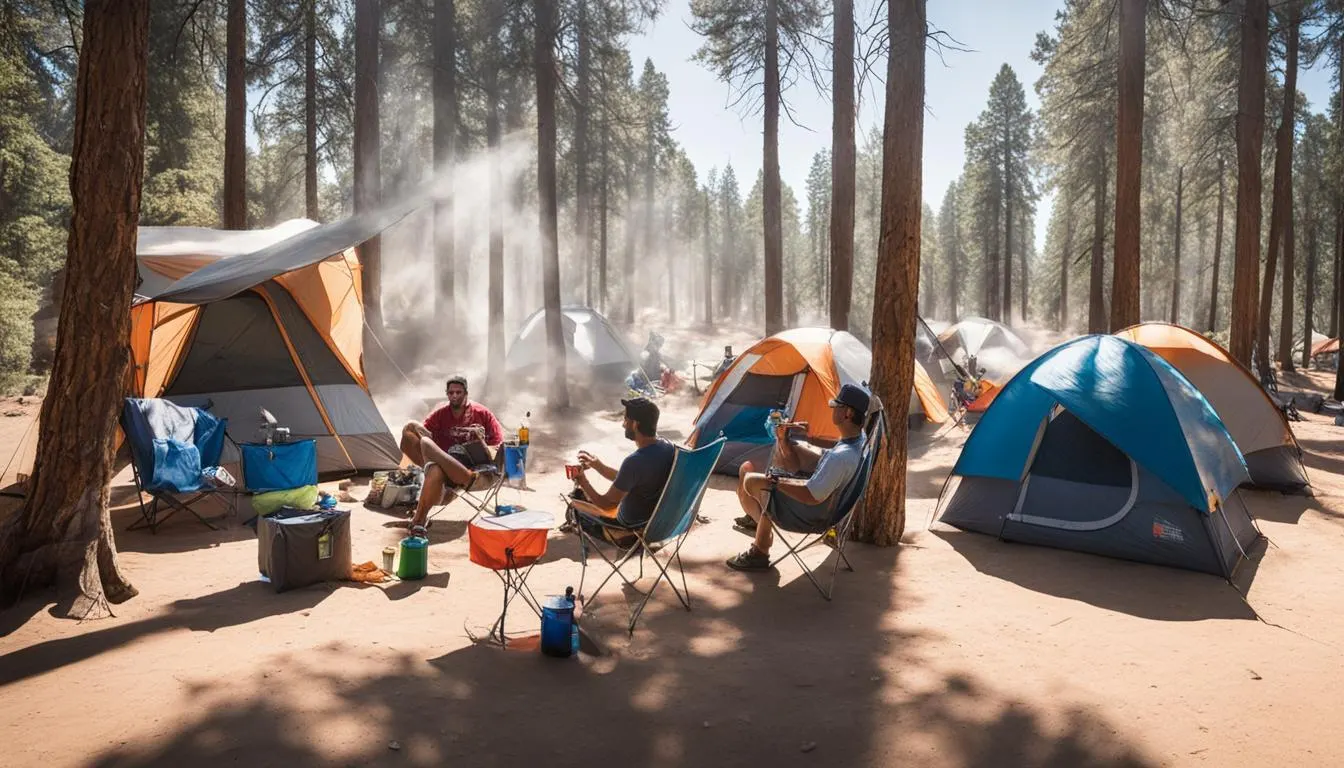
The single biggest factor in how hot your tent feels is where you put it. Shade matters more than any gear you bring. Look for a site under tree cover that will still be shaded during the hottest part of the afternoon, not just in the morning. East-facing shade disappears by midday; look for spots shaded by terrain, canopy, or a ridge to the west.
Sites near water — a lake, river, or even a damp meadow — tend to run cooler than dry, exposed ground, and often carry a steady breeze. Higher elevation sites are also generally cooler than valley floors, since heat sinks into low ground and lingers there overnight.
Avoid pitching on bare rock, sand, or asphalt-like surfaces, which absorb heat during the day and radiate it back after sunset.
Set Up Your Tent for Airflow
Orient your tent so its door and any vents face the prevailing wind direction, so moving air is pushed through the interior rather than around it. If your tent has multiple doors or vents, opening them on opposite sides creates cross-ventilation, which cools the inside far more effectively than a single opening.
A rainfly blocks airflow and traps heat, so leave it off or rolled back whenever rain isn't a realistic risk. If you do need the fly for dew or a chance of showers, use one with vented panels and keep those open.
Some campers take their tent down entirely during the hottest daylight hours and set it back up in the evening. This isn't practical for everyone, but if you're basing out of one site for several days, leaving a tent fully closed up under direct sun for hours will make it noticeably hotter come nightfall.
Use Shade Structures and Reflective Covers
A simple tarp or sunshade rigged above your tent — not touching it, but suspended a foot or more overhead — creates an air gap that blocks direct sun while still letting heat escape upward rather than building up inside the tent fabric. This is more effective than a shade that sits directly on the tent.
Light-colored tents and covers reflect more sunlight than dark ones and generally run cooler inside during the day.
Choose a Sleeping Setup for Warm Nights
A tent with generous mesh panels, rather than solid fabric walls, will ventilate far better and reduce condensation. This matters most on warm, humid nights when trapped moisture makes the air inside feel heavier.
Swap a full sleeping bag for a lightweight sheet, a sleeping bag liner, or an unzipped bag used as a blanket. Sleeping bags are built to retain body heat, which works against you in warm weather.
A small battery-powered fan placed near the tent door can meaningfully increase airflow when there's no natural breeze, especially in the still air of early night before temperatures drop.
Stay Hydrated and Manage Your Body Temperature
Drink water steadily throughout the day rather than waiting until you feel thirsty, since thirst lags behind actual fluid loss, especially during activity in the heat. On hot days, plan for more water than you'd normally carry, and refill whenever you have a reliable source.
Meals built around fruits, vegetables, and other water-rich foods help offset fluid loss and are easier to eat comfortably in the heat than heavy, hot meals. A cooler with reliable ice retention keeps perishables safe to eat and gives you access to cold food and drinks, which can make a real difference to comfort over a multi-day trip.
Watch for signs of heat-related illness in yourself and others — heavy sweating, dizziness, nausea, confusion, or a headache that doesn't resolve with rest and water. If these appear, move to shade, cool down, hydrate, and seek medical help if symptoms are severe or don't improve.
Plan Activities Around the Heat of the Day
Shift strenuous activity — hiking, setting up camp, breaking down gear — to early morning or evening, and treat the middle of the day as a time to rest in shade.
If there's a safe, legal spot to swim near your campsite, a river, lake, or swimming hole is one of the most effective ways to cool off directly. Check local conditions and any posted guidance before swimming, since currents and water depth can vary a great deal between sites.
Floating in calm river sections, wading in shallow water, or simply sitting near moving water can all provide relief even without full submersion. If temperatures are extreme, moving to higher ground for a few hours — even just a short hike up in elevation — often provides noticeably cooler air.