Motorcycle Camping: How to Pack Light, Smart, and Balanced
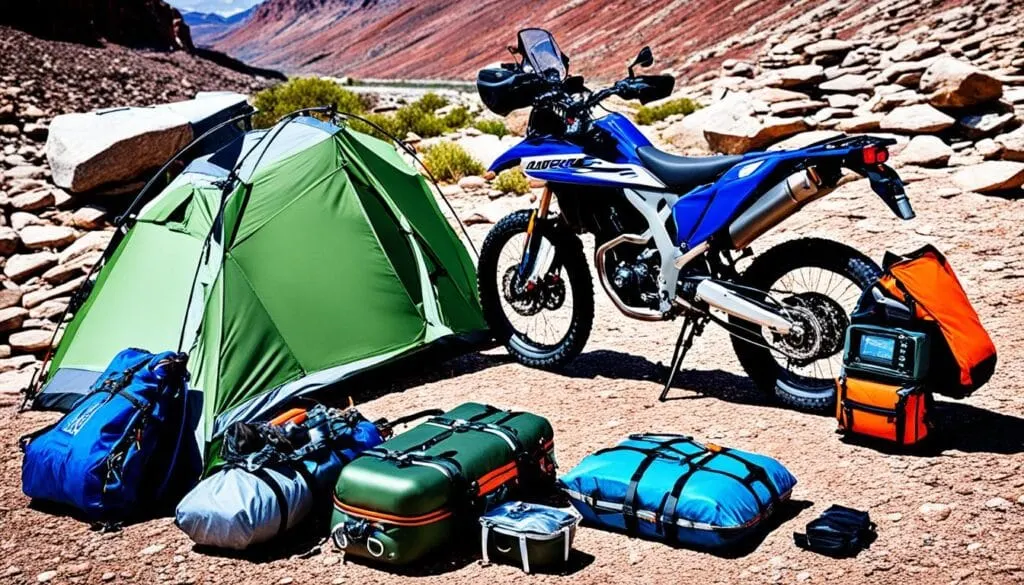
Motorcycle camping rewards discipline. A car camper can toss in an extra bag without much thought, but on a bike every item competes for limited space and affects how the motorcycle handles. Packing well is less about gear and more about method: what you bring, how you distribute it, and how you secure it.
Choosing Luggage
Luggage falls into two broad categories, and most experienced riders end up using some mix of the two.
Hard cases (aluminum or hard plastic boxes mounted on a frame) are rigid, lockable, and weatherproof. They protect gear well and make a solid platform for strapping extra items on top. The tradeoffs are added weight, width, and a less forgiving impact in a low-speed drop or tip-over — a hard corner can catch a leg or the ground harder than a soft bag would.
Soft luggage (bags made from abrasion-resistant fabric) is lighter, flexes with the bike, and tends to be more forgiving if the bike goes down. It won't lock in the same way hard cases do, but many soft bags are highly water-resistant and can be paired with a lock cable for peace of mind at rest stops.
A common setup uses soft saddlebags or panniers for most gear, a tail bag or dry bag lashed across the back seat or rack for bulky items like a sleeping bag or tent, and a small tank bag for things you need to reach without stopping — phone, snacks, documents.
Whatever you choose, bring extra straps, cord, or cargo netting. Something will need to be lashed down that didn't fit in a bag, and having spare tie-down capacity solves problems on the road that you can't plan for at home.
What to Pack
The essentials for a motorcycle camping trip aren't different in kind from any camping trip — they're just chosen and packed with size and weight in mind.
- Shelter: A compact, freestanding tent that packs down small is worth the investment. Freestanding designs are easier to pitch on hard or uneven ground where you can't rely on stakes alone.
- Sleep system: A sleeping bag rated for the coldest temperature you realistically expect, plus an insulated sleeping pad. Insulation from the ground matters as much as the bag itself.
- Cooking gear: A small stove, one pot that can double as a bowl, and minimal utensils. Nest items inside each other to save space — a stove and fuel canister often fit inside the pot.
- Tools and spares: A tire repair kit and small pump, a compact multi-tool, and any fasteners or fuses specific to your bike. Know how to use them before you need them on the side of a road.
- Clothing: Layers rather than bulk — a base layer, insulating layer, and waterproof outer layer cover a wide range of conditions with less volume than a single heavy jacket. Pack rain gear even if the forecast looks clear.
- Riding gear: Whatever protective gear you ride in should be treated as non-negotiable, not as an item to leave behind to save space.
Packing Technique
A few habits make a real difference in how much fits and how the bike handles once loaded.
Roll rather than fold. Rolled clothing takes up less room in a soft bag and fills irregular spaces more efficiently than folded stacks. Compression sacks can shrink bulky items like sleeping bags further, though they add a small amount of weight themselves.
Choose multi-purpose gear. A groundsheet that doubles as a rain shelter, or a cooking pot that also serves as a bowl, means fewer total items without sacrificing function.
Mind weight placement, not just weight. Keep heavier items low and close to the bike's center of gravity — near the seat rather than high on a rear rack or far out on the sides. A top-heavy or rear-heavy load changes how the bike steers and brakes, especially at low speed or on uneven ground.
Balance side to side. If you're using panniers or saddlebags, distribute weight evenly between the two sides. An unbalanced load pulls the bike off-center and is tiring to correct for over a long ride.
Build a list and stick to it. Write out your gear ahead of time, pack the same way each trip, and keep frequently needed items — rain gear, tools, snacks — somewhere you can reach without unpacking everything else.
Choosing a Campsite
Motorcycle camping opens up options that aren't practical for larger vehicles, since a bike can reach smaller or more remote sites that a car or trailer can't. Decide in advance what you actually need: running water, a fire ring, a picnic table, or nothing more than a flat spot to pitch a tent.
Reserve ahead where reservations are possible, particularly during busy seasons or in popular parks, since walk-up availability at developed campgrounds is not guaranteed. If you're relying on dispersed or first-come sites, have a backup plan in mind in case your first choice is full.
Check the weather for your route and destination before you leave, not just the forecast for the campsite itself. Conditions can differ significantly along a ride, and knowing what to expect lets you pack the right layers and decide whether a site with more shelter is the safer choice.