How to Keep Food Cold When Camping
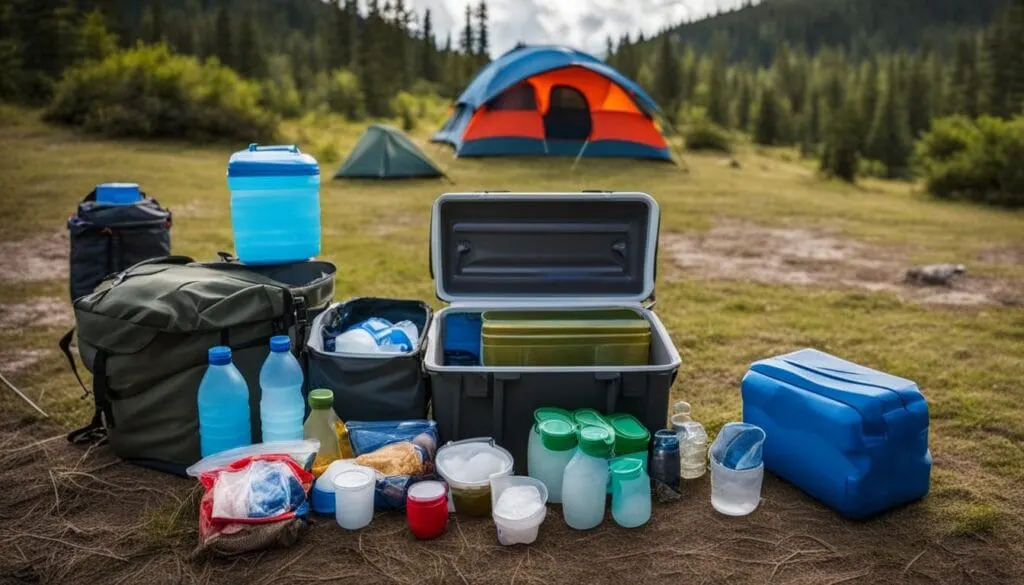
Keeping food cold while camping isn't about owning the fanciest cooler. It's about a handful of habits: chilling things before you leave, packing them the right way, and limiting how often warm air gets in. Get those right and even a basic cooler will hold food safely for days.
Start Cold Before You Leave Home
A cooler is designed to maintain temperature, not create it. If everything inside starts cold, the cooler has far less work to do.
Chill the cooler itself for a few hours before loading it — fill it with ice or cold water and let it sit in the shade. Refrigerate or freeze food and drinks in advance rather than loading room-temperature items straight from the pantry or store shelf. Meat, in particular, keeps longer and more safely if it goes into the cooler already frozen solid.
Choose Ice Wisely
Block ice melts more slowly than cubed or crushed ice because it has less surface area exposed to warm air. If you have the choice, use block ice for the bulk of your cooling and reserve a smaller amount of cube ice for drinks you'll access often.
Frozen water bottles or reusable gel packs are worth using in place of loose ice. They don't create a slushy mess as they melt, and frozen water bottles double as drinking water once they thaw. Lining the bottom and sides of the cooler with these before adding food gives you a more even, longer-lasting cold barrier.
Pack Strategically
Air is the enemy of cold retention — the more empty space in a cooler, the faster it warms up. Pack contents tightly, filling gaps with extra ice, frozen water bottles, or even wadded towels.
Layer with the coldest, most perishable items — raw meat, dairy, anything you're most worried about — at the bottom, where cold air naturally settles. Items you'll grab often, like snacks or drinks, belong near the top so you're not digging through the whole cooler and losing cold air every time you want something.
If your trip includes a lot of drinks, consider packing them in a separate cooler entirely. Drinks coolers get opened constantly; keeping that traffic away from your food cooler means your food stays colder for longer.
Control Where the Cooler Sits
Direct sun raises a cooler's internal temperature quickly, even with good insulation. Keep it in shade — under a tree, a tarp, or your vehicle — and off hot surfaces like bare rock or pavement, where heat radiates upward into the cooler's base. A layer of insulation underneath, such as a blanket or foam pad, helps in exposed campsites.
Minimize Opening and Closing
Every time a cooler is opened, cold air spills out and warm air replaces it. Plan meals so you know what you need before you open the lid, and try to retrieve everything for that meal in one trip rather than several. Keeping the cooler closed as much as possible does more to preserve its internal temperature than almost any other single habit.
Know When to Let Food Go
Perishable food that has warmed above a safe temperature for an extended period should not be eaten, even if it looks and smells fine — this is one of the few areas where "when in doubt, throw it out" is genuinely the safest rule. A thermometer kept in the cooler is a simple way to check that things are staying properly cold, especially on longer trips where you can't easily tell by touch.
Quick Checklist
- Pre-chill the cooler and freeze or refrigerate food before the trip
- Use block ice or frozen water bottles instead of loose cubes where possible
- Pack tightly, with perishables at the bottom and frequently used items on top
- Keep the cooler in shade and off hot ground
- Open the lid as rarely as possible
- Discard any perishable food that's been warm too long