How to Buy a Travel Trailer: A Practical Buyer's Guide
Start With Towing, Not Floor Plans
Before falling in love with a layout, figure out what your vehicle can actually tow. Every tow vehicle has a maximum towing capacity, and that number should include the trailer's fully loaded weight, not just its empty "dry" weight.
A trailer's dry weight rarely reflects how it travels. Once you add water, propane, food, gear, and personal belongings, actual weight can climb well beyond the sticker figure. A reasonable habit is to shop for trailers whose loaded weight comfortably falls under your vehicle's rated capacity, leaving margin rather than pushing right up to the limit.
Also check your vehicle's hitch weight rating, and whether your setup will need a weight-distributing hitch or sway control. These aren't optional upgrades if your combination calls for them — they directly affect how the trailer handles at highway speed and in wind or when passed by large trucks.
Choosing Size and Floor Plan
Size decisions should follow from how you actually plan to travel, not how a floor plan looks in a showroom.
- Sleeping capacity: Count how many people will regularly sleep in the trailer, not just the maximum the manufacturer claims it can sleep.
- Living and kitchen space: Think about whether you'll cook full meals or mostly eat out, and how much counter and seating space that requires.
- Storage: Make a rough list of the gear, clothing, and equipment you travel with, and picture where it would actually go in the trailer.
- Bathroom: Wet baths (where the shower and toilet share one small space) save room but feel cramped to some people; decide if that trade-off works for you.
- Exterior length and height: Longer and taller trailers can be harder to maneuver, park, and store, and may not fit in every campsite or storage facility.
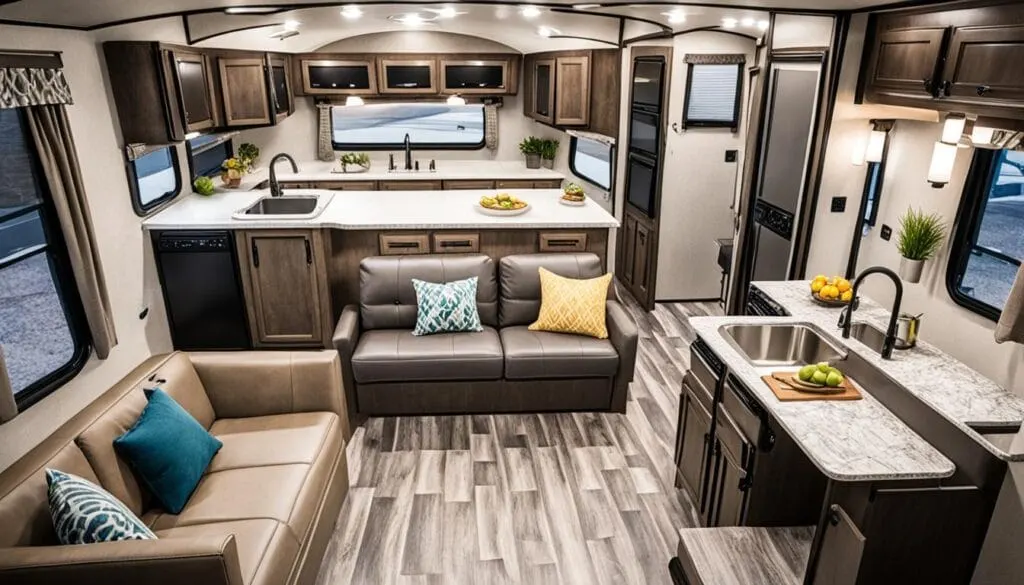
If you can, walk through several floor plans in person before deciding. Photos and diagrams often make spaces look larger or more open than they feel in practice.
Inspecting for Damage
Whether buying new or used, a careful walk-through can catch problems before they become expensive.
Interior
Walk the floor slowly and pay attention to any soft, spongy, or uneven spots, which can indicate water intrusion or structural damage underneath. Check corners, closets, and areas around windows and vents, since these are common places for leaks to start. Open every cabinet and drawer to check that hinges, latches, and slides work smoothly.
Exterior
Look over the trailer's skin for dents, cracking, discoloration, or soft spots, which can also point to water damage. Check the roof if you can safely access it — this is one of the most common places for leaks to originate over time. Open and close all doors, windows, and exterior storage compartments to confirm they seal and latch properly.
Mechanical Components
These are worth having a qualified technician inspect, especially on a used trailer:
- Brakes: Should engage smoothly and evenly.
- Axles and suspension: Look for uneven wear, rust, or misalignment, which can suggest the trailer has been overloaded or poorly maintained.
- Tires: Check tread depth and look for cracking or dry rot, which happens with age even on tires that haven't been driven much.
- Frame: Inspect for rust, especially underneath and near the hitch.
Operational Systems
Test everything you can before you buy: the electrical system on both shore power and battery, the water pump and plumbing, the propane appliances, and the air conditioning or heating. Run water through every faucet and check that the toilet and any tanks operate correctly. It's much easier to negotiate or walk away over a problem you find during inspection than to discover it after the sale.
Matching a Trailer to Your Lifestyle
Think about how and where you'll actually use the trailer, not just how you use it on a dream trip.
Trailers built for cold-weather use typically have additional insulation and heating capacity to handle low temperatures; standard trailers can struggle to stay warm and may have exposed plumbing that's vulnerable to freezing. If you plan to camp outside of mild seasons, this is worth prioritizing.
Consider how often you'll be setting up and breaking camp. Larger trailers with more amenities often take longer to level, hook up, and pack away, which matters if you move frequently rather than settling in for extended stays.
Finally, think honestly about storage. Not every home has space to park a trailer, and off-site storage may be needed when it's not in use.
Budgeting Beyond the Purchase
A travel trailer carries ongoing costs beyond its purchase price. Plan for:
- Routine maintenance: tire replacement, brake servicing, sealant and caulking around seams and roof penetrations, and appliance upkeep.
- Unexpected repairs: water damage, appliance failures, and wear on mechanical components can arise even with careful use.
- Insurance: coverage options vary, and it's worth comparing policies to understand what's protected.
- Storage and site fees: if you don't have space at home, factor in the ongoing cost of storing the trailer elsewhere.
Regular upkeep, especially resealing the roof and checking for leaks, is one of the most effective ways to protect a trailer's long-term condition and value.